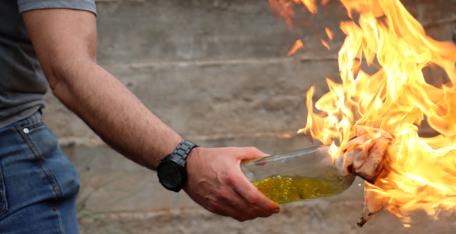
When Fire Becomes a Felony: Arson Defense in Austin, Texas
A campfire that got out of control. A trash can fire behind a building. A dispute with a landlord. A fire that started accidentally. In Texas, arson is one of the most aggressively prosecuted offenses. What might be a mistake or an accident can become a felony charge carrying years or decades in prison. The stigma of arson follows you for life—affecting employment, housing, and your reputation in the community. The stakes could not be higher.
At Barton & Associates, Attorneys at Law, we defend clients across Austin Central Texas against arson charges. Whether you are accused of setting a fire intentionally, recklessly, or negligently, we understand how quickly a situation can escalate. Our attorneys have spent decades in Travis County courtrooms and beyond, handling the most serious criminal cases with skill and determination.
We know that arson cases often hinge on complex forensic evidence—fire patterns, accelerants, and expert testimony. We know how to challenge the State’s evidence, present alternative explanations, and build a defense that protects your freedom. We know that a mistake should not define your future.
If you are facing an arson charge, you are not alone. Let us help you fight back.
Understanding Arson in Texas
Under Texas law, a person commits arson if they intentionally, knowingly, or recklessly start a fire or cause an explosion that damages or destroys any building, habitation, or vehicle, or that damages or destroys any property knowing that it is within a building, habitation, or vehicle.
The Elements:
The State must prove:
- You started a fire or caused an explosion
- That damaged or destroyed a building, habitation, or vehicle (or property within)
- And you acted intentionally, knowingly, or recklessly
Types of Arson:
- Arson of a Building or Habitation: Second-degree felony (2 to 20 years)
- Arson of a Vehicle: Second-degree felony (2 to 20 years)
- Arson with Intent to Defraud: First-degree felony (5 to 99 years)
- Arson Causing Injury or Death: First-degree felony (5 to 99 years or life)
The Penalty:
- Second-Degree Felony: 2 to 20 years in prison, fine up to $10,000
- First-Degree Felony: 5 to 99 years or life in prison, fine up to $10,000
For residents across Central Texas, an arson conviction can mean decades in prison.
What Is the Penalty for Arson in Texas?
The penalty for arson depends on the type of property damaged and whether injury or death occurred.
Arson of a Building, Habitation, or Vehicle:
- Second-degree felony
- 2 to 20 years in prison
- Fine of up to $10,000
Arson with Intent to Defraud:
- First-degree felony
- 5 to 99 years or life in prison
- Fine of up to $10,000
Arson Causing Injury or Death:
- First-degree felony
- 5 to 99 years or life in prison
- Fine of up to $10,000
Collateral Consequences:
- Felony Criminal Record: A permanent felony conviction
- Loss of Firearm Rights: A felony conviction results in lifetime prohibition
- Employment: Many employers will not hire individuals with arson convictions
- Housing: Landlords may deny rental applications
- Professional Licensing: Licensing boards may deny or revoke licenses
- Insurance: Arson convictions affect your ability to obtain insurance
For those in the Austin area, an arson conviction can destroy your future.
How to Defend an Arson Charge
Defending against an arson charge requires a strategic approach. The stakes are high, and the State will present expert testimony from fire investigators.
Defense 1: The Fire Was Accidental
The most common defense is that the fire was accidental. The State must prove you acted intentionally, knowingly, or recklessly. If the fire was caused by:
- A faulty appliance
- A malfunctioning electrical system
- A discarded cigarette
- A campfire that spread
- Lightning or other natural causes
You have a defense.
Defense 2: You Did Not Start the Fire
The State must prove you were responsible for the fire. If the fire was started by someone else, or if the cause is unknown, you have a defense.
Defense 3: No Criminal Intent
The State must prove you intended to start the fire or acted recklessly. If you were unaware of the fire, or if the fire was started without your knowledge, you have a defense.
Defense 4: Challenging the Fire Investigator
Fire investigators are not always correct. Your attorney can challenge:
- The investigator’s qualifications
- The methodology used
- Whether the investigator ruled out alternative causes
- Whether the investigator was biased
Defense 5: The Property Was Not a “Habitation”
For arson of a habitation, the State must prove the structure was a home. If the structure was a garage, shed, or other non-residential building, the charge may be reduced.
Defense 6: Unlawful Search or Arrest
If the evidence was obtained through an illegal search or arrest, your attorney can file a motion to suppress.
For those in Central Texas, a strong defense can mean the difference between a life sentence and freedom.
The Role of the Fire Investigator
Arson cases almost always involve testimony from a fire investigator—often a certified fire investigator or an agent with the State Fire Marshal’s Office. Their testimony can be challenged.
What the Investigator Looks For:
- Patterns: V-shaped burn patterns, pour patterns, “alligatoring” of wood
- Accelerants: Presence of gasoline, lighter fluid, or other accelerants
- Point of Origin: Where the fire started
- Exclusion: Ruling out accidental causes
Challenging the Investigator:
- Alternative Causes: Were there other possible causes the investigator did not consider?
- Methodology: Did the investigator follow proper procedures?
- Bias: Is the investigator biased toward the prosecution?
- Qualifications: Is the investigator properly qualified?
Independent Experts:
Your attorney can hire an independent fire investigator to review the State’s evidence and provide alternative opinions.
For residents across the Austin metro area, challenging the fire investigator is often the key to the defense.
Accidental Fires vs. Arson
Many arson cases begin as accidents that are misinterpreted by investigators. A campfire that spreads. A cigarette that ignites a couch. A space heater that malfunctions. What feels like a tragic accident can be charged as arson.
Defending Accidental Fires:
- No Intent: You did not intend to start the fire
- No Recklessness: You were not aware of the risk
- Alternative Causes: The fire had an accidental cause
The Danger:
Prosecutors often assume that any fire of suspicious origin must be arson. Your attorney must present evidence of accidental causes.
For those in the Austin area, accidental fires require a defense that emphasizes the lack of criminal intent.
Arson with Intent to Defraud
Arson with intent to defraud—often called insurance fraud arson—is a first-degree felony. This occurs when someone sets a fire to collect insurance money.
The Elements:
- You started a fire
- You intended to defraud an insurance company
Defending Fraud Arson:
- No Intent: You did not intend to defraud anyone
- Accidental: The fire was accidental
- Not Your Fire: You did not start the fire
The Danger:
Insurance fraud arson cases often involve extensive investigation by insurance company investigators. The resources against you are significant.
For residents across Central Texas, fraud arson charges require the most aggressive defense.
Reckless Arson
Reckless arson occurs when a person recklessly starts a fire that damages property. Recklessness means you were aware of a substantial and unjustifiable risk and consciously disregarded it.
The Elements:
- You started a fire
- You acted recklessly
- The fire damaged property
Defending Reckless Arson:
- No Recklessness: You were not aware of the risk
- Accident: The fire was an accident, not reckless conduct
- No Damage: The fire did not damage property
The Danger:
Reckless arson is a second-degree felony—the same as intentional arson. A moment of carelessness can lead to years in prison.
For those in the Austin metro area, reckless arson charges require a defense that challenges the mental state element.
Deferred Adjudication for Arson
For first-time offenders, deferred adjudication may be available for arson charges—even for felonies.
How Deferred Adjudication Works:
- You plead guilty or no contest
- The court defers a finding of guilt
- You complete probation (typically 1-5 years)
- Conditions may include community service, fines, restitution, and other requirements
- If you complete probation successfully, the case is dismissed
- No conviction on your record
Eligibility:
- First-time offender
- No prior felony convictions
- The case does not involve serious injury or death
For residents across Central Texas, deferred adjudication is often the goal in an arson case.
Frequently Asked Questions About Arson in Austin, Texas
When clients come to our office—whether from the urban core of Austin, the suburbs to the north and south, or the Hill Country communities—they often have questions about arson charges. Here are the answers to the most common inquiries we receive.
What is the penalty for arson in Texas?
Arson of a building, habitation, or vehicle is a second-degree felony (2 to 20 years). Arson with intent to defraud or causing injury is a first-degree felony (5 to 99 years or life).
What is the difference between arson and reckless burning?
Arson requires intent or recklessness. Reckless burning is a lesser charge for fires that do not involve buildings or habitations. In Texas, most fire-related charges are prosecuted as arson.
Can a campfire be considered arson?
Yes. If a campfire spreads and damages property, you can be charged with arson—even if you did not intend for it to spread.
What if the fire was accidental?
If the fire was accidental, you have a defense. The State must prove you acted intentionally, knowingly, or recklessly.
How are arson cases investigated?
Arson cases are investigated by fire investigators who examine the scene for patterns, accelerants, and the point of origin. Their conclusions can be challenged.
Can I get deferred adjudication for arson?
Yes, in some cases. First-time offenders may be eligible for deferred adjudication, which results in dismissal of the case with no conviction on your record.
Do I need an attorney for an arson charge?
Yes. Arson is a serious felony that can result in decades in prison. An experienced attorney can challenge the fire investigator’s conclusions and seek deferred adjudication.
Why Barton & Associates for Arson Defense in Austin
Arson cases are among the most complex and high-stakes cases we handle. Our attorneys have spent decades in courtrooms across Central Texas, defending clients against these charges with skill and determination.
We know the local fire investigators. We know the prosecutors. We know the judges. And we know how to challenge the evidence, present alternative explanations, and fight to keep a felony off your record.
Take the First Step Toward Protecting Your Future
If you are facing an arson charge, your freedom and your future are on the line. A felony conviction can affect your employment, your housing, and your rights for the rest of your life. Do not wait. The sooner you have an experienced attorney on your side, the better your chances of keeping a felony off your record.
Contact our Austin office today at 512-THE-FIRM (843-3476) to speak with an experienced criminal defense attorney about your case. You can also complete the online Free Consultation form on our website to schedule a confidential meeting. Please note, on-site consultations are by appointment only. We look forward to helping you protect your rights and your future.
Main Category: Criminal Defense Austin
Practice Area Category: Felony Offenses
Barton & Associates, Attorneys at Law
316 W 12th St Suite 400, Austin, TX 78701
Office: 512-THE-FIRM (843-3476)