Drunk Driving Accident Claims in San Antonio: Civil Damages, Bar Liability and the Criminal Case
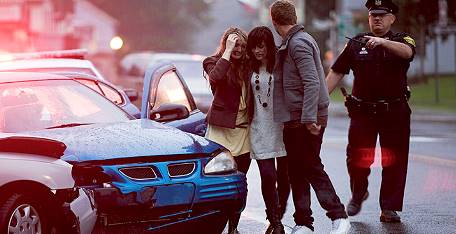
When a drunk driver injures someone, two separate cases usually follow. The state prosecutes the driver for a crime, and the injured person has a civil claim for the harm the crash caused. They run on different timelines, are decided on different standards and have different goals. Texas also gives injured people two tools that an ordinary crash does not: a claim against a bar or restaurant that served an obviously intoxicated customer, and exemplary damages against a driver whose conduct was grossly negligent. An auto accident attorney in San Antonio can explain the rules that apply to every crash, and our general guide covers them. This page covers what is specific to drunk driving: how the civil claim relates to the criminal case, who can be responsible, dram shop claims, exemplary damages, the evidence to keep and the insurance that applies.
It applies to drivers, passengers, pedestrians and riders hurt by an impaired driver, and to families who have lost someone. You may see the same claim called a DWI accident or a DUI accident. The claim is the same.
Your Civil Claim Is Separate From the Criminal Case
A person is intoxicated under the Penal Code if the person lacks the normal use of mental or physical faculties because of alcohol or another substance, or has an alcohol concentration of 0.08 or more (Section 49.01). When a drunk driver seriously injures someone, the charge is intoxication assault, a third-degree felony (Section 49.07). When the crash kills someone, it is intoxication manslaughter, a second-degree felony (Section 49.08). The prosecutor, and not the injured person, decides whether to bring those charges and how to resolve them.
Your civil claim does not depend on the criminal case. These are the differences that matter.
- Who decides. The prosecutor controls the criminal case. You decide whether to bring the civil claim, with your lawyer.
- The standard of proof. A criminal conviction requires proof beyond a reasonable doubt. A civil claim is decided on a preponderance of the evidence, which is a lower standard.
- A conviction is not required. A civil claim can proceed if the driver is not charged, is acquitted or pleads to a lesser offense.
- A conviction can help. Under Texas Rule of Evidence 803(22), a final felony conviction after a trial or a guilty plea, with no appeal pending, can be used in a civil case to prove a fact essential to the judgment. A no-contest plea cannot be used that way.
- The money. The criminal case punishes the driver. The civil claim is how the injured person recovers medical bills, lost income and the other losses described below.
The criminal case can move slowly, and the evidence in the civil case can disappear while it does. Do not wait for the criminal case to end before speaking with a lawyer.
Who Can Be Responsible for a Drunk Driving Crash
- The driver. The person who drove while intoxicated is responsible for the harm the crash caused.
- The driver’s employer. A company can answer for an employee who was driving in the course of work, including after a work event or a client dinner. Whether the driver was acting for the employer depends on the facts.
- A bar, restaurant or other alcohol seller. A business that served an obviously intoxicated customer may be responsible under the dram shop statute, described in the next section.
- An adult who served a minor. In limited circumstances an adult who knowingly gave alcohol to a minor can be responsible if the minor then causes a crash.
- Others. A vehicle owner, a vehicle’s manufacturer or a government entity may be involved if their conduct or a defect contributed. Those claims turn on their own rules.
Dram Shop Claims Under Texas Law
Chapter 2 of the Texas Alcoholic Beverage Code creates a claim against an alcohol provider. A provider is a person who sells or serves alcohol under a license or permit, or who otherwise sells alcohol to someone (Section 2.01). To succeed against a provider, an injured person must show two things (Section 2.02(b)).
- Obvious intoxication. When the alcohol was provided, it was apparent to the provider that the customer was obviously intoxicated to the extent that the customer presented a clear danger to himself and others.
- Proximate cause. The customer’s intoxication was a proximate cause of the damages.
Three limits are worth knowing. First, the claim runs against a provider who sells or serves alcohol, and a person who gives alcohol away at a private party is not a provider under that definition. Second, a separate rule makes an adult who is 21 or older liable for the intoxication of a minor under 18 when the adult is not the minor’s parent, guardian or spouse and knowingly served or provided alcohol that contributed to the minor’s intoxication (Section 2.02(c)). Third, for a customer who is 18 or older, Chapter 2 is the exclusive cause of action against the provider (Section 2.03), so a dram shop case is built on the statute’s terms.
The proof is almost all in records that businesses overwrite. The evidence that matters includes the customer’s receipts, tab and card statements, the time of each drink, security video, the names of the servers and bartenders on shift, and witnesses who saw the customer’s speech, balance and behavior. A lawyer can send a preservation letter to the business promptly after the crash. Plan on the general two-year filing period for injury claims (Civil Practice and Remedies Code Section 16.003), and do not wait to find out whether a longer period applies.
Exemplary Damages Against a Drunk Driver
Texas calls punitive damages exemplary damages. They are available only when the harm results from fraud, malice or gross negligence, and the claimant must prove it by clear and convincing evidence, with a unanimous jury on both the finding and the amount (Civil Practice and Remedies Code Section 41.003). Gross negligence has two parts: an act or omission that, viewed objectively, involves an extreme degree of risk, and the defendant’s actual awareness of that risk and conscious indifference to the safety of others (Section 41.001). Facts such as a very high alcohol concentration, a choice to drive after hours of drinking, or prior intoxication offenses may be offered to prove it, and the result depends on the proof.
Exemplary damages are usually capped at the greater of two times the economic damages plus up to $750,000 in noneconomic damages, or $200,000 (Section 41.008(b)). The cap does not apply to claims based on conduct described in certain felony statutes, and the list includes intoxication assault and intoxication manslaughter under Penal Code Sections 49.07 and 49.08 (Section 41.008(c)). Whether the exception applies depends on the facts of the crash, so have a lawyer review it. Exemplary damages are never automatic, and an insurer may dispute whether a particular policy covers them.
How Insurers and Defendants Argue Fault
A drunk driving case is not always a straight line from the driver to the victim. The common arguments are that the injured person shares the fault: a passenger who knew the driver had been drinking, a pedestrian who crossed outside a crosswalk, a driver who was speeding or not paying attention, or a person who had been drinking too. Fault matters because of how Texas divides it. A claimant found more than 50 percent responsible cannot recover, and a lower percentage reduces the award by that percentage (Civil Practice and Remedies Code Sections 33.001 and 33.012). The driver’s intoxication does not erase an argument about your conduct, and your conduct does not excuse the driver’s.
Evidence That Decides Drunk Driving Cases
- The crash report. When a crash causes injury or death, the investigating officer must file a written report within 10 days (Transportation Code Section 550.062), and a person involved can order Form CR-3 from the Texas Department of Transportation.
- The DWI investigation. The arrest report, any field sobriety testing, blood or breath test results, body camera video and 911 audio record the driver’s condition. Agencies keep some recordings for a limited time, so ask for them quickly.
- Where the driver was drinking. Receipts in the vehicle, card statements, texts and witnesses may identify the bar or the party. Tell your lawyer anything you learn.
- Your vehicle and the scene. Photographs of the vehicles, the road, signals and skid marks, and the vehicles themselves before they are repaired or sold.
- Video. Businesses, traffic cameras and other drivers’ dash cameras may record over footage within days.
- Witnesses. Names and phone numbers of anyone who saw the crash or the driver afterward.
- Medical records. EMS, emergency room and follow-up records that tie your injuries to the crash.
Insurance That May Pay
- The driver’s liability coverage. The Texas minimums are $30,000 for one injured person, $60,000 for all injured people in a crash and $25,000 for property (Transportation Code Section 601.072), and serious injuries often exceed them, which is why other sources matter.
- The alcohol provider’s insurance. A business that served the driver may carry its own liability coverage. Ask for the policy early in a dram shop case.
- Your own uninsured and underinsured motorist coverage. An auto policy includes it unless the named insured rejected it in writing (Insurance Code Section 1952.101). Underinsured coverage can cover part of the gap between what the driver’s insurer pays and what you could legally collect from the driver, up to your policy limit (Section 1952.106). If the driver flees and is never identified, the coverage generally needs physical contact between that vehicle and you or your property (Section 1952.104).
- Other coverage. Check your auto policy for personal injury protection and medical payments coverage. Tell your lawyer about your health insurance too, because the plan may have a claim to be repaid from a recovery.
Injuries, Damages and Deadlines
Impaired drivers often cause head-on, intersection and wrong-way crashes, and the injuries can be severe. Our guides to traumatic brain injury claims and spinal cord injury claims cover the most serious. A claim can include the cost of treatment now and in the future, income lost and reduced earning capacity, physical pain, mental anguish, impairment and disfigurement, and property damage. Texas limits recovery of medical bills to what was actually paid or incurred (Section 41.0105). The suit must generally be filed within two years (Section 16.003), counted from the date of death if the crash was fatal.
What This Means for Your Bexar County Case
- Call 911, ask that the crash be investigated for impairment, get medical care and tell every provider how the injuries happened.
- Photograph the scene, the vehicles and your injuries. Collect the driver’s name, plate and insurer, the names of witnesses and the report number.
- Write down anything you saw or heard about the driver’s condition or where the driver had been drinking, and tell your lawyer.
- Do not give a recorded statement, accept a quick offer or sign a release for any insurer before speaking with a lawyer.
- Ask a lawyer to send preservation letters to any bar or business that served the driver, and for video, vehicle data and phone records.
- Find every policy that may apply: the driver’s, any business’s, your own auto policy and your health insurance.
- Keep a record of bills and missed work, and keep track of notices about the criminal case, since it affects your timeline even though it does not control your claim.
More About Drunk Driving and Related Claims
These guides cover related questions.
- car accident claims: the general rules for crashes between vehicles.
- bicycle and pedestrian accident claims: crashes where an impaired driver hits a person on foot or on a bike.
- motorcycle accident claims: lane rights, helmets and fault for riders.
- rideshare accident claims: crashes involving an Uber or Lyft driver.
- wrongful death claims: claims by families after a fatal crash.
- Texas personal injury statute of limitations: the filing deadlines in detail.
- drunk driving accident guide: a shorter overview for people hurt by an impaired driver.
Why San Antonio Clients Choose Barton & Associates for Drunk Driving Cases
Barton & Associates has tried Texas cases since 2001. The firm’s trial attorneys include Gary J. Barton, who founded the firm after serving as a Bexar County prosecutor and has tried more than 100 cases to a jury, and Jim Erickson, a senior trial attorney who has tried more than 250 cases to a jury verdict. A drunk driving case turns on proving the driver’s intoxication, finding every responsible party and every policy, and keeping the civil claim moving while the criminal case runs its course, so we start there and tell you plainly what each choice risks.
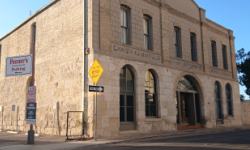
We cannot promise a result. What we can do is tell you what the statutes require, what we recommend and what each choice risks. The first consultation is free and confidential. Our San Antonio office is at 115 Camaron Street, San Antonio, Texas 78205. You can get directions to our office before your visit. For the first meeting, bring what you can of the following, and call even if you cannot find everything.
- The crash report or report number, and any citation
- Photographs and video of the scene, the vehicles and your injuries
- Anything you know about where the driver had been drinking, such as receipts, texts or names
- The driver’s name, license plate and insurance information, and the names of witnesses
- Your own auto insurance policy and declarations page
- Medical records, bills and explanation of benefits statements
- Pay stubs or an employer letter showing missed work
- A calendar of your key dates and deadlines, including any court dates in the criminal case
Frequently Asked Questions
Can I sue a drunk driver even if the driver is not convicted?
Yes. A civil claim does not depend on the criminal case. It is decided on a preponderance of the evidence, which is a lower standard than the beyond a reasonable doubt standard in a criminal trial, and it can go forward if the driver is not charged, is acquitted or pleads to a lesser offense. A final felony conviction after a trial or a guilty plea can be used as evidence in the civil case (Texas Rule of Evidence 803(22)).
What is the difference between my civil claim and the criminal case?
The prosecutor brings the criminal case to punish the driver, and the prosecutor controls it. You bring the civil claim to recover the harm the crash caused, such as medical bills, lost income and pain. The two have separate timelines, and the outcome of one does not decide the other.
What are intoxication assault and intoxication manslaughter?
Intoxication assault is causing serious bodily injury to another person by accident or mistake while intoxicated and operating a motor vehicle in a public place, and it is a third-degree felony (Penal Code Section 49.07). Intoxication manslaughter is causing a death in the same way, and it is a second-degree felony (Section 49.08). Under Section 49.01 a person is intoxicated with an alcohol concentration of 0.08 or more or without the normal use of mental or physical faculties.
Can a bar be responsible for a drunk driving crash?
Possibly. Under Chapter 2 of the Alcoholic Beverage Code, a provider who sells or serves alcohol can be liable if it was apparent when the alcohol was provided that the customer was obviously intoxicated to the extent of presenting a clear danger to himself and others, and the intoxication was a proximate cause of the damages (Section 2.02(b)). The proof usually comes from receipts, card statements, video and witnesses.
Can a friend or party host be responsible?
Usually not for an adult guest. A provider under Chapter 2 is a person who sells or serves alcohol under a license or permit, or otherwise sells it (Section 2.01). The exception is an adult who is 21 or older and not the minor’s parent, guardian or spouse and who knowingly served or provided alcohol that contributed to the intoxication of a minor under 18 (Section 2.02(c)).
Can I get punitive damages in a drunk driving case?
Texas calls them exemplary damages. They require proof of fraud, malice or gross negligence by clear and convincing evidence and a unanimous jury (Civil Practice and Remedies Code Section 41.003). They are usually capped, but the cap does not apply to claims based on conduct described in certain felony statutes, which include intoxication assault and intoxication manslaughter (Section 41.008). They are never automatic, so a lawyer should evaluate the facts.
What if the driver was working or coming from a work event?
The driver’s employer may be responsible if the driver was acting in the course of the job, which can include driving a company vehicle or traveling for work. Whether it applies to a work party or a client dinner depends on the facts, and employer insurance can add a source of recovery.
What if I was a passenger and knew the driver had been drinking?
You can still have a claim, but the defendants will argue that you share the fault. A claimant found more than 50 percent responsible cannot recover, and a lower percentage reduces the award by that percentage (Civil Practice and Remedies Code Sections 33.001 and 33.012). The evidence on what you knew and what you could have done decides how much, if anything, the argument reduces.
What if the drunk driver has no insurance or only minimum coverage?
Your own insurance may help. Texas requires auto liability insurers to include uninsured and underinsured motorist coverage unless the named insured rejects it in writing (Insurance Code Section 1952.101), and the minimum liability limits are only $30,000 for one person (Transportation Code Section 601.072). Underinsured coverage pays the damages you are legally entitled to collect from the driver, within your policy limit and reduced by what the driver’s insurer pays (Insurance Code Section 1952.106). A bar’s insurance can be another source in a dram shop claim.
What if the drunk driver fled the scene?
Leaving the scene of a crash that injured someone is a criminal offense (Transportation Code Sections 550.021 and 550.023), but it does not pay your bills. If the driver is never identified, uninsured motorist coverage requires physical contact between that vehicle and you or your property (Insurance Code Section 1952.104), so keep your clothing, photographs of the impact and anything left behind at the scene.
What evidence matters most?
The crash report, the DWI investigation and test results, video, and proof of where the driver had been drinking, such as receipts and card statements. Businesses overwrite video, and agencies keep some recordings for a limited time, so a lawyer can send preservation letters promptly. Do not repair or sell your vehicle until it has been photographed and inspected.
How long do I have to file, and what can I recover?
The general deadline to file suit is two years from the crash, or from the date of death if someone was killed (Civil Practice and Remedies Code Section 16.003). A claim can include past and future medical care, lost income and reduced earning capacity, pain, mental anguish, impairment and disfigurement, and property damage. Medical bills are limited to what was actually paid or incurred (Section 41.0105), and any share of fault assigned to you reduces the total. A family that has lost someone may have claims of its own.
What should I bring to the first meeting about a drunk driving accident?
Bring the crash report or report number, photographs and video, anything you know about where the driver had been drinking, the driver’s information and witness names, your own auto policy, medical records and bills, proof of missed work, and any court dates in the criminal case. Call even if some records are missing.
Talk With a San Antonio Drunk Driving Accident Attorney
Bar video is recorded over, agencies do not keep every recording and the insurers will already be building their files. Speak with a San Antonio car accident attorney at Barton & Associates before you give a statement or sign anything.
Call our San Antonio office at 210-500-0000 or complete the online Free Consultation form to schedule a confidential meeting about your drunk driving accident claim. The office is at 115 Camaron Street, San Antonio, Texas 78205.
Main Category: Personal Injury
Practice Area Category: Motor Vehicle Accidents
Barton & Associates, Attorneys at Law
115 Camaron St, San Antonio, TX 78205
Office: 210-500-0000