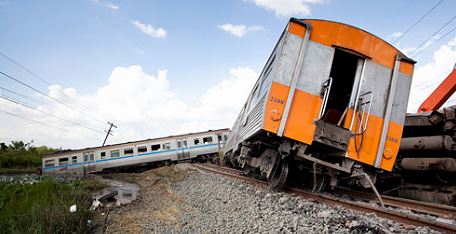
Tracks of Tragedy: Railroad (FELA) & Crossing Accidents in Austin, Texas
The whistle blows. The crossing gates descend. For most of us, it’s a brief delay. But for railroad workers and those who live near the tracks, trains present daily risks. A faulty crossing gate. A train that fails to sound its horn. A workplace injury that leaves a railroader unable to work. When railroad negligence causes injury, the consequences can be devastating—and the legal remedies are unlike any other personal injury claim.
At Barton & Associates, Attorneys at Law, we represent railroad workers and accident victims across Central Texas in claims under the Federal Employers Liability Act (FELA) and railroad crossing accident cases. From the rail lines that run through Austin to the crossings in Round Rock and the yards in Temple, we understand the unique dangers of the railroad industry. Our attorneys have spent decades fighting for the rights of railroad workers and those injured at railroad crossings.
We know that FELA cases are different from ordinary workers’ compensation claims. The standard of proof is lower, the damages are broader, and the railroad’s defenses are limited. We know how to investigate railroad accidents, hold railroads accountable for unsafe conditions, and build cases that get injured workers and accident victims the compensation they deserve.
If you or a loved one has been injured in a railroad accident, you are not alone. Let us help you seek justice.
Understanding FELA: The Federal Employers Liability Act
The Federal Employers Liability Act (FELA) is a federal law that protects railroad workers injured on the job. Unlike state workers’ compensation systems, FELA allows injured workers to sue their employer for negligence—and to recover full damages.
Who Is Covered:
- Railroad employees
- Yard workers
- Train crews (engineers, conductors, brakemen)
- Maintenance workers
- Signal workers
- Track workers
What Makes FELA Different:
- No workers’ compensation: FELA is a fault-based system, not no-fault
- Lower standard of proof: The railroad is liable if its negligence played any part in causing the injury
- Full damages: You can recover pain and suffering, emotional distress, and future lost earnings
- No caps: Unlike state workers’ comp, there are no caps on benefits
For railroad workers across Central Texas, FELA provides protections that state workers’ compensation does not.
What Is the Federal Employers Liability Act (FELA)?
The Federal Employers Liability Act (FELA) is a federal law enacted in 1908 to protect railroad workers injured on the job. It allows railroad employees to sue their employers for negligence and recover full damages.
Key Features of FELA:
- Fault-based: You must prove the railroad was negligent
- Low standard of proof: The railroad is liable if its negligence played any part in causing the injury—even 1%
- Full damages: You can recover medical expenses, lost income, pain and suffering, and emotional distress
- No caps: Unlike state workers’ comp, there are no limits on recovery
- Jury trial: You have the right to a jury trial
Who Is Covered:
- All railroad employees
- Full-time, part-time, and temporary workers
- Workers injured on the job or while performing work-related duties
For those in the Austin area, FELA provides a powerful remedy for injured railroad workers.
How to Prove a FELA Claim
Proving a FELA claim requires showing that the railroad was negligent and that its negligence caused your injury.
Step 1: Establish the Railroad’s Duty
Railroads have a duty to provide a safe workplace. This includes:
- Providing safe equipment
- Maintaining safe track and facilities
- Providing adequate training
- Enforcing safety rules
- Providing adequate staffing
Step 2: Prove Negligence
You must show that the railroad breached its duty. Common examples:
- Defective equipment (brakes, couplings, handrails)
- Unsafe track conditions
- Inadequate training
- Understaffing leading to excessive hours
- Failure to enforce safety rules
Step 3: Prove Causation
Under FELA, you need only show that the railroad’s negligence played any part—even the slightest part—in causing your injury. This is a much lower standard than in ordinary negligence cases.
Step 4: Document Your Damages
- Medical expenses
- Lost wages
- Pain and suffering
- Emotional distress
- Loss of earning capacity
- Future medical needs
For railroad workers across Central Texas, proving a FELA claim requires a thorough investigation and an attorney who understands the unique standards of FELA.
Common Railroad Worker Injuries
Railroad work is dangerous. Workers face daily risks from heavy equipment, moving trains, and hazardous materials.
Common Injuries:
- Back and Spinal Injuries: Heavy lifting, slips and falls, jolting movements
- Traumatic Brain Injuries: Falls, being struck by equipment
- Cumulative Trauma: Carpal tunnel, hearing loss, repetitive stress injuries
- Amputations: Caught in machinery, coupling accidents
- Burns: Electrical burns, chemical burns, steam burns
- Fractures: Falls, being struck by objects
- Occupational Diseases: Exposure to diesel exhaust, asbestos, silica, chemicals
What You Must Prove:
- The railroad’s negligence caused or contributed to your injury
- Even if you were partially at fault, you can recover (reduced by your percentage of fault)
For those in the Austin area, railroad worker injuries often require expert testimony from medical professionals, engineers, and railroad safety experts.
Railroad Crossing Accidents
Every year, hundreds of people are killed or injured at railroad crossings. When a crossing is unsafe—faulty gates, inadequate warnings, obstructed views—the railroad can be held liable.
Common Crossing Hazards:
- Malfunctioning crossing gates
- Inadequate warning signals
- Overgrown vegetation blocking visibility
- Poorly maintained crossings
- Trains failing to sound horns
- Lack of proper signage
Who Is Liable:
- The railroad company
- The entity responsible for maintaining the crossing (state, county, city)
- The train operator
What You Must Prove:
- The crossing was unsafe
- The railroad (or other entity) knew or should have known of the hazard
- The hazard caused the accident
- You suffered damages
For families across Central Texas, crossing accident cases require a thorough investigation of the crossing’s history, maintenance records, and any prior complaints.
The FELA Standard of Proof
One of the most important features of FELA is its low standard of proof. Unlike ordinary negligence cases, where the plaintiff must prove that the defendant’s negligence was the proximate cause, FELA requires only that the railroad’s negligence played any part in causing the injury.
The “Featherweight” Standard:
- The railroad’s negligence need only be a cause—not the sole cause
- Even 1% fault on the part of the railroad is enough for liability
- Contributory negligence is not a bar—your recovery is simply reduced by your percentage of fault
Why It Matters:
This low standard means that FELA cases are more favorable to injured workers than ordinary negligence cases. Your attorney can focus on proving that the railroad was negligent in any way, rather than proving that negligence was the primary cause.
For railroad workers across Central Texas, the FELA standard of proof is a powerful tool.
Damages Under FELA
Unlike state workers’ compensation, which provides limited benefits, FELA allows injured workers to recover full damages.
Types of Damages:
- Medical Expenses: Past and future medical care
- Lost Wages: Past and future lost income
- Loss of Earning Capacity: If you cannot return to your job
- Pain and Suffering: Physical pain and mental anguish
- Emotional Distress: Depression, anxiety, PTSD
- Loss of Enjoyment of Life: Inability to participate in activities you once enjoyed
No Caps:
Unlike many personal injury cases, there are no caps on damages under FELA.
For those in the Austin area, FELA provides the full range of damages available in any personal injury case.
FELA vs. Workers’ Compensation
Many workers injured on the job are covered by workers’ compensation. Railroad workers are different. They are covered by FELA.
Workers’ Compensation:
- No-fault (you do not need to prove negligence)
- Limited benefits (medical expenses, lost wages)
- No pain and suffering
- No jury trial
- Caps on benefits
FELA:
- Fault-based (you must prove negligence)
- Full damages (medical, lost wages, pain and suffering)
- Jury trial
- No caps
For railroad workers across Central Texas, FELA provides significantly greater compensation than workers’ compensation.
Frequently Asked Questions About Railroad (FELA) & Crossing Accidents in Austin, Texas
When railroad workers and accident victims come to our office—whether from Austin’s neighborhoods, the suburbs to the north and south, or the Hill Country communities—they often have questions about FELA and crossing accidents. Here are the answers to the most common inquiries we receive.
What is FELA?
The Federal Employers Liability Act (FELA) is a federal law that allows railroad workers to sue their employers for negligence when they are injured on the job.
Who is covered by FELA?
All railroad employees—train crews, yard workers, maintenance workers, signal workers, and track workers—are covered by FELA.
What is the statute of limitations for FELA claims?
You generally have three years from the date of injury to file a FELA claim. For occupational diseases, the clock starts when you discover the injury.
What is the standard of proof under FELA?
Under FELA, you need only show that the railroad’s negligence played any part in causing your injury. This is a much lower standard than in ordinary negligence cases.
What damages can I recover under FELA?
You can recover medical expenses, lost wages, loss of earning capacity, pain and suffering, emotional distress, and loss of enjoyment of life. There are no caps.
What is the difference between FELA and workers’ compensation?
Workers’ comp is no-fault but provides limited benefits. FELA requires proof of negligence but provides full damages, including pain and suffering.
Do I need an attorney for a FELA or crossing accident claim?
Yes. FELA cases are complex, and railroads have teams of lawyers and experts. An experienced FELA attorney can help you navigate the process and recover the compensation you deserve.
Why Barton & Associates for Railroad (FELA) & Crossing Accidents in Austin
Railroad cases require attorneys who understand the unique laws that govern the industry—FELA, the Federal Railroad Safety Act, and the regulations of the Federal Railroad Administration. Our attorneys have spent decades representing railroad workers and crossing accident victims across Central Texas.
We know the local rail lines, the crossings, and the hazards. We know the experts who can prove causation. And we know how to build a case that gets you the compensation you deserve.
Take the First Step Toward Justice
If you are a railroad worker injured on the job, or if you or a loved one has been injured in a railroad crossing accident, do not wait. The statute of limitations is strict. Evidence disappears. The sooner you have an experienced attorney on your side, the sooner you can begin the process of seeking justice.
Contact our Austin office today at 512-THE-FIRM (843-3476) to speak with an experienced railroad accident attorney about your case. You can also complete the online Free Consultation form on our website to schedule a confidential meeting. Please note, on-site consultations are by appointment only. We look forward to helping you seek the justice you deserve.
Main Category: Personal Injury Austin
Practice Area Category: Transportation & Mass Torts
Barton & Associates, Attorneys at Law
316 W 12th St Suite 400, Austin, TX 78701
Office: 512-THE-FIRM (843-3476)