


Seriously injured in an Austin accident? Every hour you delay securing experienced legal representation, critical accident evidence disappears, witness memories fade and insurance carriers strengthen their compensation minimization strategy against you. Barton & Associates’ Personal Injury Division has recovered millions for seriously injured victims throughout Travis County—from MoPac and IH-35 to Ben White Boulevard and Slaughter Lane—delivering relentless, maximum-compensation advocacy backed by decades of Central Texas personal injury litigation excellence and unwavering victim commitment.
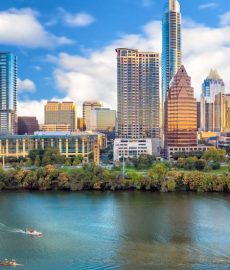







Austin’s status as America’s fastest-growing major city brings extraordinary personal injury consequences—skyrocketing construction accident rates, overwhelmed highway infrastructure generating catastrophic collision volumes and aggressive insurance carriers exploiting injured victims’ unfamiliarity with Texas personal injury law throughout Travis County. Barton & Associates’ Austin Personal Injury Division was built specifically to counter every one of those challenges with unmatched legal firepower. Our Austin Personal Injury Division has recovered substantial verdicts and maximum settlements for seriously injured clients across Travis County, including thriving communities in Pflugerville, Round Rock, Hutto and Lockhart, appearing before Travis County civil courts and federal Western District of Texas tribunals throughout Central Texas. Barton & Associates delivers certified trial mastery, construction accident liability specialization, relentless insurance company opposition and an unconditional commitment until we win your maximum recovery.
In Austin’s rapidly evolving personal injury landscape, the credentials, courtroom experience and insurance litigation sophistication of your legal team will directly determine the compensation difference between financial recovery and financial devastation. At Barton & Associates, our Austin Personal Injury legal team strategically unites board-certified trial specialists, accomplished insurance litigation attorneys, construction accident liability experts and dedicated victim advocates—each delivering independently verified courtroom excellence and genuine compassionate commitment to every seriously injured Travis County client we represent. Our attorneys maintain active State Bar of Texas licensure, hold distinguished standing within the Austin Bar Association and regularly appear before Travis County civil courts handling catastrophic injury, wrongful death and complex multi-party liability matters. From Westlake Hills and Bee Cave to Taylor, Elgin and Smithville, our personal injury team pursues every seriously injured Austin victim’s maximum financial recovery relentlessly.
At Barton & Associates, our Austin Personal Injury mission is singular and non-negotiable: dismantle every insurance industry tactic, corporate defense strategy and institutional obstacle standing between seriously injured Travis County victims and the complete, maximum financial compensation Texas law entitles them to recover. Austin’s unprecedented construction explosion, technology campus commuter congestion along US-183 and Loop 360 and rapidly expanding entertainment district foot traffic generate devastating, life-altering injuries for hardworking families across Georgetown, Cedar Park, Lago Vista and Bee Cave communities daily. Barton & Associates deploys board-certified trial expertise, aggressive multi-party liability pursuit and sophisticated insurance counter-intelligence strategy on behalf of every seriously injured Austin victim. Every negligent driver, reckless property owner and careless contractor facing a Barton & Associates personal injury claim faces our absolute maximum compensation pursuit—without hesitation.
Austin injury victims navigating the aftermath of catastrophic accidents deserve a personal injury attorney whose compensation results are independently verifiable, genuinely substantial, and directly reflective of maximum financial justice — not advertising exaggerations designed to exploit vulnerable accident victims during their most desperate moments. At Barton & Associates, our Austin Personal Injury Division has constructed a commanding, documented track record of significant verdicts, substantial negotiated settlements, and maximum compensation recoveries for seriously injured clients throughout Travis County and the greater Central Texas region, including surrounding communities of San Marcos, Wimberley, Lockhart, and Burnet. Our aggressive multi-party liability strategy, construction industry negligence expertise, and authoritative mastery of Texas personal injury law have consistently delivered transformative financial outcomes for Central Texas injury victims navigating Austin’s increasingly dangerous and densely populated accident landscape.
Austin’s unprecedented construction boom — transforming neighborhoods from East Riverside and Johnston Terrace through the rapidly developing Domain Northside and North Lamar corridors — has generated a dramatic surge in catastrophic construction accident injuries affecting both workers and innocent bystanders throughout Travis County. Our Austin construction accident attorneys have successfully recovered substantial compensation for crane collapse victims, scaffold fall survivors, electrocution injury clients, and construction debris impact victims through aggressive general contractor negligence pursuit, subcontractor liability identification, OSHA violation documentation, and defective construction equipment product liability actions — consistently delivering maximum financial recoveries that workers’ compensation limitations alone could never adequately provide for seriously injured Central Texas construction accident victims and their devastated families.
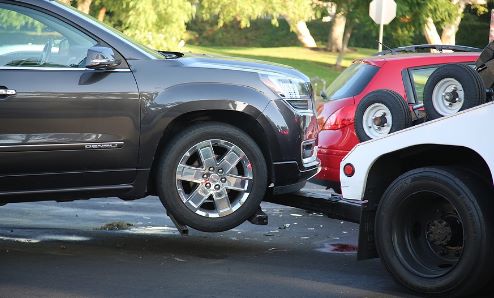
Austin’s chronically congested IH-35 expansion corridor, notoriously dangerous US-183 technology commuter route, and heavily trafficked SH-71 and FM-1431 intersection networks generate catastrophic auto accident injuries that permanently alter Travis County victims’ lives through devastating physical trauma, permanent neurological disabilities, and overwhelming lifetime medical care expenses. Our Austin auto accident attorneys have recovered significant compensation for rear-end collision survivors, wrong-way accident victims, distracted driving injury clients, and catastrophic intersection collision survivors across Hyde Park, Mueller, Onion Creek, and surrounding Williamson County and Hays County communities throughout greater Central Texas.
Barton & Associates has successfully recovered significant wrongful death compensation for devastated Travis County families — providing meaningful financial accountability against negligent drivers, reckless construction operators, and careless property owners whose preventable actions permanently and irreversibly destroyed Austin families from Tarrytown and Clarksville through surrounding communities of Bastrop, Giddings, and Lampasas throughout Central and East Texas.
Our Austin personal injury team has successfully recovered substantial compensation for premises liability victims — including construction site bystander injuries, retail establishment slip and fall incidents, apartment complex negligent security assaults, and dangerous property condition claims across Austin’s Sixth Street entertainment district, South Congress commercial corridor, and rapidly expanding East Austin mixed-use development communities throughout Travis County.
Our Austin proven results track record embodies something profoundly more meaningful than impressive financial recovery statistics — it represents an enduring, unconditional commitment to every seriously injured Travis County victim whose maximum financial recovery, physical rehabilitation, and family’s long-term security Barton & Associates has been privileged to pursue and protect. From Travis County civil courts through the Western District of Texas federal courts, our personal injury attorneys are consistently recognized as Austin’s most aggressive, strategically sophisticated, and genuinely results-driven victim advocates across every personal injury practice category. When Austin injuries demand maximum compensation — Barton & Associates pursues it completely and relentlessly.
When Austin’s most aggressive insurance carriers, corporate construction defendants, and institutional liability opponents deploy their full legal resources to systematically minimize your personal injury compensation, defeating that formidable institutional opposition demands a comprehensively resourced, strategically superior powerhouse legal team with the certified expertise, investigative depth, and Central Texas market intelligence to maximize every available dollar of compensation you rightfully deserve under Texas personal injury law. At Barton & Associates, our Austin Personal Injury Division assembles precisely that — an extensively resourced team of board-certified trial specialists, construction liability attorneys, advanced accident reconstructionists, medical evidence analysts, and dedicated victim advocates working in coordinated strategic alignment to deliver dominant compensation outcomes for seriously injured victims throughout Travis County and the greater Central Texas region.
The foundational strength distinguishing the Barton & Associates Austin Personal Injury legal team from competing Central Texas injury firms is our roster of board-certified personal injury trial specialists — attorneys holding independently verified Texas Board of Legal Specialization certification whose maximum compensation strategies, insurance negotiation mastery, and Travis County civil courtroom command have been rigorously confirmed through demanding peer-review processes. For Austin accident victims confronting catastrophic construction injuries, multi-vehicle highway collisions, or devastating wrongful death losses involving complex multi-party liability structures, this certification delivers verifiable, independently confirmed assurance of exceptional personal injury trial mastery that self-proclaimed expertise and general practice credentials cannot credibly replicate for seriously injured Central Texas victims and their families.
What most powerfully differentiates the Barton & Associates Austin personal injury team from all competing Central Texas injury firms is our dedicated construction accident and worksite liability investigation unit — a specialized investigative capability uniquely essential for Austin’s unprecedented construction boom environment. Our specialized team includes licensed construction site accident reconstructionists, OSHA compliance violation analysts, structural engineering liability consultants, crane and heavy equipment failure specialists, and general contractor negligence documentation experts who collaborate in precise strategic alignment with our trial attorneys to systematically pursue maximum liability against negligent general contractors, subcontractors, equipment manufacturers, and property developers across Austin’s most active construction corridors from the Domain and Riverside Drive redevelopment zones through East Cesar Chavez, North Loop, and rapidly expanding Far Northwest Austin and Steiner Ranch development communities.
Powering every successful Barton & Associates Austin personal injury compensation recovery is our advanced medical evidence and economic damages documentation infrastructure — comprising independent medical examination specialists, traumatic brain injury documentation consultants, life care planning professionals, vocational rehabilitation analysts, and forensic economic damages calculation experts who systematically build the most comprehensively documented, financially maximized compensation cases possible for catastrophically injured victims across Austin, Cedar Park, Leander, Liberty Hill, and surrounding Williamson County and Burnet County communities throughout Central Texas.
Barton & Associates maintains a uniquely powerful insurance counter-intelligence and negotiation capability — attorneys and legal professionals with deep insider knowledge of how Austin’s most aggressive insurance carriers internally evaluate, reserve, negotiate, and strategically defend personal injury claims throughout Travis County. This institutional insurance intelligence translates directly into more strategically constructed demand packages, more effectively countered bad faith settlement tactics, and more persuasively built jury trial presentations for seriously injured victims across Austin’s South Lamar, Barton Hills, Zilker, and surrounding Hays County and Caldwell County communities throughout the greater Central Texas personal injury landscape.
From initial accident scene evidence preservation through final Travis County civil court judgment or maximum negotiated settlement resolution, Barton & Associates deploys the complete professional depth, certified trial mastery, construction liability expertise, and insurance counter-intelligence resources that seriously injured Austin victims deserve when their physical recovery, financial security, professional future, and family’s long-term wellbeing are genuinely and irreversibly at stake. Our powerhouse personal injury legal team serves seriously injured victims across Austin, Georgetown, Pflugerville, Bastrop, Lockhart, and every community throughout greater Travis County with unmatched professional intensity and genuine Central Texas compassion. When Austin insurance corporations minimize — Barton & Associates maximizes completely and relentlessly.
Austin’s extraordinarily discerning, highly educated population evaluates personal injury legal representation against an exceptionally demanding professional standard — one that extends meaningfully beyond courtroom performance to encompass genuine communication transparency, culturally aware client service, verified peer recognition, and authentic civic investment that collectively distinguish truly exceptional victim advocacy from merely competent legal representation. At Barton & Associates, our Austin Personal Injury Division has meticulously earned that exceptional standard — victim by victim, recovery by recovery, and verdict by verdict — across Travis County’s most demanding civil courts and throughout Central Texas’s most consequential and financially significant personal injury matters over decades of dedicated service.
Austin’s technology professionals, university researchers, creative industry entrepreneurs, and rapidly growing diverse residential communities facing serious personal injury matters deserve a client experience specifically calibrated to their sophisticated communication expectations, professional schedule demands, and technology-forward lifestyle preferences. At Barton & Associates, every seriously injured Austin Personal Injury client across neighborhoods from Tarrytown and Pemberton Heights to Rosewood, Govalle, and Windsor Park receives dedicated senior attorney access, real-time secure digital case status communications, proactive strategic update notifications, and a fully committed legal team that genuinely understands the profound professional disruption, reputational sensitivity, and financial complexity accompanying serious personal injury matters within Austin’s interconnected technology and creative professional communities. Our technology-forward client service philosophy transforms Austin’s most overwhelming injury recovery experience into a professionally managed, clearly communicated, and strategically controlled compensation pursuit.
Barton & Associates Austin Personal Injury attorneys have earned distinguished recognition from the Austin Bar Association, achieved consistent selection for prestigious legal peer-review excellence distinctions including Super Lawyers and Best Lawyers in America designations, and maintained exceptional verified client satisfaction ratings across Google Business Profile, Avvo, and Martindale-Hubbell — the three most authoritative and widely consulted attorney credibility evaluation platforms influencing Austin personal injury hiring decisions among seriously injured Central Texas victims and their families. Our senior personal injury attorneys regularly present at Austin Bar Association continuing legal education programs, contribute authoritative analysis on evolving Texas negligence law and construction liability developments, and actively mentor emerging Travis County personal injury practitioners — collectively cementing Barton & Associates’ standing as Austin’s most professionally distinguished and peer-validated Personal Injury Division.
Austin injury victims and their families consistently identify complete communication transparency as their most critical personal injury attorney service concern — specifically whether their chosen legal team will communicate honestly about case liability strength, realistic compensation projections, strategic challenges, and case timeline expectations throughout their entire personal injury matter. At Barton & Associates, radical communication transparency and strategic case honesty are foundational, non-negotiable client service commitments. Seriously injured clients across Travis County, Williamson County, and Bastrop County receive comprehensive, candid strategic assessments — including honest liability evaluations, realistic compensation range projections, and transparent identification of case complexity challenges — at every critical decision point throughout their Austin personal injury matter without misleading optimism or strategic information withholding.
Our exceptional reputation extends genuinely and meaningfully beyond Travis County courtroom performance into Austin’s extraordinarily vibrant, diverse, and rapidly evolving civic community. Barton & Associates actively supports Austin Bar Foundation pro bono personal injury initiatives, contributes to Central Texas legal aid organizations serving underrepresented injury victims across Austin’s Eastern Crescent communities, participates in community construction safety advocacy programs, engages with neighborhood associations across Bouldin Creek, Travis Heights, and Crestview, and maintains authentic long-term civic investment throughout every Austin community we serve. This genuine, sustained commitment reflects the identical foundational values driving every client relationship — unwavering professional integrity, demonstrated maximum compensation accountability, and sincere dedication to complete financial justice for every Austin injury victim regardless of their background or circumstances.
When Travis County residents seriously injured in construction accidents, catastrophic highway collisions, premises liability incidents, or devastating wrongful death tragedies evaluate their personal injury attorney options, Barton & Associates consistently emerges as Austin’s most trusted, peer-validated, and client-celebrated Personal Injury Division. Our verifiable maximum compensation track record, technology-forward culturally aware service experience, radical communication transparency, and genuine Austin community investment make us the clear, confident choice for seriously injured victims and grieving families across Austin, Round Rock, San Marcos, Marble Falls, and the entire greater Central Texas region.
Austin injury victims deserve maximum compensation and extraordinary advocacy. Barton & Associates delivers both — with absolute commitment and without compromise.
Austin’s position at the convergence of IH-35, US-290, and SH-130—three of Central Texas’s most heavily traveled commercial freight corridors—combined with the city’s explosive population growth has created a dramatic surge in catastrophic 18-wheeler and commercial vehicle collisions permanently devastating Travis County families daily. When a negligent trucking corporation’s recklessness irreversibly shatters your life, Barton & Associates responds with immediate, maximum legal force. Our Austin trucking accident attorneys rapidly preserve electronic logging device data, deploy certified accident reconstructionists, subpoena driver qualification and maintenance records, and aggressively pursue federal FMCSA violations, hours-of-service regulation breaches and negligent trucking company entrustment liability for catastrophically injured victims across Pflugerville, Manor, Del Valle and Austin’s most dangerous commercial freight corridors. Under Texas negligence law, every responsible party—trucking corporations, freight brokers, loading contractors, and equipment manufacturers—faces Barton & Associates’ relentless maximum compensation pursuit.
Austin’s unprecedented construction explosion, rapidly expanding technology campus development and surging warehouse and distribution infrastructure growth have created a dramatic workplace injury surge throughout Travis County—where catastrophic fall accidents, crane collapses, electrocution injuries and heavy equipment crushing incidents permanently devastate hardworking Central Texas families at an alarming and accelerating rate. At Barton & Associates, our Austin workplace injury attorneys aggressively pursue every available third-party liability claim, general contractor negligence action and defective equipment product liability lawsuit far beyond inadequate workers’ compensation limitations. Our legal team recovers maximum compensation for construction accident survivors, technology campus worksite injury victims, warehouse distribution center employees and roadway infrastructure workers seriously injured across Austin’s North Burnet corridor, East Fifth Street redevelopment zone, Riverside Drive construction projects and rapidly expanding Hutto, Georgetown and Leander industrial development communities throughout Williamson County.
Austin’s explosive retail expansion, thriving entertainment district growth and rapidly developing mixed-use residential communities have created an increasingly complex premises liability landscape where negligent property owners routinely prioritize profit over visitor safety—leaving seriously injured Travis County victims facing devastating physical consequences and overwhelming financial burdens entirely alone. At Barton & Associates, our Austin premises liability attorneys aggressively hold every negligent property owner completely and financially accountable. Our legal team pursues maximum compensation for slip and fall victims, negligent security assault survivors, apartment complex injury claimants and dangerous structural condition cases across Austin’s Sixth Street entertainment corridor, East Seventh Street mixed-use developments, Domain retail complex, Rainey Street district and rapidly expanding South Congress and North Loop commercial communities throughout Travis County. Our investigators meticulously preserve surveillance footage, secure incident documentation, analyze property maintenance histories and identify prior violation patterns—constructing irrefutable negligence cases against every irresponsible Williamson County, Travis County and Hays County property owner.


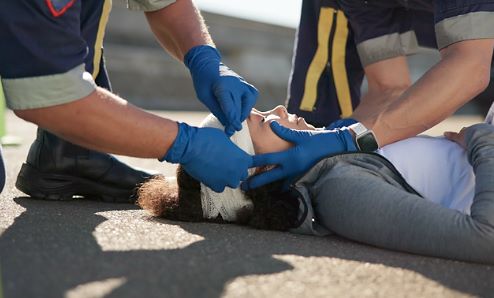

Contact Barton & Associates Austin today for a free, confidential consultation about your legal matter. Complete this form to schedule a Free Consultation, or call us at 512-843-3476 to check immediate attorney availability.
We are selective about the cases we accept because we treat our clients like family—with respect, dignity and unwavering commitment. In return, we expect the same courtesy. We do not tolerate rudeness toward our staff, and we will withdraw representation from any client who exhibits inappropriate behavior, dishonesty or attempts to mislead our team.
FAQ Personal Injury Austin
Workers’ compensation in Texas — when it applies at all, since Texas does not require most private employers to carry it — typically limits an injured worker’s recovery to a statutory schedule of benefits and forecloses a direct negligence lawsuit against the subscribing employer. But construction accidents almost always involve parties beyond the direct employer, and those third parties are fully exposed to tort liability. A general contractor who negligently supervises the work site, a subcontractor whose crew creates a hazardous condition, an equipment manufacturer whose defective crane or scaffold contributes to a fall, and a property developer who imposes unreasonable schedule pressure that bypasses safety protocols can all be sued independently under Texas negligence law regardless of the workers’ compensation relationship. Austin’s unprecedented construction expansion — spanning the Domain corridor, East Riverside redevelopment, and major infrastructure projects along MoPac and US-183 — means these multi-party liability situations arise constantly. We identify every responsible party, pursue every available theory of recovery, and build a complete damages case that reflects not just the immediate medical costs but the long-term impact on the injured worker’s ability to earn a living.
Austin has one of the highest concentrations of rideshare vehicles and shared e-scooters in Texas, and the legal framework governing injury claims involving those vehicles is more complex than a standard car accident. For rideshare collisions involving Uber or Lyft drivers, Texas Insurance Code Chapter 1954 establishes a tiered insurance framework: the applicable coverage depends on whether the driver was logged off the app entirely, logged in but without a passenger request, or actively transporting a passenger. The coverage amounts differ significantly across those states, and determining which applies requires reviewing the driver’s app data at the moment of impact. For e-scooter accidents, the analysis depends on whether the injured party was the scooter rider, a pedestrian struck by a scooter, or a cyclist sideswiped by one. City of Austin regulations govern scooter operators’ obligations, and the platform company may bear liability for equipment maintenance failures or negligent deployment of scooters in high-pedestrian areas like Sixth Street, the UT campus, or the Congress Avenue corridor. We handle both categories and understand how to extract the data and documentation these cases require.
Medical malpractice is a specialized subset of personal injury law governed primarily by Texas Civil Practice and Remedies Code Chapter 74, which imposes procedural requirements that do not exist in ordinary negligence cases. Before filing suit against a physician, hospital, or other health care provider in Travis County, we must serve a formal notice of intent at least 60 days before filing, and within 120 days of filing the lawsuit we must produce an expert report from a qualified medical professional who opines on the applicable standard of care, how the defendant deviated from it, and how that deviation caused the claimed injury. If the report is inadequate, the case can be dismissed with prejudice and the plaintiff may be required to pay the defendant’s attorney fees. These are strict procedural requirements with potentially catastrophic consequences if not followed correctly. The substantive standard is also distinct from ordinary negligence: we must prove the health care provider deviated from the standard of care that a reasonably prudent provider in the same field would have met under the same or similar circumstances, and we rely on credentialed medical experts to establish that standard and its breach. Austin’s medical corridor — Seton, St. David’s, Dell Seton at UT, and the surrounding network of surgical centers and specialty practices — generates medical malpractice matters regularly, and we approach them with the expert infrastructure these cases require.
An accident caused by a driver who was intoxicated opens the door to additional categories of compensation that are not available in an ordinary negligence case. Under Texas Civil Practice and Remedies Code Chapter 41, exemplary or punitive damages may be awarded against a defendant whose conduct constitutes malice or gross negligence — and Texas courts have consistently held that choosing to drive while intoxicated can meet that standard. A conviction or guilty plea by the at-fault driver is admissible and powerful evidence in the civil case. Additionally, if the intoxicated driver was served alcohol by a bar, restaurant, or social host while visibly intoxicated before the crash, Texas Alcoholic Beverage Code Section 2.02 creates a potential dram shop claim against that establishment, providing an additional source of compensation and, typically, a deeper pool of insurance coverage. Austin’s active entertainment districts — Sixth Street, Rainey Street, East Sixth, and the surrounding areas — mean that late-night and early-morning drunk driving collisions are a recurring problem. We evaluate both the direct negligence claim against the driver and any potential dram shop liability against alcohol providers as a standard part of our intake in these cases.
Product liability is a branch of Texas tort law that imposes responsibility on manufacturers, distributors, and sellers for injuries caused by defective products — and it applies regardless of whether the injured person purchased the product or even had a direct relationship with the seller. Texas recognizes three theories of product defect: a manufacturing defect, where the specific unit that caused harm deviated from its intended design; a design defect, where the entire product line is unreasonably dangerous because of how it was engineered; and a marketing defect, also called failure to warn, where the product lacked adequate instructions or warnings about known risks. For vehicle defects — brake failures, defective airbags, steering system failures, tire delamination — these claims can run parallel to an accident case against the at-fault driver, potentially multiplying available recovery. Austin’s active cycling and outdoor lifestyle also generates product defect claims involving e-bikes, recreational equipment, and safety gear. Product liability cases require early evidence preservation — defective products should be kept in their post-accident condition and not repaired or returned — and often depend on engineering experts who can analyze the product and reconstruct how the defect caused the specific injury. We handle these cases from evidence preservation through trial.
Pedestrian and bicycle accident cases in Austin present some of the most serious injury scenarios we handle, because the physics of a collision between a motor vehicle and a person on foot or on a bike almost always produce catastrophic or fatal results. Austin’s rapid growth has outpaced its pedestrian infrastructure, and collisions involving pedestrians and cyclists occur regularly along high-traffic corridors like South Congress, Lamar Boulevard, Airport Boulevard, and the urban sections of MoPac. The legal framework is standard Texas negligence law — we must establish that the driver owed a duty, breached it, and caused the injuries — but the practical challenges include the fact that drivers and their insurers frequently attempt to assign fault to the pedestrian or cyclist, particularly if the person was crossing outside a marked crosswalk or riding without lights. Texas’s modified comparative fault rule under Chapter 33 of the Civil Practice and Remedies Code governs any shared fault reduction, and we aggressively challenge inflated fault assignments. In pedestrian and bicycle fatality cases, we also evaluate whether the City of Austin or TxDOT bears responsibility for dangerous road conditions, inadequate signage, or deficient crosswalk design — which may require filing against a governmental entity under the Texas Tort Claims Act within the shortened notice deadline we described for government claims.
The economic damages component of a personal injury case is not a simple multiplication of current salary times years to retirement. For professionals in Austin’s technology and startup ecosystem, a serious disabling injury may affect not only base salary but unvested equity, bonus eligibility, performance-based compensation, career trajectory within a specialized field, and the loss of a particular professional opportunity that was in progress at the time of injury. Vocational rehabilitation specialists and forensic economists who work with us can quantify the lost value of unvested RSU tranches, interrupted executive compensation arrangements, and diminished future earning capacity in a field that rewards continuous development and seniority. These calculations become exhibits at trial or, more commonly, the foundation for demand packages that push insurers toward realistic settlement valuations. We have handled cases for injured professionals across Austin’s technology sector, creative industry, and university research community, and we understand that cookie-cutter damages presentations leave money on the table in those situations. Every damages model we build is tailored to the injured client’s specific professional situation.
Large public events create premises liability and negligent security exposure for organizers, venue operators, and property owners alike. The applicable framework under Texas law depends on the injured person’s status — most festival attendees and ticket holders are invitees to whom the highest duty of reasonable care applies — and the nature of the harm. Slip and falls from inadequate crowd management infrastructure, injuries from stage collapse or structural failure, assaults that occurred because the event organizer failed to provide adequate security staffing for a foreseeable crowd, and injuries from overcrowding or inadequate emergency egress all present viable negligence claims against the responsible parties. Austin’s vibrant festival and live music landscape — from large-scale events at Zilker Park to regular programming at venues across Red River Street and the broader downtown entertainment district — means these situations are not hypothetical. One important consideration is that large events frequently involve multiple entities — a promoter, a venue operator, a staffing company, a vendor — and identifying every party who bears responsibility requires careful investigation. We look at contracts between those entities, prior incident history at the venue, staffing levels relative to attendance, and whether the organizer took reasonable precautions against foreseeable risks.
Under Texas Civil Practice and Remedies Code Section 16.003, most personal injury claims must be filed within two years of the date the cause of action accrues — which is generally the date of the injury. Missing that deadline permanently bars the claim with very limited exceptions, and Texas courts apply it strictly. But several categories of cases have different deadlines or tolling rules that modify the standard two-year period. Claims against governmental entities require formal pre-suit notice within six months in most circumstances, meaning the effective deadline for government claims is much earlier than two years. Minor children who are injured have a tolled limitations period — the two years begins running when they turn 18, not from the date of injury, which means some childhood injury claims can be pursued into the child’s early adult years. The discovery rule tolls limitations in cases where the injury was inherently undiscoverable at the time it occurred, which arises in toxic exposure cases where an illness develops years after the exposure event. Medical malpractice cases under Chapter 74 have a two-year limitations period but also an absolute ten-year statute of repose that can cut off claims regardless of when the patient discovered the negligence. We evaluate the applicable deadline in every case during our initial consultation, because a client who contacts us two years and a month after an accident may be permanently out of options.
We prepare every case as though it will go to trial, because that preparation is what creates the leverage that produces favorable settlements — and because some cases genuinely need to be tried to achieve a fair result. Our Austin personal injury attorneys appear in the Travis County district courts handling civil matters and, when the case requires it, in the Western District of Texas federal court in Austin. Founding attorney Gary J. Barton has tried over 100 jury trials and holds board certification in criminal law from the Texas Board of Legal Specialization — a credential earned by fewer than 3% of Texas attorneys that reflects a demonstrated command of jury trial advocacy. The entire firm is built around the proposition that being genuinely prepared to try a case changes how insurance carriers and opposing counsel respond throughout the litigation. Insurers who know a firm routinely settles before trial value cases differently than those who know a firm will walk into a courtroom and present the case to a jury. If you were seriously injured in Austin or anywhere in Travis County and want to speak with an attorney — not a call center — call us at 512-843-3476. Consultations are free, confidential, and conducted by a senior member of our legal team.



316 W 12th St Suite 400, Austin, TX 78701

5110 Wilkinson Dr Suite 210, Corpus Christi, TX 78415

Talk to us now. Tell us about your case below for a free confidential consultation. We will reply or call to confirm. You can also call the office to check immediate attorney availability.
