Focus Areas
Injured in a San Antonio Car Crash? Let an Auto Accident Attorney in San Antonio Fight for Your Recovery.
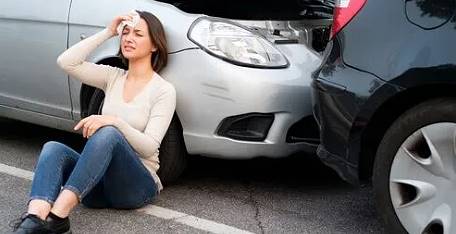
A sudden car accident in San Antonio can shatter your life in an instant. One moment, you’re navigating the interchange of I-10 and I-35 or heading down a local street; the next, you’re facing pain, mounting medical bills, lost wages, and a complex insurance claim. In the aftermath of a collision, you need more than just legal advice—you need a dedicated advocate who understands Texas law, the tactics of insurance adjusters, and the true cost of your suffering.
At Barton & Associates, Attorneys at Law, a San Antonio personal injury lawyer has spent decades exclusively fighting for injured Texans. We focus our entire practice on personal injury law, giving us the deep expertise and tenacity required to secure maximum compensation for those harmed by negligent drivers. We know that a motor vehicle accident isn’t just a case file—it’s a life-altering event for you and your family, and we are here to shoulder the legal burden so you can focus on healing.
Common Types of Motor Vehicle Accidents We Handle in Texas
Our experienced San Antonio legal team is equipped to manage the full spectrum of motor vehicle collision cases, each with its own unique challenges:
- Car Accidents: From rear-end collisions at a San Antonio stoplight to high-speed, multi-vehicle pileups on Loop 1604, we handle all types of passenger vehicle crashes.
- Trucking Accidents (18-Wheelers & Commercial Vehicles): These cases are a critical area of our practice. San Antonio is a major logistics hub, and accidents involving big rigs often result in catastrophic injuries due to their immense size and weight. We have the resources to investigate trucking company logs, maintenance records, and driver training to build a powerful case.
- Motorcycle Accidents: Motorcyclists are extremely vulnerable on Texas roads. We understand the biases they face and aggressively combat them, fighting for fair compensation for road rash, broken bones, traumatic brain injuries, and worse.
- Rideshare Accidents (Uber & Lyft): Determining insurance coverage in a crash involving Uber or Lyft is notoriously complex, depending on whether the driver was logged in, awaiting a fare, or transporting a passenger. We navigate these layered insurance policies to find all available sources of recovery.
- Pedestrian & Bicycle Accidents: Victims walking or cycling in San Antonio have little protection against a multi-ton vehicle. We are fierce advocates for pedestrians and cyclists, often fighting against claims that wrongly blame the victim.
- Drunk Driving Accidents (DUI): We hold intoxicated drivers fully accountable. Furthermore, under Texas Dram Shop Law, we may also pursue a claim against the bar, restaurant, or store that overserved alcohol to the visibly intoxicated driver who caused your harm.
- Hit-and-Run Accidents: If you were injured by a driver who fled the scene, you are not without options. We work to identify the driver through investigation and pursue compensation through your own uninsured motorist (UM) coverage.
- E-Scooter Accidents: San Antonio’s rental e-scooter programs have created a new category of serious injury claims, from collisions with vehicles to defective scooter malfunctions. We hold negligent drivers, rental companies, and the city accountable when a scooter rider is hurt.
What to Do After a Car Accident in San Antonio: A Critical Guide
Your actions immediately following a crash can significantly impact your health and the strength of your future claim.
- Seek Medical Attention Immediately: This is your absolute first priority. Some serious injuries, like whiplash or internal bleeding, may not be apparent right away due to shock and adrenaline. A medical record creates a vital link between the accident and your injuries.
- Call the Police: A official Texas Peace Officer’s Report (CR-3) is a key piece of evidence. Do not rely on the other driver to “work it out privately.”
- Document the Scene: If you are able, take photos and videos of vehicle damage, license plates, road conditions, traffic signs, and your visible injuries. Get contact information from witnesses.
- Be Cautious in Conversations: Do not admit fault or speculate about what happened. Be polite but limit your discussion with the other driver to exchanging insurance information.
- Do NOT Give a Recorded Statement to the Other Insurance Company: The adjuster for the at-fault driver is not on your side. Their goal is to get you to say something they can use to minimize or deny your claim. Politely decline and direct them to your attorney.
- Contact a San Antonio Car Accident Lawyer Before Speaking with Any Insurance Company. This includes your own insurer. We can handle all communication to protect your rights from the start.
How Our San Antonio Car Accident Attorneys Build Your Claim for Maximum Value
At Barton & Associates, we don’t just file paperwork. We conduct a thorough, independent investigation to build an undeniable case for full and fair compensation.
- Immediate Evidence Preservation: We swiftly act to secure crash scene footage, traffic camera videos, dashcam footage, and black box data from vehicles before it is lost or overwritten.
- Comprehensive Investigation: Our team works with accident reconstruction experts, safety specialists, and medical professionals to establish exactly how the crash happened and the full extent of your injuries.
- Damages Calculation: We calculate all your current and future losses, including:
- Economic Damages: Medical bills (ER visits, surgery, physical therapy, future care), lost wages, loss of future earning capacity, and property damage.
- Non-Economic Damages: Physical pain and suffering, mental anguish, emotional distress, disfigurement, and loss of enjoyment of life.
- Aggressive Negotiation: Insurance companies recognize that our firm is fully prepared to go to trial. We use this leverage to negotiate from a position of strength, consistently securing settlements that reflect the true value of our clients’ cases.
Why Choose Barton & Associates After Your San Antonio Auto Accident?
- Deep Local Knowledge & Courtroom Experience: Our attorneys know the Bexar County courthouses, local judges, and Texas procedural rules intimately. We are respected litigators, not just settlement negotiators.
- A Record of Proven Results: We have a history of securing multi-million dollar verdicts and settlements for our clients across Texas.
- Client-Centered, Compassionate Approach: You will work directly with your attorney, not a case manager. We keep you informed at every step, answer your questions in plain English (or Spanish), and treat you with the dignity and respect you deserve.
The Barton & Associates Advantage: We Handle the Insurance Company So You Don’t Have To
From the moment you hire us, we become your shield. We manage all calls, letters, and negotiations with the insurance adjusters. Our goal is to lift the burden of legal stress from your shoulders, allowing you to dedicate your energy to your physical and emotional recovery. We are skilled at cutting through the delays and lowball tactics to pursue the justice and financial security you need to move forward.
Frequently Asked Questions
Q: How does a trucking or 18-wheeler accident case in San Antonio differ from a standard car accident claim?
A: Trucking cases are fundamentally different from standard car accident claims in complexity, the number of potentially liable parties, and the evidence that exists and must be preserved immediately. A commercial trucking company is a sophisticated entity with legal counsel, insurers, and accident response teams who may be dispatched to the scene before you have left the hospital. The truck itself carries a black box — the Electronic Control Module — that records speed, brake application, engine data, and hours of operation in the period leading up to the crash. That data can be overwritten within days if a litigation hold is not issued immediately. Federal Motor Carrier Safety Administration regulations impose specific requirements on commercial carriers governing driver hours-of-service, vehicle maintenance, pre-trip inspections, drug and alcohol testing, and driver qualification files — all of which produce documentary records that must be obtained through discovery. Liability in a trucking case can extend beyond the driver to include the trucking company, the company that loaded the cargo, the lessor of the vehicle, and the maintenance contractor — each of which is a separate defendant with potentially separate insurance coverage. San Antonio sits at the intersection of several major freight corridors including I-35, I-10, and Loop 410, making it one of the most active commercial trucking markets in Texas. The investigative and legal resources required to handle a serious trucking case properly from day one are substantially greater than what a standard car accident claim requires.
Q: Who can be held liable when an Uber or Lyft driver causes an accident in San Antonio?
A: Rideshare accident liability in Texas is determined primarily by the driver’s status within the app at the time of the crash, which controls which insurance coverage applies and in what amount. When the driver is not logged into the app at all, only the driver’s personal auto insurance applies. When the driver is logged in and waiting for a ride request — the period Uber and Lyft call Period 1 — both companies provide contingent liability coverage of fifty thousand dollars per person and one hundred thousand dollars per accident, but only if the driver’s personal insurance does not apply. When the driver has accepted a ride request or has a passenger in the vehicle — Periods 2 and 3 — Uber and Lyft each carry one million dollars in liability coverage per occurrence. The practical challenge is that rideshare companies dispute their own coverage status aggressively and the determination of which period applies at the exact moment of a crash requires documentation from the app’s internal records, which must be obtained through formal legal process. Beyond the driver and the rideshare company, other potentially liable parties include a third-party driver who caused the collision, a vehicle manufacturer if a defect contributed to the accident, or a government entity responsible for a road condition. We investigate all available coverage sources simultaneously from the moment we are retained in a rideshare case because the coverage that applies determines the total recovery available to our client.
Q: What is Texas’s dram shop law and can a bar or restaurant be held responsible if a drunk driver injured me?
A: Texas Alcoholic Beverage Code Section 2.02 — the Texas Dram Shop Act — creates civil liability for providers of alcoholic beverages who serve alcohol to an individual when it was apparent the person was already obviously intoxicated to the point that they presented a clear danger to themselves and others, and that intoxication was a proximate cause of the damages suffered. This means a bar, restaurant, liquor store, or other licensed establishment that continued serving alcohol to a visibly intoxicated person who then caused a serious accident can be held liable for the damages that result. Dram shop liability is separate from and in addition to the liability of the drunk driver. It provides a significant additional source of recovery in cases where the at-fault driver’s insurance limits are insufficient to compensate for serious injuries — which is frequently the case in catastrophic accidents. Proving a dram shop claim requires evidence that the server or establishment knew or should have known the person was obviously intoxicated, which means immediate preservation of bar surveillance footage, credit card records showing purchase history, receipts, witness accounts from other patrons, and server testimony. That evidence disappears quickly — surveillance systems overwrite footage on short cycles, and witnesses become difficult to locate. We issue litigation holds and send evidence preservation letters to establishments immediately when a dram shop claim is viable, which requires moving within days of the accident in some cases.
Q: What types of evidence are most critical to preserve immediately after a serious car accident in San Antonio?
A: The evidence that determines the outcome of a serious car accident claim deteriorates faster than most people realize. Surveillance footage from businesses along the accident route — gas stations, restaurants, parking lots, ATMs — is typically overwritten on a 24 to 72 hour cycle. Dashcam footage from nearby vehicles exists only as long as those vehicles have not overwritten their storage. The black box data recorder in a modern vehicle captures pre-crash speed, brake force, steering input, and seatbelt status in the seconds before impact — but that data can be overwritten in subsequent driving cycles if the vehicle is not immediately secured. Physical evidence at the scene — skid marks, debris fields, gouge marks in the pavement, traffic signal timing records — changes or disappears as the scene is cleared and traffic resumes. Witness accounts become less reliable within days as memories fade and details blend. We issue litigation holds and evidence preservation letters immediately upon retention, which formally notify the at-fault party, their insurer, and relevant third parties of their obligation to preserve all evidence related to the accident. We also work with accident reconstruction experts who document the scene and vehicle damage in the immediate aftermath. The difference between a case built on complete evidence and one where critical footage or physical data was lost before the investigation began can be the difference between proving liability clearly and litigating a disputed-fault case with incomplete records.
Q: How does uninsured or underinsured motorist coverage work in Texas after a car accident?
A: Uninsured motorist coverage and underinsured motorist coverage are two distinct but related protections under Texas Insurance Code Chapter 1952 that most drivers in San Antonio do not fully understand until they need them. Uninsured motorist coverage — UM — applies when the at-fault driver has no insurance at all, which is a common situation given that Texas has one of the highest rates of uninsured drivers in the country. If you are hit by an uninsured driver, your own UM coverage pays your damages up to your policy limits. Underinsured motorist coverage — UIM — applies when the at-fault driver has insurance, but their liability limits are insufficient to cover your actual damages. For example, if the at-fault driver carries the Texas minimum liability of thirty thousand dollars and your medical bills alone exceed that amount, your UIM coverage pays the gap between what you received from the at-fault driver’s policy and your total damages up to your own UIM limits. Texas insurers are required to offer UM and UIM coverage, and policyholders must affirmatively reject it in writing to decline it — meaning you likely have it if you did not specifically opt out. In hit-and-run accidents where the at-fault driver cannot be identified, UM coverage is typically the only source of recovery. We review all available insurance coverage — the at-fault driver’s policy, your own UM and UIM coverage, any umbrella policies, and any other applicable coverage — before evaluating the full value of your claim, because the total recovery available depends on correctly identifying every coverage source.
Q: What is maximum medical improvement and why does it matter for settling a car accident claim in Texas?
A: Maximum medical improvement is the point at which your treating physicians have determined that your condition has stabilized and that further significant recovery is unlikely — meaning your medical status has reached the plateau where future treatment will maintain your condition rather than meaningfully improve it. MMI is one of the most important concepts in personal injury claim valuation because it is the point at which the full extent of your damages can be assessed with reasonable certainty. Before you reach MMI, your future medical expenses are an estimate. After MMI, your physicians can project your future care needs — ongoing treatment, medication, physical therapy, surgical interventions, assistive devices — with the specificity required to calculate future medical damages accurately. Settling a personal injury claim before reaching MMI means accepting a lump sum that is calculated before anyone can say with confidence what your total medical costs will be. Insurance companies are aware of this and frequently make early settlement offers — sometimes within weeks of a serious accident — before the full extent of the injuries is established. Those offers are almost always inadequate because they do not account for future care costs and long-term disability that are not yet fully apparent. We advise every motor vehicle accident client to complete treatment to MMI before evaluating any settlement offer, and we work with your treating physicians and medical experts to document the full picture of your future needs before we begin final negotiations.
Q: How does a pre-existing injury or condition affect my car accident claim in Texas?
A: A pre-existing injury or medical condition does not bar you from recovery and does not reduce your claim to zero — but it does require careful handling to protect the full value of what you are owed. Texas follows the eggshell plaintiff rule, which holds that a defendant takes the plaintiff as they find them. If you had a prior back condition, a previous head injury, or an earlier surgery to a body part that was worsened or aggravated by the accident, the defendant is liable for that aggravation even though they did not cause the underlying condition. The measure of damages is the worsening or exacerbation of your condition attributable to the accident — not the condition itself. Insurance companies use pre-existing conditions aggressively to minimize claims, arguing that your current medical complaints are the continuation of a prior condition rather than the result of the accident. The defense to this argument is medical evidence specifically distinguishing your baseline condition before the accident from your condition after it. This requires obtaining your complete prior medical records, working with your treating physicians to document exactly what changed as a result of the crash, and in some cases retaining an independent medical expert who can testify about the aggravation. Gaps in prior treatment — periods where your pre-existing condition was not actively being treated or causing you symptoms — are particularly important evidence that the accident produced a new injury or significant worsening rather than a continuation of a pre-existing problem. Call us at 210-500-0000 for a free consultation — we handle all personal injury cases on contingency and you pay nothing unless we recover.
Contact Our San Antonio Motor Vehicle Accident Law Firm Today
If you or a loved one has been injured in a car, truck, motorcycle, or any other motor vehicle accident in San Antonio, Austin or Corpus Christi, time is of the essence. Evidence fades, memories become less sharp, and Texas’s statute of limitations imposes a strict deadline to file a lawsuit.
Don’t navigate this difficult road alone. Let an experienced personal injury lawyer in San Antonio at Barton & Associates fight for you.
Contact Barton & Associates, Attorneys at Law, today at 210-500-0000 for a free, no-obligation case consultation. We will listen to your story, explain your legal options, and help you take the first step toward recovery and justice.
Main Category: Personal Injury
Barton & Associates, Attorneys at Law
115 Camaron St, San Antonio, TX 78205
Office: 210-500-0000