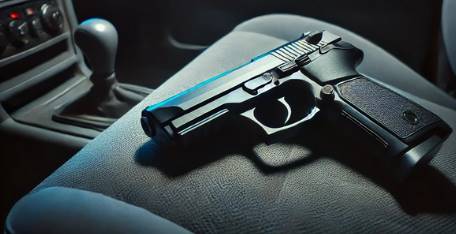
One Traffic Stop, One Mistake: Weapons in a Vehicle Defense in Austin, Texas
A routine traffic stop. A broken taillight, a rolling stop, a momentary lapse in attention. Then, the officer asks a question: “Are there any weapons in the vehicle?” Your answer—or what the officer finds—can turn a simple citation into a criminal charge that threatens your freedom, your right to carry, and your future. In Texas, where vehicle carry laws have changed dramatically in recent years, what was legal yesterday may be a crime today. Understanding your rights and mounting an effective defense requires experience, knowledge, and strategic thinking.
At Barton & Associates, Attorneys at Law, we defend clients throughout Austin and Central Texas against weapons charges arising from traffic stops. From the neighborhoods of Central Austin to the communities of Round Rock, Cedar Park, Lakeway, Kyle, and Dripping Springs, our attorneys bring decades of experience to criminal defense. We understand that these cases often hinge on constitutional issues—unlawful stops, illegal searches, and the nuances of Texas carry laws—and that a skilled defense can protect your rights, your freedom, and your Second Amendment rights.
Whether you are facing charges of unlawful carry, possession of a prohibited weapon, or a more serious offense discovered during a traffic stop, we provide the strategic guidance and aggressive representation you need to protect your future.
The Traffic Stop: Where It All Begins
Every weapons case that starts with a traffic stop begins with the same question: Did the officer have the right to stop your vehicle? If the initial stop was unlawful, everything that follows—including the discovery of any weapon—may be suppressed.
What Makes a Traffic Stop Lawful:
- Reasonable suspicion that a traffic violation occurred (speeding, broken equipment, etc.)
- Probable cause to believe a crime was committed
- An observed violation (not a hunch)
Commonly Challenged Stops:
- Pretextual stops (stopping for a minor violation to investigate other suspected criminal activity)
- Stops based on a “hunch” rather than an observed violation
- Stops based on mistaken belief about the law
- Stops that last longer than necessary to address the traffic violation
When the Stop Is Unlawful:
If the officer did not have reasonable suspicion to stop your vehicle, the stop is unlawful. Any evidence obtained as a result—including any weapons discovered—must be suppressed. Without the weapon, the State may have no case.
For families in Austin, challenging the legality of the traffic stop is often the first and most powerful defense.
Can an Officer Search Your Car for Weapons During a Traffic Stop?
The Fourth Amendment protects against unreasonable searches and seizures. During a traffic stop, an officer’s authority to search your vehicle is limited.
When an Officer May Search:
- Consent: If you give permission, the officer may search
- Probable Cause: If the officer has probable cause to believe evidence of a crime is in the vehicle
- Plain View: If a weapon is in plain sight, the officer may seize it
- Search Incident to Arrest: If you are arrested, the officer may search the passenger compartment
- Inventory Search: If the vehicle is impounded, the officer may conduct an inventory search
When an Officer May NOT Search:
- Based on a hunch or suspicion alone
- Based on a traffic violation unrelated to weapons
- Based on a request for consent that you decline
- After the purpose of the traffic stop has concluded
Protecting Your Rights:
You have the right to refuse consent to a search. Politely but firmly say, “I do not consent to a search.” This does not guarantee the officer will not search, but it preserves your right to challenge the search later.
For families in Austin, understanding your rights during a traffic stop is essential to protecting yourself.
What Is the Penalty for Carrying a Weapon in a Vehicle in Texas?
Texas law on carrying weapons in vehicles has changed significantly. Understanding the current law is essential to your defense.
Current Law (Permitless Carry):
As of September 1, 2021, most adults 21 and over may carry a handgun in their vehicle without a license. However, there are important limitations:
- You must be legally eligible to possess a firearm (no felony convictions, etc.)
- The handgun may be carried in a holster (open carry) or concealed
- You may not carry in prohibited locations (schools, courthouses, etc.)
Prohibited Weapons:
Certain weapons are always illegal to possess, regardless of location, including:
- Machine guns
- Short-barrel firearms (without proper registration)
- Explosive weapons
- Armor-piercing ammunition
When Carrying a Weapon Becomes a Crime:
- If you are prohibited from possessing firearms (felon, etc.)
- If you are carrying a prohibited weapon
- If you are in a prohibited location
- If you are under 21 (with exceptions for military, law enforcement)
- If you are intoxicated while carrying
The Penalty:
Unlawful carry of a weapon is generally a Class A misdemeanor, punishable by up to one year in jail and a fine of up to $4,000. Carrying a prohibited weapon or carrying in a prohibited location can be a felony.
For families in Austin, understanding the current law is essential to avoiding criminal charges.
The “Traveling” Defense: A Thing of the Past
Before permitless carry, many Texans relied on the “traveling” defense—the claim that they were traveling and therefore exempt from unlawful carry laws. Today, the traveling defense is largely obsolete.
What the Traveling Defense Was:
Under prior law, a person was exempt from unlawful carry charges if they were traveling. Courts defined “traveling” broadly, and many defendants successfully used this defense.
Why It Matters Less Now:
With the passage of permitless carry, most adults can carry a handgun in their vehicle without a license. The traveling defense remains relevant only for:
- Individuals under 21 (who cannot carry under permitless carry)
- Individuals carrying weapons other than handguns
- Individuals prohibited from possessing firearms
If You Are Under 21:
If you are under 21 and not in the military or law enforcement, you may still need to rely on the traveling defense or other exceptions. An experienced attorney can advise you on the law.
For families in Austin, understanding the current law is essential to building your defense.
Consent Searches: The Most Common Trap
One of the most common ways weapons are discovered during traffic stops is through consent searches. An officer asks, “Do you mind if I take a look around?” Many people agree, thinking they have nothing to hide—or because they feel pressured.
Why Consent Searches Are Dangerous:
- You give up your Fourth Amendment rights
- Even if the officer had no probable cause, your consent makes the search legal
- The officer does not have to tell you that you can refuse
Your Rights:
You have the absolute right to refuse consent. You do not need a reason. A simple, polite statement is enough: “Officer, I do not consent to a search.”
If You Consented:
Even if you consented, there may be grounds to challenge the search:
- Was your consent voluntary, or were you coerced?
- Did the officer imply you had no choice?
- Did the officer exceed the scope of your consent?
For families in Austin, refusing consent is often the best way to protect your rights.
Prohibited Weapons and Traffic Stops
If you are carrying a weapon that is illegal under Texas law, a traffic stop can lead to serious felony charges.
What Is a Prohibited Weapon:
- Machine guns (unless properly registered)
- Short-barrel firearms (barrel less than 16 inches for rifles, 18 inches for shotguns)
- Explosive weapons
- Armor-piercing ammunition
- Chemical dispensing devices (except personal defense spray)
- Improvised explosive devices
- Zip guns
Defending Prohibited Weapon Charges:
- The Weapon Does Not Meet the Definition: Your attorney can challenge whether the item qualifies as a prohibited weapon
- Lack of Knowledge: If you did not know the weapon was prohibited, you may have a defense
- Lawful Possession: Some weapons (such as short-barrel firearms) may be legal with proper federal registration
- Unlawful Search: If the search was illegal, the weapon may be suppressed
For families in Austin, prohibited weapon charges require an aggressive defense.
Constructive Possession: When It’s Not Your Weapon
Not every weapon found in a vehicle belongs to every occupant. The State must prove you “possessed” the weapon—either actually or constructively.
Actual Possession: You had the weapon on your person or under your immediate control.
Constructive Possession: The weapon was in a location you controlled, and you knew about it.
Defending Against Constructive Possession:
- Shared Vehicle: If the vehicle belongs to someone else, the weapon may belong to that person
- Passenger: Passengers may not have control over the vehicle
- No Knowledge: If you did not know the weapon was there, you did not possess it
- Multiple Occupants: If there were multiple people in the vehicle, the State may not be able to prove who possessed the weapon
For families in Austin, challenging constructive possession can be an effective defense.
What Happens If You Are Caught with a Gun in Your Car in Texas?
If you are caught with a gun in your car, the outcome depends on several factors:
Best Case Scenario:
- You are legally eligible to possess firearms
- You are over 21 (or qualify for an exception)
- The handgun is not prohibited
- You are not in a prohibited location
- You are not intoxicated
- Result: No charges, or charges dismissed
Worst Case Scenario:
- You are a prohibited person (felon, etc.)
- You are carrying a prohibited weapon
- You are in a prohibited location
- You are intoxicated
- Result: Felony charges, potential prison time, loss of firearm rights
What to Do:
- Do not consent to a search
- If asked about weapons, you have the right to remain silent
- Contact an attorney immediately
For families in Austin, knowing your rights and the law can prevent a traffic stop from becoming a criminal case.
Frequently Asked Questions About Weapons in a Vehicle in Austin, Texas
When clients come to our office—whether from Austin’s central neighborhoods, the suburbs to the north and south, or the Hill Country communities—they often have questions about weapons in vehicles. Here are the answers to the most common inquiries we receive.
Can I carry a handgun in my car without a license in Texas?
Yes. Most adults 21 and over can carry a handgun in their vehicle without a license under permitless carry. However, you must be legally eligible to possess firearms.
Can a police officer search my car without a warrant?
Only under specific circumstances: with your consent, with probable cause, if the weapon is in plain view, incident to arrest, or during an inventory search after impoundment.
Should I tell an officer I have a gun in my car?
There is no legal duty to disclose that you are carrying a handgun in your vehicle. If asked, you have the right to remain silent. If the officer asks to search, you have the right to refuse.
What if I am under 21?
If you are under 21 and not in the military or law enforcement, you may not carry a handgun under permitless carry. However, you may still be able to carry under other exceptions (traveling, etc.).
Can I carry a loaded rifle in my car?
Yes, generally. Texas law does not prohibit carrying a loaded long gun (rifle or shotgun) in a vehicle, provided you are not in a prohibited location.
What is the penalty for carrying a weapon in a prohibited place?
Carrying a weapon in a prohibited place (school, courthouse, etc.) can be a third-degree felony, punishable by 2 to 10 years in prison.
Do I need an attorney for a weapons charge from a traffic stop?
Yes. Weapons charges can result in loss of firearm rights, jail time, and a permanent criminal record. An experienced attorney can challenge the stop, the search, and the evidence.
Why Barton & Associates for Weapons in a Vehicle Defense in Austin
Weapons charges arising from traffic stops require attorneys who understand the Fourth Amendment, the nuances of Texas carry laws, and the strategies for challenging unlawful stops and searches. The attorneys at Barton & Associates bring decades of experience to this area of criminal defense, helping clients protect their rights, their freedom, and their Second Amendment rights.
We are deeply rooted in the Austin legal community. We have handled weapons cases in Travis County courts for decades and understand the local law enforcement practices, the prosecutors, and the judges. This local knowledge allows us to advise clients accurately and advocate effectively.
We are also committed to a client-centered approach. We take the time to understand your case, your goals, and your concerns. We explain your options in clear, straightforward language, and we provide honest advice about the best path forward.
Take the First Step Toward Protecting Your Rights
If you were arrested for a weapon discovered during a traffic stop, your rights, your freedom, and your Second Amendment rights are on the line. Do not wait. The sooner you have an experienced attorney on your side, the better your chances of a favorable outcome. At Barton & Associates, we are here to fight for you.
Contact our Austin office today at 512-THE-FIRM (843-3476) to speak with an experienced criminal defense attorney about your case. You can also complete the online Free Consultation form on our website to schedule a confidential meeting. Please note, on-site consultations are by appointment only. We look forward to helping you protect your rights and your future.
Main Category: Criminal Defense Austin
Practice Area Category: Weapon Crimes
Barton & Associates, Attorneys at Law
316 W 12th St Suite 400, Austin, TX 78701
Office: 512-THE-FIRM (843-3476)