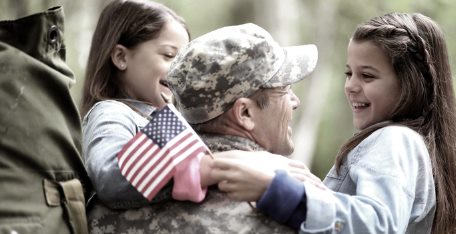
Military Child Support: Protecting Service Members and Their Children in Austin, Texas
Service members and their families make extraordinary sacrifices in service to our country. Deployments, permanent changes of station, and the unique demands of military life create challenges that civilian families rarely face. When it comes to child support, these challenges are compounded by complex jurisdictional rules, unique income calculations, and protections afforded to service members under federal law.
At Barton & Associates, Attorneys at Law, we help military families throughout Austin and Central Texas navigate the unique landscape of military child support. From the neighborhoods of Central Austin to the communities of Round Rock, Cedar Park, Lakeway, Kyle, and Dripping Springs—home to many current and former service members connected to Fort Cavazos (formerly Fort Hood), Camp Mabry, and other military installations—our attorneys bring decades of experience to military family law matters.
Whether you are a service member seeking to ensure that your child support reflects your military income and deployment status, or a custodial parent seeking fair support from a service member parent, we provide the strategic guidance you need to protect your rights and your children’s financial future.
Understanding Military Child Support in Texas
Child support for military families operates under the same basic framework as civilian child support, but with important differences. Service members are subject to the Texas Family Code, but federal laws—including the Servicemembers Civil Relief Act (SCRA) and the Uniformed Services Former Spouses’ Protection Act (USFSPA)—provide additional protections and create unique considerations.
Key Differences for Military Families:
-
Income Calculation: Military income includes base pay, Basic Allowance for Housing (BAH), Basic Allowance for Subsistence (BAS), and special pays. Each of these components is treated differently in child support calculations.
-
Jurisdiction: Service members may have legal residency in a state different from where they are stationed, creating complex jurisdictional questions.
-
Deployment: Deployments affect parenting time, which in turn affects child support calculations. Deployed service members have special protections under federal law.
-
Enforcement: The military has its own enforcement mechanisms for child support, including the ability to garnish wages directly from military pay.
-
Retirement: Military retirement pay may be subject to division for child support arrears through mechanisms similar to QDROs.
For families in Austin and the surrounding areas, where many service members are stationed at nearby installations, understanding these unique considerations is essential.
How Is Military Income Calculated for Child Support in Texas?
Calculating child support for a service member requires understanding the components of military compensation. Not all military pay is treated the same under Texas law.
Components of Military Income:
-
Base Pay: The service member’s basic monthly pay is included in gross income for child support purposes, just like civilian wages.
-
Basic Allowance for Housing (BAH): BAH is generally included in gross income for child support. However, if the BAH is specifically designated for housing that also benefits the child (such as when the service member has the child in their home), there may be arguments for adjusting the support calculation.
-
Basic Allowance for Subsistence (BAS): BAS is generally included in gross income. Like BAH, if the BAS is used to provide meals for the child during parenting time, adjustments may be appropriate.
-
Special Pays: Hazardous duty pay, combat pay, flight pay, and other special pays are generally included in gross income.
-
Tax Advantages: Military pay enjoys certain tax advantages—portions of BAH and BAS are not taxable. The child support guidelines account for actual net income, so these tax advantages affect the calculation.
Excludable Income:
Some forms of military income may be excluded from the child support calculation:
-
Combat pay is generally excluded from gross income in most states, including Texas.
-
Disability payments from the Department of Veterans Affairs are generally not considered income for child support purposes.
-
Hostile fire pay may be excluded.
For service members stationed in Texas or living in Austin, accurately calculating income for child support requires a thorough understanding of how each component of military pay is treated.
The Servicemembers Civil Relief Act (SCRA) and Child Support
The Servicemembers Civil Relief Act (SCRA) provides important protections for active-duty service members in civil legal proceedings, including child support matters. Understanding these protections is essential for both service members and custodial parents.
Key SCRA Protections:
-
Stay of Proceedings: A service member who is on active duty may request a stay (delay) of court proceedings if their military duties materially affect their ability to participate in the case. This applies to child support establishment, modification, and enforcement proceedings.
-
No Default Judgments: If a service member is on active duty, the court cannot enter a default judgment against them without first appointing an attorney to represent their interests.
-
Interest Rate Cap: The SCRA caps interest rates on pre-service debts at 6 percent, which may affect child support arrears that have been reduced to judgment.
-
Eviction Protection: The SCRA provides eviction protection for service members and their families, which may be relevant in cases where housing is at issue.
How SCRA Affects Child Support Cases:
If you are a service member facing a child support proceeding, you may be entitled to a stay if your deployment or duty status prevents you from participating. If you are a custodial parent seeking support from a service member, you must be prepared to navigate the SCRA’s requirements to avoid delays.
For families in Austin, where many service members are deployed or subject to frequent moves, understanding SCRA protections is essential to moving cases forward.
How Does Deployment Affect Child Support in Texas?
Deployment is one of the most significant events in a service member’s career, and it has important implications for child support.
Deployment and Parenting Time:
Child support in Texas is based on the paying parent’s income, not directly on parenting time. However, a significant change in parenting time—such as a deployment that prevents a parent from exercising their court-ordered visitation—may affect the support calculation.
If a service member is deployed and cannot exercise their parenting time, the custodial parent may be providing more care for the child. This could potentially affect the support amount, particularly if the deployment is long-term.
Temporary Adjustments:
Courts may consider temporary adjustments to child support during deployment. For example:
-
If the service member’s income changes due to deployment (such as receiving combat pay or hazardous duty pay), that change may affect support.
-
If the service member is no longer incurring expenses associated with parenting time during deployment, that may be considered.
SCRA Stays:
If a service member is deployed and cannot participate in a child support proceeding, they may request a stay under the SCRA. The stay may last for the duration of the deployment plus 60 days.
Reunification After Deployment:
When a service member returns from deployment, parenting time may need to be reestablished. The support order may need to be modified to reflect the return to the regular parenting schedule.
For military families in Austin, where deployments are a reality of service life, planning for the impact on child support is essential.
Jurisdiction and Residency for Military Families
Determining which state has jurisdiction over child support matters is complex for military families. Service members may have legal residency in one state while stationed in another.
Legal Residency vs. Physical Presence:
-
Legal Residency: Service members may maintain legal residency in a state where they do not currently live. This is often the state where they entered the military or where they have chosen to establish residency.
-
Physical Presence: The state where the service member is stationed may have jurisdiction based on physical presence.
UIFSA and Jurisdiction:
The Uniform Interstate Family Support Act (UIFSA) governs jurisdiction over child support cases. Under UIFSA:
-
The state where the child resides has jurisdiction to establish support.
-
The state that issued a support order retains continuing, exclusive jurisdiction as long as a party or the child remains in that state.
-
Service members’ military status does not automatically change jurisdiction.
Choosing Jurisdiction:
For military families, the choice of forum can significantly affect the outcome of a child support case. Different states have different child support guidelines, different rules about what income is included, and different enforcement mechanisms.
For families in Austin, where service members may be stationed at Fort Cavazos or other installations while maintaining residency elsewhere, determining the proper jurisdiction is often the first and most critical step.
How to Enforce Child Support Against a Service Member in Texas
Enforcing child support against a service member requires understanding both state and federal enforcement mechanisms.
Wage Garnishment:
The military has its own wage garnishment system. Under the Uniformed Services Former Spouses’ Protection Act (USFSPA), child support can be enforced through direct garnishment of military pay. The Defense Finance and Accounting Service (DFAS) processes these garnishments.
Enforcement Through DFAS:
To garnish a service member’s pay for child support, you must:
-
Have a valid child support order.
-
Submit the order to DFAS through the appropriate state child support agency.
-
DFAS will then deduct support payments directly from the service member’s pay.
Contempt and Military Consequences:
If a service member fails to pay child support, the military may take disciplinary action. Nonpayment of child support is a violation of the Uniform Code of Military Justice (UCMJ) and can result in:
-
Non-judicial punishment (Article 15)
-
Loss of security clearance
-
Administrative separation from service
-
Court-martial in serious cases
The Role of the State Child Support Agency:
The Texas Office of the Attorney General (OAG) can assist with enforcement against service members. The OAG has established procedures for working with DFAS and military authorities.
For custodial parents in Austin seeking support from a service member, utilizing both state and federal enforcement mechanisms is often the most effective approach.
Military Retirement and Child Support Arrears
A service member’s military retirement pay can be used to satisfy child support arrears. The Uniformed Services Former Spouses’ Protection Act (USFSPA) allows for the division of military retired pay to satisfy child support obligations.
Using Retirement to Satisfy Arrears:
If a service member owes child support arrears, the court can order that a portion of their military retired pay be paid directly to the custodial parent or to the state child support agency until the arrears are satisfied.
The Process:
-
Obtain a court order directing payment of a specific amount from military retired pay.
-
Submit the order to DFAS for implementation.
-
DFAS will deduct the specified amount from the service member’s retirement pay and send it to the designated recipient.
Limitations:
The USFSPA limits the amount that can be taken from military retired pay to 50 percent of disposable retired pay (or 65 percent if the arrears are more than 12 weeks old). This is consistent with federal limits on wage garnishment.
For families in Austin, where many veterans settle after their service, military retirement may be a significant asset for satisfying child support arrears.
What Are the Rights of a Deployed Parent in Texas?
Deployed service members have specific rights under Texas law designed to protect their relationship with their children and their rights as parents.
Deployment and Custody:
Under the Texas Family Code, a parent who is deployed has the right to designate a family member to exercise their parenting time during deployment. The designated person steps into the deployed parent’s shoes for the duration of the deployment.
Child Support During Deployment:
A deployed parent’s child support obligation may be adjusted during deployment, particularly if the deployment affects their income or their ability to exercise parenting time. The parent should seek a temporary modification rather than simply stopping payments.
Reinstatement After Deployment:
When a service member returns from deployment, they are entitled to have their parenting time and child support obligations restored to the pre-deployment status. The court may order a reasonable transition period to help the parent and child readjust.
No Penalty for Deployment:
Texas law explicitly provides that a parent’s deployment may not be used as grounds to modify custody against the deployed parent. The parent’s absence due to military service is not considered a material and substantial change justifying a custody change.
For service members in Austin facing deployment, understanding these protections is essential to preserving their rights.
Frequently Asked Questions About Military Child Support in Austin, Texas
When service members and their families come to our office—whether from Austin’s central neighborhoods, the suburbs to the north and south, or the communities surrounding Fort Cavazos—they often have questions about military child support. Here are the answers to the most common inquiries we receive.
Does BAH count as income for child support?
Generally, yes. Basic Allowance for Housing (BAH) is included in gross income for child support purposes. However, if the BAH is specifically designated for housing that also benefits the child during parenting time, there may be arguments for adjusting the support calculation.
Can child support be modified during deployment?
Yes. If a service member’s income changes during deployment (such as receiving combat pay) or if parenting time is significantly affected, a temporary modification may be appropriate. The service member should seek modification rather than simply stopping payments.
What happens if I am deployed and cannot attend a child support hearing?
The Servicemembers Civil Relief Act (SCRA) allows you to request a stay (delay) of the proceedings if your military duties materially affect your ability to participate. You must request the stay promptly and provide documentation of your deployment status.
Can the military garnish my wages for child support?
Yes. Under the Uniformed Services Former Spouses’ Protection Act (USFSPA), child support can be enforced through direct garnishment of military pay. The Defense Finance and Accounting Service (DFAS) processes these garnishments.
Is combat pay included in child support calculations?
In Texas, combat pay is generally excluded from gross income for child support purposes. This reflects the temporary and hazardous nature of combat pay.
What if I am a veteran receiving disability benefits?
VA disability benefits are generally not considered income for child support purposes. However, if the veteran is also receiving military retirement pay, that retirement pay may be subject to child support.
How does a permanent change of station (PCS) affect child support?
If a service member receives orders to move to another duty station, it may affect parenting time and, consequently, child support. The support order may need to be modified to reflect the new geographic circumstances. However, the move alone does not automatically change the support obligation.
Why Barton & Associates for Military Child Support in Austin
Military child support requires attorneys who understand both Texas family law and the unique federal laws that apply to service members. The attorneys at Barton & Associates bring decades of experience to military family law matters, helping service members and their families navigate this complex landscape.
We are deeply rooted in the Central Texas military community. We have represented countless service members stationed at Fort Cavazos and other installations, as well as their families. We understand the unique challenges of military life—deployments, PCS moves, and the intersection of state and federal law.
We are also committed to a client-centered approach. We take the time to understand your military status, your family circumstances, and your goals. We explain your options in clear, straightforward language, and we provide honest advice about the best path forward.
Take the First Step Toward Resolving Your Military Child Support Matter
If you are a service member or the spouse of a service member facing child support issues, you need an attorney who understands the unique considerations of military life. At Barton & Associates, we are here to help.
Call our Austin office today at 512-THE-FIRM (843-3476) to speak with an experienced military family law attorney about your child support matter. You can also complete the online Free Consultation form on our website to schedule a confidential meeting. Please note, on-site consultations are by appointment only. We look forward to helping you protect your rights and your children’s financial future.
Main Category: Family Law Austin
Practice Area Category: Child Support
Barton & Associates, Attorneys at Law
316 W 12th St Suite 400, Austin, TX 78701
Office: 512-THE-FIRM (843-3476)