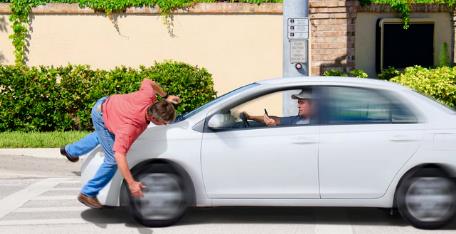
A Minor Accident, A Major Charge: Failure to Stop & Give Information Defense in Austin, Texas
A bump in a parking lot. A scrape along the side of a parked car. A minor collision in heavy traffic. You didn’t think anyone was hurt. You left. Now you are facing a charge of Failure to Stop and Give Information—a Class B misdemeanor that carries jail time, a criminal record, and consequences that follow you for years. In Texas, leaving the scene of an accident—even a minor one—is a criminal offense.
At Barton & Associates, Attorneys at Law, we defend clients across Central Texas against Failure to Stop and Give Information charges. Whether you were involved in a minor fender-bender, a parking lot scrape, or an accident where no one was injured, we understand how a moment of confusion can become a criminal charge. Our attorneys have spent decades in Travis County courtrooms and beyond, handling traffic and criminal cases with skill and determination.
We know that these cases often hinge on a single question: did you know you were involved in an accident? We know how to challenge the State’s evidence, argue that you were unaware of the collision, and build a defense that keeps a conviction off your record. We know that a moment of confusion should not define your future.
If you are facing a Failure to Stop and Give Information charge, you are not alone. Let us help you fight back.
Understanding Failure to Stop & Give Information in Texas
Under Texas law, a driver involved in an accident must stop and provide information to the other driver. Failure to do so is a criminal offense, even if no one was injured.
The Elements:
The State must prove:
-
You were involved in an accident
-
You failed to stop and provide your name, address, and vehicle registration information
-
You knew or should have known you were involved in an accident
Types of Offenses:
-
Accident Involving Damage to Vehicle Only: Class B misdemeanor (up to 180 days in jail)
-
Accident Involving Injury: Third-degree felony (2 to 10 years in prison)
-
Accident Involving Death: Second-degree felony (2 to 20 years in prison)
The Penalty:
-
Class B Misdemeanor: Up to 180 days in jail
-
Fine: Up to $2,000
-
License Suspension: Possible
For residents across Central Texas, leaving the scene of an accident can mean jail time.
What Is the Penalty for Leaving the Scene of an Accident in Texas?
The penalty for leaving the scene of an accident depends on whether injury occurred.
Damage to Vehicle Only:
-
Class B misdemeanor
-
Up to 180 days in jail
-
Fine of up to $2,000
-
License suspension possible
Accident Involving Injury:
-
Third-degree felony
-
2 to 10 years in prison
-
Fine of up to $10,000
-
License suspension up to 2 years
Accident Involving Death:
-
Second-degree felony
-
2 to 20 years in prison
-
Fine of up to $10,000
-
License suspension up to 2 years
Collateral Consequences:
-
Criminal Record: A permanent conviction on your record
-
Employment: Many employers conduct background checks
-
Housing: Landlords may deny rental applications
-
Insurance: Rates will increase dramatically; you may be dropped
-
Professional Licensing: Licensing boards may deny or revoke licenses
For those in the Austin area, a conviction for leaving the scene can affect every aspect of your life.
How to Defend a Failure to Stop Charge
Defending against a Failure to Stop charge requires a strategic approach. The State must prove you knew or should have known you were in an accident.
Defense 1: You Did Not Know You Were in an Accident
The most common defense is that you were unaware of the collision. This is especially common in:
-
Minor scrapes or bumps
-
Parking lot accidents
-
Accidents where you felt no impact
-
Accidents where you were not at fault
Defense 2: You Stopped but Could Not Locate the Other Driver
If you stopped but could not find the other driver, you may have a defense. You should report the accident to the police as soon as possible.
Defense 3: You Were Unable to Stop Due to Safety Concerns
If stopping would have placed you in danger, you may have a defense. You should report the accident as soon as you are safe.
Defense 4: You Stopped and Provided Information
If you stopped and provided your information, the charge should be dismissed.
Defense 5: The Accident Did Not Occur
If there was no accident, there is no crime. Your attorney can challenge whether an accident actually occurred.
Defense 6: Mistaken Identity
In some cases, the wrong vehicle or driver may have been identified. Your attorney can challenge:
-
Witness identification
-
Surveillance footage
-
Vehicle descriptions
For those in Central Texas, a strong defense can mean the difference between a conviction and a dismissal.
Knowledge: The Key Element
The State must prove you knew—or should have known—you were involved in an accident. Without knowledge, there is no crime.
What the State Must Prove:
-
You knew you hit something
-
You knew you hit another vehicle
-
You knew or should have known that damage occurred
Defending Lack of Knowledge:
-
No Impact: You did not feel any impact
-
Minor Impact: The impact was so minor you did not notice
-
Already Damaged: Your vehicle was already damaged; you did not know new damage occurred
-
Distracted: You were distracted and did not realize what happened
The Danger of “Should Have Known”:
The State can argue that you “should have known” based on the circumstances. Your attorney can counter that a reasonable person would not have known.
For residents across the Austin metro area, proving lack of knowledge is often the most effective defense.
Minor Accidents: The Parking Lot Scenario
Many Failure to Stop cases arise from minor accidents in parking lots. A scrape, a bump, a shopping cart. You drive away, not realizing anything happened.
Why These Cases Happen:
-
You did not feel the impact
-
You thought you hit a curb or pothole
-
You did not see any damage
-
You were in a hurry and did not check
Defending Parking Lot Cases:
-
No Knowledge: You did not know you hit anything
-
No Damage: There was no damage to either vehicle
-
Minor Damage: The damage was so minor that a reasonable person would not have noticed
For those in the Austin area, parking lot accidents can be defended by showing lack of knowledge.
What to Do If You Are Involved in an Accident
If you are involved in an accident, what you do in the moments after can affect whether you face criminal charges.
What to Do:
-
Stop: You must stop. Leaving the scene is a crime.
-
Check for Injuries: If anyone is injured, call 911.
-
Exchange Information: Provide your name, address, and vehicle registration information to the other driver.
-
Report the Accident: If the other driver is not present, report the accident to the police as soon as possible.
What NOT to Do:
-
Do Not Leave: Even if the damage seems minor, do not leave.
-
Do Not Assume: Do not assume the other driver will not report it.
-
Do Not Ignore: Do not ignore a knock on your door or a call from the police.
If You Left the Scene:
If you left the scene, contact an attorney immediately. Your attorney can help you report the accident and mitigate the consequences.
For residents across Central Texas, knowing what to do after an accident can prevent a criminal charge.
The Difference Between Failure to Stop and Hit and Run
“Hit and run” is the common term for Failure to Stop and Render Aid. The key difference is whether injury occurred.
Failure to Stop (Damage Only):
-
Class B misdemeanor
-
Damage to vehicle only
-
No injury
-
Up to 180 days in jail
Failure to Stop and Render Aid (Injury):
-
Third-degree felony
-
Injury occurred
-
2 to 10 years in prison
Why the Distinction Matters:
The presence of injury elevates a misdemeanor to a felony. If the other driver claims injury, your attorney must challenge whether injury actually occurred.
For those in the Austin metro area, the distinction between damage and injury is critical.
Deferred Disposition for Failure to Stop
For first-time offenders, deferred disposition (probation) may be available for Failure to Stop charges.
How Deferred Disposition Works:
-
You plead no contest
-
The court defers a finding of guilt
-
You complete probation (typically 90 days to 6 months)
-
Conditions may include community service, defensive driving, and fines
-
If you complete probation successfully, the case is dismissed
-
No conviction on your record
Eligibility:
-
First-time offender
-
No prior criminal history
-
The case does not involve injury or accident with another person
The Benefit:
-
No conviction on your record
-
No jail time
-
No criminal record
For residents across Central Texas, deferred disposition is often the goal in a Failure to Stop case.
Frequently Asked Questions About Failure to Stop & Give Information in Austin, Texas
When clients come to our office—whether from the urban core of Austin, the suburbs to the north and south, or the Hill Country communities—they often have questions about leaving the scene charges. Here are the answers to the most common inquiries we receive.
What is the penalty for leaving the scene of an accident in Texas?
For damage only: Class B misdemeanor (up to 180 days in jail). For injury: third-degree felony (2 to 10 years). For death: second-degree felony (2 to 20 years).
What if I didn’t know I was in an accident?
If you did not know you were in an accident, you have a defense. The State must prove you knew or should have known.
What should I do if I hit a parked car?
Stop. Leave a note with your name, contact information, and insurance information. If you don’t, you can be charged with Failure to Stop.
What if I was afraid to stop?
If you were in danger, you may have a defense. However, you should still report the accident as soon as possible.
Can I get deferred disposition for leaving the scene?
Yes, in some cases. First-time offenders may be eligible for deferred disposition, which results in dismissal of the case with no conviction on your record.
What if the other driver was at fault?
Fault does not matter. If you were involved in an accident, you must stop and provide information—even if you are not at fault.
Do I need an attorney for a Failure to Stop charge?
Yes. A Failure to Stop conviction can result in jail time and a criminal record. An experienced attorney can challenge the knowledge element and seek deferred disposition.
Why Barton & Associates for Failure to Stop Defense in Austin
Failure to Stop cases often hinge on a single question: did you know you were in an accident? Our attorneys have spent decades in courtrooms across Central Texas, handling traffic and criminal cases with skill and determination.
We know the local prosecutors. We know the judges. We know how to challenge the State’s case, argue that you were unaware of the collision, and fight to keep a conviction off your record.
Take the First Step Toward Protecting Your Record
If you are facing a Failure to Stop charge, your record and your freedom are on the line. Do not wait. The sooner you have an experienced attorney on your side, the better your chances of keeping this charge off your record.
Call our Austin office today at 512-THE-FIRM (843-3476) to speak with an experienced criminal defense attorney about your case. You can also complete the online Free Consultation form on our website to schedule a confidential meeting. Please note, on-site consultations are by appointment only. We look forward to helping you protect your rights and your future.
Main Category: Criminal Defense Austin
Practice Area Category: Misdemeanors
Barton & Associates, Attorneys at Law
316 W 12th St Suite 400, Austin, TX 78701
Office: 512-THE-FIRM (843-3476)