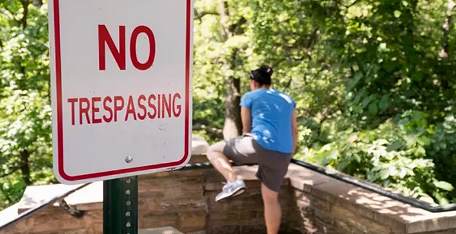
A Step Too Far: Criminal Trespassing Defense in Austin, Texas
A walk through a construction site. A shortcut across a neighbor’s yard. A visit to a property you thought was open to the public. A moment of confusion about where you were allowed to be. In Texas, criminal trespassing is a charge that can arise from a simple misunderstanding. A step onto the wrong property can lead to a criminal record, jail time, and consequences that follow you for years.
At Barton & Associates, Attorneys at Law, we defend clients across Central Texas against criminal trespassing charges. Whether you are accused of entering a building without permission, walking onto construction property, or being on land that was posted against entry, we understand how quickly a misunderstanding can escalate. Our attorneys have spent decades in Travis County courtrooms and beyond, handling criminal cases with skill and determination.
We know that trespassing cases often hinge on a single question: did you have permission to be there? We know how to challenge the State’s evidence, present proof of consent, and build a defense that keeps a conviction off your record. We know that a misunderstanding should not define your future.
If you are facing a criminal trespassing charge, you are not alone. Let us help you fight back.
Understanding Criminal Trespassing in Texas
Under Texas law, a person commits criminal trespass if they enter or remain on property without the owner’s effective consent, after receiving notice that entry is forbidden.
The Elements:
The State must prove:
-
You entered or remained on property
-
Without the owner’s effective consent
-
You had notice that entry was forbidden
Types of Criminal Trespass:
-
Criminal Trespass: Class B misdemeanor (up to 180 days in jail)
-
Criminal Trespass (Habitation): Class A misdemeanor (up to 1 year in jail)
-
Criminal Trespass (Critical Infrastructure Facility): State jail felony (180 days to 2 years)
The Penalty:
-
Class B Misdemeanor: Up to 180 days in jail, fine up to $2,000
-
Class A Misdemeanor: Up to 1 year in jail, fine up to $4,000
-
State Jail Felony: 180 days to 2 years in state jail, fine up to $10,000
For residents across Central Texas, a trespassing conviction can mean jail time.
What Is the Penalty for Criminal Trespassing in Texas?
The penalty for criminal trespassing depends on the type of property entered.
Criminal Trespass (General):
-
Class B misdemeanor
-
Up to 180 days in jail
-
Fine of up to $2,000
Criminal Trespass on a Habitation:
-
Class A misdemeanor
-
Up to 1 year in jail
-
Fine of up to $4,000
Criminal Trespass on a Critical Infrastructure Facility:
-
State jail felony
-
180 days to 2 years in state jail
-
Fine of up to $10,000
Collateral Consequences:
-
Criminal Record: A permanent conviction on your record
-
Employment: Many employers conduct background checks
-
Housing: Landlords may deny rental applications
-
Professional Licensing: Licensing boards may deny or revoke licenses
-
Immigration: Non-citizens may face deportation
For those in the Austin area, a trespassing conviction can affect every aspect of your life.
How to Defend a Criminal Trespassing Charge
Defending against a criminal trespassing charge requires a strategic approach. The State must prove you entered without consent and had notice that entry was forbidden.
Defense 1: You Had Permission to Be There
The most common defense is that you had the owner’s consent to be on the property. Evidence may include:
-
Testimony from the owner
-
Text messages or emails granting permission
-
Prior pattern of authorized access
-
The property was open to the public
Defense 2: You Did Not Receive Notice
The State must prove you had notice that entry was forbidden. Notice can be:
-
Verbal warning from the owner or authorized person
-
Signs posted on the property
-
Fencing or other enclosure
Defense 3: You Did Not Enter or Remain
If you were on the property but did not “enter”—you were on a sidewalk, a public right-of-way, or a common area—you have a defense.
Defense 4: The Property Was Not Private
If the property was open to the public—a business, a park, a common area—you may have a defense.
Defense 5: Mistaken Identity
In some cases, the wrong person may have been identified. Your attorney can challenge:
-
Witness identification
-
Surveillance footage
-
Officer observations
Defense 6: Unlawful Stop or Arrest
If the evidence was obtained through an illegal stop or arrest, your attorney can file a motion to suppress.
For those in Central Texas, a strong defense can mean the difference between a conviction and a dismissal.
Permission: The Heart of the Case
Trespassing cases almost always turn on one question: did you have permission to be there? If you did, you are not guilty. If you reasonably believed you did, you are not guilty.
What Counts as Permission:
-
Verbal permission from the owner
-
Written permission (texts, emails)
-
Implied permission (the property is open to the public)
-
Prior pattern of authorized access
What Does NOT Count as Permission:
-
The door was unlocked (this is not permission)
-
The gate was open (this is not permission)
-
No one told you to leave (this is not permission)
Proving Permission:
Your attorney can gather evidence of permission, including:
-
Witness testimony
-
Text messages and social media communications
-
Phone records
-
The owner’s own statements
For residents across the Austin metro area, proving permission is often the key to the defense.
Notice: When Entry Is Forbidden
The State must prove you had notice that entry was forbidden. Without notice, there is no crime.
Types of Notice:
-
Verbal Notice: The owner or authorized person told you to leave
-
Signs: “No Trespassing” signs posted on the property
-
Fencing: Fencing or other enclosure that clearly marks the property
-
Purple Paint: In Texas, purple paint marks on trees or fence posts serve as notice
Defending Lack of Notice:
-
No Signs: There were no “No Trespassing” signs
-
Signs Not Visible: The signs were not visible from where you entered
-
No Fencing: The property was not fenced or enclosed
-
No Verbal Warning: No one told you to leave
For those in the Austin area, challenging notice is often a powerful defense.
Trespassing on Habitations
Trespassing on a habitation—a home, apartment, or other residence—is a Class A misdemeanor, carrying up to one year in jail.
What Makes It Different:
-
The property is a home
-
Higher penalty than general trespassing
-
More serious collateral consequences
Defending Habitation Trespass:
-
Permission: You had permission to be there
-
No Notice: You did not know it was a private residence
-
Mistaken Identity: You thought it was a different property
The Danger:
Entering a home without permission—even if you were invited by someone who lived there—can lead to a criminal charge if that person did not have authority to invite you.
For residents across Central Texas, habitation trespass cases require careful handling.
Trespassing on Construction Sites and Critical Infrastructure
Trespassing on construction sites or critical infrastructure facilities (power plants, water treatment facilities, etc.) can result in felony charges.
What Qualifies as Critical Infrastructure:
-
Power plants
-
Water treatment facilities
-
Telecommunications facilities
-
Oil and gas facilities
-
Transportation infrastructure
The Penalty:
-
State jail felony
-
180 days to 2 years in state jail
Defending Critical Infrastructure Trespass:
-
No Notice: You did not know the property was critical infrastructure
-
No Signs: There were no signs indicating the property was off-limits
-
Permission: You had permission to be there
For those in the Austin metro area, critical infrastructure trespass requires the most aggressive defense.
Deferred Adjudication for Criminal Trespass
For first-time offenders, deferred adjudication may be available for criminal trespass charges.
How Deferred Adjudication Works:
-
You plead guilty or no contest
-
The court defers a finding of guilt
-
You complete probation (typically 6-12 months)
-
Conditions may include community service, fines, and other requirements
-
If you complete probation successfully, the case is dismissed
-
No conviction on your record
Eligibility:
-
First-time offender
-
No prior criminal history
-
The case does not involve violence or other aggravating factors
For residents across Central Texas, deferred adjudication is often the goal in a trespassing case.
Frequently Asked Questions About Criminal Trespassing in Austin, Texas
When clients come to our office—whether from the urban core of Austin, the suburbs to the north and south, or the Hill Country communities—they often have questions about trespassing charges. Here are the answers to the most common inquiries we receive.
What is the penalty for criminal trespassing in Texas?
Criminal trespass is a Class B misdemeanor (up to 180 days). Trespass on a habitation is a Class A misdemeanor (up to 1 year). Trespass on critical infrastructure is a state jail felony (180 days to 2 years).
What if I had permission to be there?
If you had permission, you are not guilty. Your attorney can present evidence of permission, including testimony, texts, and other communications.
What is notice?
Notice means you were told entry was forbidden. This can be verbal warning, signs, fencing, or purple paint marks.
What if there were no “No Trespassing” signs?
If there were no signs and you were not told to leave, you may have a defense. The State must prove you had notice.
Can I get deferred adjudication for trespassing?
Yes, in many cases. First-time offenders may be eligible for deferred adjudication, which results in dismissal of the case with no conviction on your record.
What if the property was open to the public?
If the property was open to the public—a business, a park, a common area—you may have a defense. However, you can still be trespassed if you are asked to leave and refuse.
Do I need an attorney for a trespassing charge?
Yes. A trespassing conviction can result in jail time and a criminal record. An experienced attorney can challenge the permission and notice elements and seek deferred adjudication.
Why Barton & Associates for Criminal Trespassing Defense in Austin
Trespassing cases often hinge on a single question: did you have permission to be there? Our attorneys have spent decades in courtrooms across Central Texas, handling criminal cases with skill and determination.
We know the local prosecutors. We know the judges. We know how to gather evidence of permission, challenge notice, and fight to keep a conviction off your record.
Take the First Step Toward Protecting Your Record
If you are facing a criminal trespassing charge, your record and your freedom are on the line. Do not wait. The sooner you have an experienced attorney on your side, the better your chances of keeping this charge off your record.
Call our Austin office today at 512-THE-FIRM (843-3476) to speak with an experienced criminal defense attorney about your case. You can also complete the online Free Consultation form on our website to schedule a confidential meeting. Please note, on-site consultations are by appointment only. We look forward to helping you protect your rights and your future.
Main Category: Criminal Defense Austin
Practice Area Category: Misdemeanors
Barton & Associates, Attorneys at Law
316 W 12th St Suite 400, Austin, TX 78701
Office: 512-THE-FIRM (843-3476)