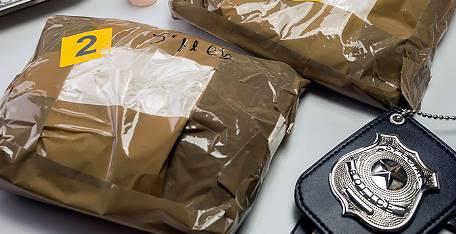
The Long Arm of the Law: Federal Drug Crimes Defense in Austin, Texas
A drug case in state court is serious. A drug case in federal court is a different world entirely. Federal prosecutors have vast resources. Federal agents—DEA, FBI, Homeland Security—have nationwide reach. Federal sentencing guidelines are unforgiving. There is no parole. Mandatory minimum sentences are common. And once the federal government decides to prosecute, they rarely let go. For those facing federal drug charges, the stakes are measured in decades, not years.
At Barton & Associates, Attorneys at Law, we defend clients throughout Austin and Central Texas against federal drug charges. From the neighborhoods of Central Austin to the communities of Round Rock, Cedar Park, Lakeway, Kyle, and Dripping Springs, our attorneys bring decades of experience to federal criminal defense. We understand that federal cases require a different approach—more resources, more investigation, and a deep understanding of federal law, the sentencing guidelines, and the strategies for negotiating with U.S. Attorneys. We know how to challenge federal investigations, attack informant credibility, and fight for the best possible outcome.
Whether you are facing charges for drug trafficking, conspiracy, or any other federal drug crime, we provide the strategic guidance and aggressive representation you need to protect your freedom.
Understanding Federal Drug Crimes
Federal drug crimes are prosecuted by the United States Attorney’s Office in federal court. The penalties are often more severe than state penalties, and there is no parole in the federal system.
Common Federal Drug Crimes:
-
Drug Trafficking: The manufacture, distribution, or possession with intent to distribute controlled substances. Penalties depend on the drug type and quantity.
-
Drug Conspiracy: An agreement with others to commit a drug crime. Conspiracy charges can reach participants who never touched drugs.
-
Importation/Exportation: Bringing drugs into or out of the United States.
-
Possession with Intent to Distribute: Similar to trafficking, based on quantity and circumstances.
-
Continuing Criminal Enterprise (CCE): Running a large-scale drug operation. Also known as the “kingpin” statute. Carries a mandatory minimum of 20 years to life.
-
Money Laundering: Concealing the proceeds of drug trafficking.
Federal vs. State Prosecution:
-
Federal Resources: DEA, FBI, ATF, Homeland Security Investigations
-
Federal Sentencing: Guidelines with narrow ranges; no parole
-
Mandatory Minimums: Common for drug offenses
-
No Parole: You must serve at least 85% of any sentence
For families in Austin, a federal drug charge can mean decades in federal prison.
What Is the Penalty for Federal Drug Trafficking?
Federal drug trafficking penalties are determined by the type and quantity of drugs, as well as the defendant’s criminal history.
Mandatory Minimums:
-
5 years: 500 grams of cocaine, 100 grams of heroin, 50 grams of meth, 100 kilograms of marijuana, or 1,000 pills of ecstasy
-
10 years: 5 kilograms of cocaine, 1 kilogram of heroin, 500 grams of meth, 1,000 kilograms of marijuana, or 3,000 pills of ecstasy
If Death or Serious Injury Occurs:
-
20 years to life: If death or serious injury results from the drug trafficking
For Large-Scale Traffickers (CCE):
-
20 years to life: For continuing criminal enterprise (kingpin) offenses
The Federal Sentencing Guidelines:
Even without mandatory minimums, the Federal Sentencing Guidelines impose structured ranges based on:
-
The drug quantity
-
The defendant’s role in the offense (leader, manager, minor participant)
-
The defendant’s criminal history
-
Whether a weapon was involved
-
Whether the defendant accepted responsibility
For families in Austin, federal drug sentences are measured in years and decades.
How to Defend a Federal Drug Crime
Defending against a federal drug charge requires a strategic approach. The resources of the federal government are immense, but the case can still be challenged.
Defense 1: Unlawful Search and Seizure
Federal investigations often involve search warrants, wiretaps, and surveillance. The Fourth Amendment protects against unreasonable searches and seizures. Your attorney can challenge:
-
No Probable Cause: The search warrant was not supported by probable cause
-
Misleading Affidavit: The warrant affidavit contained false or misleading statements
-
Wiretap Violations: The wiretap did not meet the requirements of federal law
-
GPS Tracking: Unauthorized GPS tracking may violate the Fourth Amendment
If the search was illegal, the evidence cannot be used against you.
Defense 2: Challenging Informant Credibility
Federal drug cases often rely on confidential informants. Informants are often unreliable, motivated by leniency in their own cases, and paid for their cooperation. Your attorney can challenge:
-
The informant’s criminal history
-
The informant’s motivation to lie
-
Whether the informant was paid
-
Whether the informant was induced to make a case
Defense 3: No Knowledge
The government must prove you knew the drugs were present and that they were illegal. If you were set up, tricked, or did not know what you were transporting, you have a defense.
Defense 4: Entrapment
If law enforcement induced you to commit an offense you would not otherwise have committed, entrapment is a defense. This is common in undercover operations where officers repeatedly pressure a target to sell drugs.
Defense 5: Challenging Drug Quantities
The quantity of drugs drives the sentence. If the government cannot prove the quantity, the sentence may be significantly reduced. Your attorney can challenge:
-
The weight of the drugs
-
Whether the substance is actually a controlled substance
-
The purity of the drugs (relevant for meth and fentanyl)
Defense 6: Role in the Offense
If you played a minor role, your sentence may be reduced. Your attorney can argue:
-
You were a minor participant
-
You were not a leader or organizer
-
You did not have decision-making authority
For families in Austin, a strong defense can mean the difference between 20 years and 5 years.
Federal Sentencing Guidelines
The Federal Sentencing Guidelines are the most important factor in determining a federal drug sentence. Unlike state court, where judges have broad discretion, federal judges must calculate the guidelines range and consider it when imposing sentence.
How the Guidelines Work:
-
Each drug offense has a base offense level
-
Enhancements add levels (leader role, weapon, obstruction of justice, etc.)
-
The defendant’s criminal history category is calculated
-
The offense level and criminal history category determine the guidelines range
Example:
-
100 grams of heroin: Base offense level 26
-
If you were a leader: +4 levels
-
If you used a weapon: +2 levels
-
Total offense level 32
-
Criminal history category I: 121-151 months
Acceptance of Responsibility:
-
If you accept responsibility, you can receive a 2-3 level reduction
-
A 3-level reduction can reduce a sentence by years
The Importance of the Guidelines:
The guidelines are not mandatory, but judges must consider them. A sentence below the guidelines requires justification. A sentence above the guidelines must be explained.
For families in Austin, understanding the guidelines is essential to predicting your sentence.
Conspiracy Charges
Conspiracy is one of the most powerful tools federal prosecutors have. A conspiracy charge allows them to hold all members of a drug organization responsible for the actions of the entire group.
What the Government Must Prove:
-
An agreement to commit a drug crime
-
The defendant knowingly joined the agreement
-
An overt act in furtherance of the conspiracy
Pinkerton Liability:
Under the Pinkerton doctrine, a conspirator can be held liable for the acts of other conspirators that are reasonably foreseeable. This means you can be sentenced for drugs you never touched.
Defending Conspiracy:
-
No Agreement: You did not agree to participate
-
Withdrawal: You withdrew from the conspiracy
-
Minor Role: Your role was minor and limited
-
No Knowledge: You did not know about the conspiracy
For families in Austin, conspiracy charges can lead to sentences far beyond individual conduct.
Wiretaps and Electronic Surveillance
Federal drug investigations often use wiretaps—court-authorized interception of phone calls and messages. Wiretaps are powerful evidence, but they are also subject to strict legal requirements.
What the Government Must Prove:
-
Probable cause that the wiretap will yield evidence of a crime
-
That normal investigative procedures have failed or are too dangerous
-
Minimization: The government must minimize interception of non-relevant calls
Challenging a Wiretap:
-
No Probable Cause: The wiretap application lacked probable cause
-
Failure to Exhaust: The government did not try other investigative methods
-
Lack of Minimization: The government intercepted too many irrelevant calls
-
Misleading Affidavit: The application contained false information
If the wiretap is suppressed, the evidence from the wiretap cannot be used.
For families in Austin, challenging wiretaps can be the key to defeating a federal drug case.
The Role of the U.S. Attorney’s Office
The United States Attorney’s Office for the Western District of Texas prosecutes federal crimes in Austin. The U.S. Attorney has resources that dwarf local prosecutors.
The U.S. Attorney’s Advantages:
-
Resources: DEA, FBI, HSI agents, forensic labs, prosecutors dedicated to drug cases
-
Coordination: Ability to coordinate investigations across state lines
-
Information Sharing: Access to national databases and informants
-
Sentencing: Ability to use the sentencing guidelines and mandatory minimums as leverage
Working with Federal Prosecutors:
Federal prosecutors are often willing to negotiate, but they have more leverage than state prosecutors. Your attorney can negotiate:
-
Reduced charges
-
Below-guidelines sentences
-
Safety valve relief (for low-level, non-violent offenders)
-
Substantial assistance (5K1.1) motions for cooperation
For families in Austin, working with experienced federal defense counsel is essential.
Frequently Asked Questions About Federal Drug Crimes in Austin, Texas
When clients come to our office—whether from Austin’s central neighborhoods, the suburbs to the north and south, or the Hill Country communities—they often have questions about federal drug charges. Here are the answers to the most common inquiries we receive.
What is the difference between federal and state drug charges?
Federal charges are prosecuted by the U.S. Attorney’s Office in federal court. Penalties are often more severe, there is no parole, and mandatory minimum sentences are common.
What is a mandatory minimum sentence?
A mandatory minimum is a sentence that the judge must impose—no less than the statutory minimum. For drug trafficking, mandatory minimums are often 5 or 10 years.
What is the safety valve?
The safety valve is a provision that allows a judge to sentence below a mandatory minimum if the defendant meets certain criteria: no criminal history, no violence, and full disclosure of the offense.
What is a 5K1.1 motion?
A 5K1.1 motion is a request by the government for a sentence below the guidelines based on substantial assistance—cooperation with law enforcement. The motion must be filed by the prosecutor.
What is the difference between a conspiracy and a substantive offense?
A substantive offense is the underlying crime (possession, distribution). A conspiracy is an agreement to commit the crime. Conspiracy charges can reach people who never actually possessed or distributed drugs.
Can I get probation for a federal drug crime?
Probation is rare for federal drug crimes. Most federal drug offenses carry mandatory prison sentences. Even without mandatory minimums, the guidelines usually call for prison.
Do I need a federal defense attorney?
Yes. Federal court is a different system with different rules, different procedures, and higher stakes. You need an attorney who has experience in federal court and understands the federal sentencing guidelines.
Why Barton & Associates for Federal Drug Crimes in Austin
Federal drug crimes require attorneys who understand the federal system, the sentencing guidelines, and the strategies for challenging federal investigations. The attorneys at Barton & Associates bring decades of experience to federal criminal defense, helping clients navigate the most challenging forum.
We are deeply rooted in the Austin legal community. We have handled federal drug cases in the Western District of Texas for decades and understand the local federal prosecutors, the DEA, the FBI, and the federal judges. This local knowledge allows us to advise clients accurately and advocate effectively.
We are also committed to a client-centered approach. We take the time to understand your case, your goals, and your concerns. We explain your options in clear, straightforward language, and we provide honest advice about the best path forward.
Take the First Step Toward Protecting Your Freedom
If you are facing a federal drug charge, your freedom is on the line. Decades in federal prison are at stake. Do not wait. The sooner you have an experienced federal defense attorney on your side, the better your chances of a favorable outcome. At Barton & Associates, we are here to fight for you.
Call our Austin office today at 512-THE-FIRM (843-3476) to speak with an experienced federal criminal defense attorney about your case. You can also complete the online Free Consultation form on our website to schedule a confidential meeting. Please note, on-site consultations are by appointment only. We look forward to helping you protect your rights and your future.
Main Category: Criminal Defense Austin
Practice Area Category: Drug Crimes
Barton & Associates, Attorneys at Law
316 W 12th St Suite 400, Austin, TX 78701
Office: 512-THE-FIRM (843-3476)