


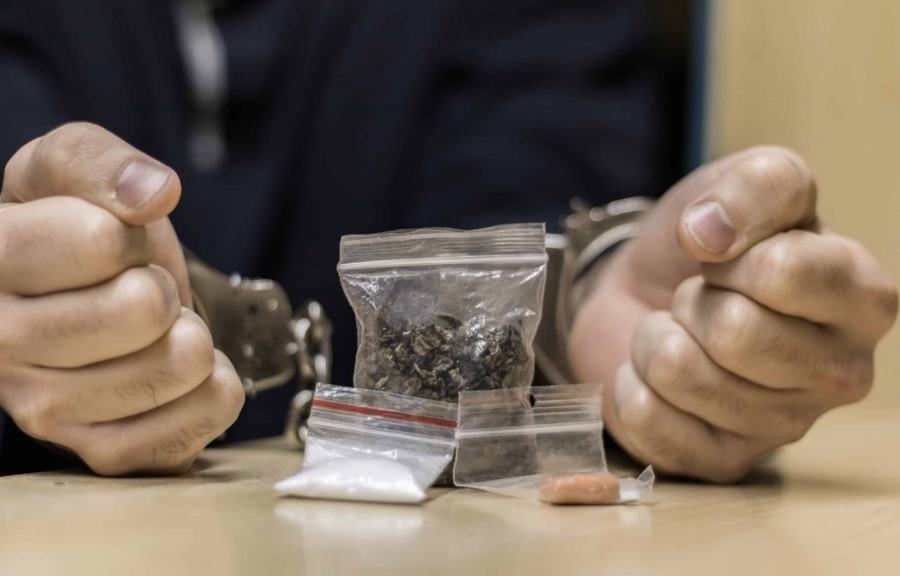
Drug Possession Charges in Corpus Christi: Penalty Groups, Court Process, and Defenses
Drug possession charges in Texas can range from a Class B misdemeanor that most people will never think about again, to a first-degree felony carrying a potential life sentence — and the difference often comes down to two factors that have nothing to do with the circumstances of the arrest itself: what substance was involved, and how much of it there was. Understanding how Texas classifies these charges is the first step to understanding what you’re actually facing.
How Texas Classifies Controlled Substances: Penalty Groups
The Texas Controlled Substances Act, found in Health and Safety Code Chapter 481, organizes controlled substances into penalty groups. Penalty Group 1, under § 481.102, includes substances like heroin, cocaine, and methamphetamine. Penalty Group 2, under § 481.103, includes certain hallucinogens. Penalty Group 3, under § 481.104, includes many prescription depressants and stimulants — medications like certain benzodiazepines and ADHD medications — when possessed without a valid prescription. Penalty Group 4, under § 481.105, covers certain compounds with limited narcotic content, often combined with other ingredients.
Which penalty group a substance falls into is the first major factor in how a possession charge is classified — and it’s worth noting that this classification doesn’t always track with how dangerous or how commonly misused a substance is perceived to be. A prescription medication possessed without a valid prescription can fall under Penalty Group 3 and carry real felony exposure, even though the same substance is legal with a prescription.
Marijuana Possession: A Different Framework
Marijuana is handled separately from the penalty group system, under Health and Safety Code § 481.121. Possession of two ounces or less is generally a Class B misdemeanor, punishable by up to 180 days in jail and a fine of up to $2,000. Between two and four ounces is a Class A misdemeanor. From four ounces up to five pounds, possession becomes a state jail felony. The thresholds continue upward from there, with possession of larger quantities — five to 50 pounds, 50 to 2,000 pounds, and over 2,000 pounds — escalating through third-degree, second-degree, and first-degree felony classifications respectively.
How the Amount Changes Everything
For Penalty Group 1 substances, the quantity possessed drives the classification dramatically. Possession of less than one gram is generally a state jail felony. Between one and four grams, the offense becomes a third-degree felony. Between four and 200 grams, it becomes a second-degree felony. Above 200 grams, the offense becomes a first-degree felony, with the punishment range increasing further for very large quantities.
What this means practically is that the difference between, for example, 0.9 grams and 1.1 grams of a Penalty Group 1 substance — an amount that might be genuinely difficult to distinguish without precise lab testing — can be the difference between a state jail felony and a third-degree felony. How a substance was weighed, what was included in that weight (including, in some cases, the weight of any adulterants or dilutants mixed with the substance), and whether the testing was conducted properly are all issues that can directly affect which charge applies.
Drug-Free Zones: Enhanced Penalties Near Schools and Parks
Health and Safety Code § 481.134 creates enhanced penalties for drug offenses that occur in or near certain locations — generally within 1,000 feet of a school, premises owned by a school, or a school bus, and within 300 feet of places like a public park, public swimming pool, video arcade, or youth center. These enhancements can increase the severity of the offense by a degree, and in some circumstances can affect eligibility for probation or require minimum periods of confinement.
Given how many residential areas in Corpus Christi are within these distances of a school or park without it being obvious from the street, drug-free zone enhancements come up more often than people expect, and whether a particular location actually falls within one of these zones is a factual question that can be — and sometimes is — successfully challenged.
Possession vs. Possession With Intent to Deliver
A simple possession charge is fundamentally different from a charge under Health and Safety Code § 481.112, manufacture or delivery of a controlled substance, which carries significantly higher penalties across the board. Whether a case is charged as simple possession or as possession with intent to deliver often comes down to circumstantial evidence: the quantity involved relative to what would be consistent with personal use, the presence of packaging materials, scales, large amounts of cash, or other items associated with distribution rather than use. The line between these two charges is not always clear-cut, and it’s an area where the specific facts of how items were found and characterized matter enormously.
Search and Seizure: The Most Common Defense Issue
A significant percentage of drug possession cases turn on how the evidence was found in the first place. The Fourth Amendment, and Texas’s own exclusionary rule under Code of Criminal Procedure Article 38.23, generally make evidence obtained through an illegal search or seizure inadmissible — meaning that even if drugs were in fact found, if they were found as a result of a stop, search, or seizure that violated the law, that evidence may not be usable against you.
This comes up constantly in the context of vehicle stops — was the initial stop legally justified, did the officer have a valid basis to search the vehicle or extend the stop beyond its original purpose, and if a search was based on “consent,” was that consent actually voluntary. These questions are often the most productive area of investigation in a possession case, independent of what was ultimately found.
Deferred Adjudication and Your Long-Term Record
Unlike DWI, where deferred adjudication is categorically unavailable, deferred adjudication community supervision is generally available for many drug possession charges under Texas Code of Criminal Procedure Article 42A.102. This matters significantly: successful completion of deferred adjudication for a possession charge can result in the case being dismissed without a final conviction, which in turn can open the door to expunction or an order of nondisclosure depending on the specific offense and circumstances. This is one of the most important differences between how a possession case and a DWI case can play out long-term, and it’s a major factor in how a possession case should be approached from the beginning.
Where Drug Possession Cases Are Handled in Nueces County
Lower-level possession cases — including marijuana possession of four ounces or less and certain smaller-quantity Penalty Group 3 and 4 cases — are generally handled as misdemeanors in the Nueces County Courts at Law. Felony possession cases, including all Penalty Group 1 felony cases and higher-quantity marijuana and other penalty group cases, are filed in one of Nueces County’s district courts and require a grand jury indictment, following the same felony process described in our post on first court appearances.
If you’re facing a drug possession charge in Corpus Christi, Barton & Associates offers free, confidential consultations with a criminal defensehttps://www.bartonlawoffice.com/what-does-a-criminal-defense-attorney-do-san-antonio/ attorney — available 24 hours a day — to evaluate the specific facts of your case. Call our Corpus Christi office at 361-800-6780.





