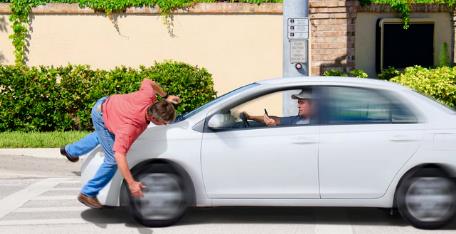
Failure to Stop & Give Information in Corpus Christi: Defending Against Property Damage Hit-and-Run Charges
A minor fender bender. A scratch in a parking lot. A bump at a stoplight. In the confusion of the moment, you drive away. Now you are facing criminal charges for failing to stop and give information. In Corpus Christi and throughout the Coastal Belt, these cases are prosecuted seriously. Even if there was no injury, even if the damage was minor, leaving the scene of an accident involving property damage is a criminal offense that can result in jail time, fines, and a permanent criminal record. When your record and your freedom are on the line, you need a defense attorney who understands the nuances of hit-and-run law and will fight to protect your rights.
At Barton & Associates, Attorneys at Law, we defend individuals throughout Corpus Christi and the Coastal Belt who are charged with Failure to Stop and Give Information—commonly known as hit-and-run involving property damage. Whether the accident occurred in a parking lot on South Padre Island Drive, on Staples Street, or in a residential neighborhood in Flour Bluff, we provide the aggressive, knowledgeable representation you need to protect your rights and your future. With extensive experience in the Nueces County criminal courts, we guide our clients through every stage of the defense process.
Understanding Failure to Stop & Give Information
Failure to Stop and Give Information is defined under Section 550.022 of the Texas Transportation Code. The offense occurs when a driver involved in an accident resulting in damage to a vehicle or property fails to stop and provide required information.
Elements of the Offense
The state must prove:
-
You were involved in an accident
-
The accident resulted in damage to a vehicle or other property
-
You knew or should have known that the accident occurred
-
You failed to stop at the scene
-
You failed to provide your name, address, and vehicle registration number
-
You failed to show your driver’s license
Penalties
Accident Involving Property Damage Only
-
Class B misdemeanor: Up to 180 days in county jail
-
Fine up to $2,000
-
Driver’s license suspension
Accident Involving Unattended Vehicle
-
If the damaged vehicle was unattended and you did not stop and leave your information, you can be charged.
How Failure to Stop Charges Arise in Corpus Christi
Failure to stop charges in Corpus Christi typically arise in several contexts:
Parking Lot Accidents
A minor collision occurs in a parking lot on South Padre Island Drive, Staples Street, or at a shopping center. The driver may not realize damage occurred and leaves. The other driver reports the incident, leading to charges.
Rear-End Collisions
A driver rear-ends another vehicle at a stoplight or in traffic. In the confusion, the driver leaves the scene. The other driver follows or reports the license plate.
Side-Swipe Accidents
A driver sideswipes another vehicle on SPID or a residential street. The driver may not feel the impact or may believe it was minor. The other driver reports the incident.
Accidents Involving Parked Cars
A driver hits a parked car and leaves without leaving information. The owner discovers the damage and reports the incident.
Minor Bumps
A driver bumps another vehicle while parking or in traffic. Believing there is no damage, the driver leaves. The other driver reports the incident.
The Consequences of a Failure to Stop Conviction
A conviction for Failure to Stop and Give Information carries serious consequences:
Criminal Penalties
-
Jail time: Up to 180 days
-
Fine: Up to $2,000
-
Probation: Extended period of community supervision with conditions
Criminal Record
A conviction remains on your record permanently and affects:
-
Employment opportunities
-
Professional licensing
-
Housing applications
-
Insurance rates
Driver’s License
Your license may be suspended upon conviction.
Insurance Consequences
A hit-and-run conviction will cause insurance rates to increase dramatically. Your insurance may be cancelled or non-renewed.
Civil Liability
In addition to criminal penalties, you may face civil lawsuits for property damage.
Defending Against Failure to Stop Charges
A strong defense can mean the difference between a conviction and an acquittal. Common defense strategies include:
Lack of Knowledge
The state must prove that you knew or should have known that an accident occurred. Defenses include:
-
You did not feel or hear the impact
-
You reasonably believed there was no damage
-
The accident was minor and not noticeable
-
You were unaware that you hit something
No Damage Occurred
If there was no damage to either vehicle, there is no offense. Your attorney may challenge:
-
Whether the alleged damage actually occurred
-
Whether the damage was pre-existing
-
Whether the alleged damage was caused by the accident
Stopped but Did Not Provide Information
If you stopped but did not provide information because you could not identify the other party, you may have a defense. For example, if you hit a parked car and left a note, you have complied with the law.
Necessity or Emergency
If you left the scene because of an emergency—such as a medical emergency—necessity may be a defense.
Mistaken Identity
In some cases, the wrong vehicle may be identified. Your attorney may challenge:
-
Whether you were the driver
-
Whether your vehicle was involved
-
Whether witnesses correctly identified you
The Failure to Stop Case Process
Understanding the process can help you navigate your case:
Step 1: Investigation
After an accident, the other party reports the incident. Law enforcement investigates, reviews surveillance footage, and identifies your vehicle.
Step 2: Citation or Arrest
Depending on the severity, you may be issued a citation or arrested.
Step 3: Arraignment
At arraignment, you are formally advised of the charges and enter a plea (usually not guilty). The court sets bond conditions.
Step 4: Discovery
Your attorney obtains discovery from the prosecutor, including:
-
Police reports
-
Witness statements
-
Surveillance footage
-
Damage photographs
Step 5: Negotiation
Your attorney negotiates with the prosecutor to seek a favorable resolution. Options may include:
-
Dismissal of charges
-
Reduction to a lesser charge (such as failure to maintain financial responsibility)
-
Deferred adjudication
-
Probation
Step 6: Trial
If no agreement is reached, the case proceeds to trial. You have the right to a jury trial. The state must prove each element of the offense beyond a reasonable doubt.
Frequently Asked Questions About Failure to Stop & Give Information
What is Failure to Stop and Give Information in Texas?
Failure to Stop and Give Information occurs when a driver involved in an accident causing property damage fails to stop and provide required information.
Is hit-and-run a felony in Texas?
Failure to stop involving property damage only is a Class B misdemeanor. If the accident involves injury or death, it becomes a felony.
What is the penalty for leaving the scene of an accident?
Property damage only: Class B misdemeanor (up to 180 days in jail). Injury or death: Third-degree felony (2 to 10 years in prison).
What if I didn’t know I hit something?
Lack of knowledge is a defense. The state must prove you knew or should have known an accident occurred.
What if I hit a parked car and left a note?
Leaving a note with your information is considered stopping and providing information. You have complied with the law.
Can I go to jail for a minor parking lot accident?
Yes. Failure to stop for any accident involving property damage can result in up to 180 days in jail.
Will I lose my license for leaving the scene?
Yes. Your license may be suspended upon conviction.
How long does a hit-and-run conviction stay on your record?
A conviction stays on your record permanently.
Can I get probation for leaving the scene?
Probation may be available, particularly for first-time offenders.
Do I need an attorney for a failure to stop charge?
Yes. A conviction can result in jail time, license suspension, and a permanent criminal record. An experienced criminal defense attorney can help you understand your rights, challenge the evidence, and protect your future.
Why Barton & Associates Is the Right Choice for Your Defense
Failure to Stop and Give Information charges can result in jail time, license suspension, and a permanent criminal record. At Barton & Associates, Attorneys at Law, we have extensive experience defending individuals against these charges in the Nueces County criminal courts.
Our attorneys understand the nuances of hit-and-run law, the importance of challenging knowledge and intent, and the strategies for negotiating favorable resolutions. We work closely with our clients to investigate the facts, gather evidence, and develop a defense strategy tailored to the unique circumstances of each case.
We also understand that failure to stop charges often arise from confusion, panic, or minor accidents. Our attorneys approach these cases with dedication, helping our clients navigate the legal system while protecting their rights, their license, and their future.
Protect Your Record and Your Future Today
If you are charged with Failure to Stop and Give Information in Corpus Christi, your record and your future are on the line. A conviction can result in jail time, license suspension, and a permanent criminal record. Do not wait. The decisions you make now will determine the outcome of your case.
Contact the experienced criminal defense attorneys at Barton & Associates today. Call us directly at 361-800-6780 to speak with a member of our team. You may also complete the Free Consultation form on our website, and we will reach out to you promptly. Please note that all on-site consultations at our Corpus Christi office are by appointment only, ensuring that we can give your case the focused attention it requires.
Reach out today—let us help you defend against failure to stop charges and protect your future.
Main Category: Criminal Defense Corpus Christi
Practice Area Category: Misdemeanors
Barton & Associates, Attorneys at Law
5110 Wilkinson Dr Suite 210, Corpus Christi, TX 78415
Office: 361-800-6780