Ignition Interlock Devices in Texas — When Are They Required After a DWI?
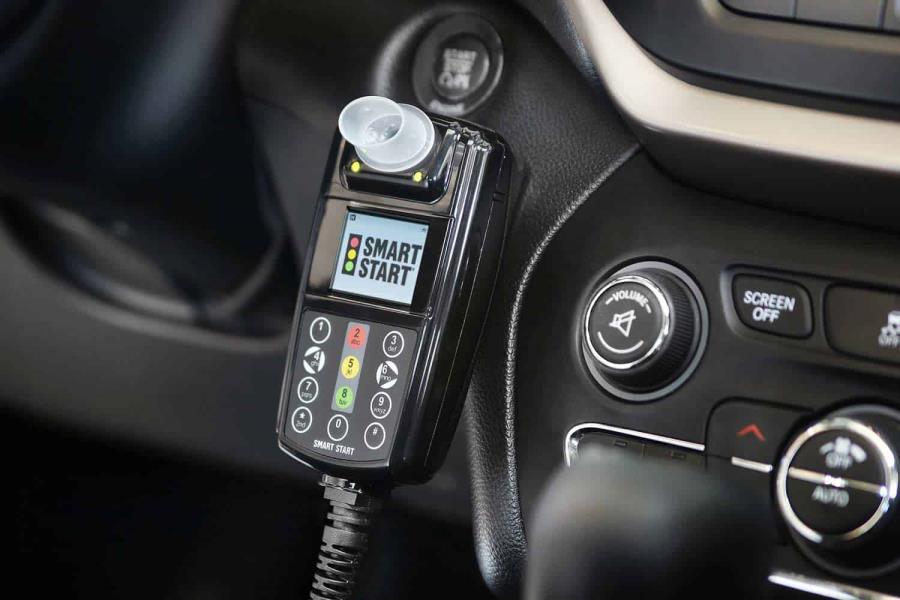
An ignition interlock device is a breath testing instrument installed in your vehicle that prevents the engine from starting if it detects alcohol above a specified threshold on your breath. In Texas, IID requirements arise in several distinct DWI situations — some mandatory by statute, others at the judge’s discretion — and the consequences of failing to comply with an IID requirement, or of attempting to circumvent one, are significantly more serious than most people realize. Understanding exactly when an IID is required, how long it must remain installed, and what your obligations are while it is in place is information every person facing a DWI charge in San Antonio needs before any plea is entered.
When Texas Law Mandates an Ignition Interlock Device
Texas Transportation Code and the Texas Code of Criminal Procedure establish several situations where an IID is required as a matter of law rather than judicial discretion.
The most significant mandatory IID trigger is a blood alcohol concentration of 0.15 or higher at the time of arrest. Under Texas Penal Code Section 49.04(d), a DWI where the defendant’s BAC was 0.15 or more is charged as a Class A misdemeanor rather than a Class B misdemeanor — a distinction that carries a higher fine ceiling and longer potential jail sentence. Under Texas Code of Criminal Procedure Article 42A.408, a judge who places a defendant on community supervision for a DWI offense involving a BAC of 0.15 or higher is required to order an IID as a condition of that supervision. The IID must remain installed for the entire period of community supervision.
This mandatory IID condition applies whether the defendant is placed on straight community supervision after a conviction or on deferred adjudication — and as discussed elsewhere, deferred adjudication is not available for DWI in Texas, meaning any community supervision for DWI follows a conviction. The IID requirement begins when community supervision begins and cannot be waived by the judge.
The second mandatory IID situation involves repeat DWI offenders. A defendant with a prior DWI conviction who is placed on community supervision for a new DWI offense is required to have an IID installed under Article 42A.408 regardless of the BAC in the current offense. The existence of a prior conviction triggers the requirement independently of the blood alcohol level.
A third IID requirement arises in the Administrative License Revocation context. Under Texas Transportation Code Section 521.246, when a person whose license has been suspended for a DWI-related reason applies for an occupational license — a restricted license allowing them to drive to and from work, school, or essential activities during the suspension period — the court issuing the occupational license is required to order an IID as a condition of that license. Driving on an occupational license without the required IID installed is a violation of the occupational license terms.
When a Judge Can Order an Ignition Interlock Device
Beyond the mandatory situations, Texas Code of Criminal Procedure Article 42A.408 authorizes — but does not require — a judge to impose an IID as a condition of community supervision in any DWI case, including first-offense DWI cases where the BAC was below 0.15 and the defendant has no prior convictions. The decision is within the judge’s discretion based on the specific facts of the case, the defendant’s history, and the judge’s assessment of the risk of future alcohol-impaired driving.
In practice, Bexar County judges exercise this discretion frequently in DWI cases that do not reach the mandatory threshold. A first-offense DWI with a BAC of 0.12, no prior record, and no aggravating circumstances may or may not result in an IID requirement — it depends on the judge assigned to the case, the recommendations in the presentence investigation report, and the arguments made by defense counsel at sentencing.
This discretionary IID authority is one of the reasons plea negotiations in DWI cases in Bexar County are worth pursuing with an attorney who knows the judges and the prosecutors in these specific courts. A negotiated plea agreement that specifies the conditions of community supervision — including whether an IID will be required — produces a known outcome rather than leaving the IID question entirely to the judge’s discretion at sentencing.
How Ignition Interlock Devices Actually Work in Texas
IIDs approved for use in Texas must meet standards established by the Texas Department of Transportation. The device requires the driver to provide a breath sample before the vehicle will start — if alcohol above the device’s set threshold is detected, the vehicle will not start. Most Texas IIDs are set at a threshold of 0.02 BAC — significantly below the legal limit — meaning any recent alcohol consumption will prevent the vehicle from starting.
Once the vehicle is running, the IID requires periodic rolling retests — breath samples taken while the vehicle is in motion at intervals set by the device. A rolling retest failure — a breath sample above the threshold while driving — causes the device to log the event, sound an alarm, and in some implementations require the driver to pull over. It does not immediately shut off the engine while the vehicle is moving — a feature designed to prevent accidents — but the logged failure is reported to the monitoring agency and can be a violation of community supervision conditions.
All breath sample results, including startup attempts, startup failures, and rolling retest results, are logged by the device and transmitted to the supervising agency on a regular basis. The defendant’s probation officer and the court have access to these records. A pattern of startup failures — multiple attempts to start the vehicle with alcohol detected — or a rolling retest failure is a violation of community supervision conditions that can trigger a motion to revoke supervision.
The Cost of Ignition Interlock Compliance
IID compliance is not free. The defendant is responsible for the cost of installation, monthly lease or rental fees for the device, and calibration and monitoring fees — costs that typically run between $70 and $150 per month depending on the device and the provider. In cases where community supervision lasts one to two years, the total IID cost to the defendant can reach $1,000 to $3,600 or more.
Texas Transportation Code Section 521.246 provides a limited hardship waiver for occupational license IID requirements — a court can reduce or waive the IID fee requirement for a defendant who demonstrates financial inability to pay. This waiver is not available for IID conditions imposed as part of community supervision, but it is relevant in the occupational license context for defendants who are already paying supervision fees and other court costs and are genuinely unable to afford the IID monthly expenses.
What Happens if You Violate the IID Requirement
Failing to install a required IID, driving a vehicle without the required IID installed, or attempting to circumvent the device — having another person provide a breath sample, using a device to defeat the breath test, or tampering with the IID in any way — are all serious violations with significant consequences.
Driving without a required IID when the IID is a condition of an occupational license is a criminal offense under Texas Transportation Code. Violating an IID condition of community supervision triggers the revocation process — the state can file a motion to revoke or adjudicate, and if the court finds the violation occurred, the defendant faces the consequences described in our probation violation post — up to the full sentence range for the original DWI offense.
Attempting to defeat or circumvent the IID — having someone else blow into the device, using a balloon or compressed air, or tampering with the device installation — is both a violation of community supervision conditions and potentially criminal conduct under Texas law. IID devices include features specifically designed to detect circumvention attempts, including cameras that photograph the person providing the breath sample and motion sensors that detect whether the driver is the person blowing into the device. These anti-circumvention features are more sophisticated than most people assume, and attempts to defeat them are documented and reported.
How an IID Requirement Affects the Defense Strategy
The prospect of a mandatory or likely IID requirement is one of the factors that should be weighed when evaluating whether to accept a plea in a DWI case or to pursue a dismissal, charge reduction, or not-guilty verdict at trial. A defendant whose BAC was 0.15 or above faces mandatory IID if they plead to the DWI charge — but if the defense can successfully challenge the BAC result through a suppression motion or through cross-examination of the laboratory analyst, the mandatory threshold may not apply.
Similarly, a defendant who is facing a first DWI with a BAC below 0.15 should understand that the IID question is one of the negotiable terms in a plea agreement — and that an attorney who knows Bexar County’s DWI courts can negotiate plea terms that address the IID condition explicitly rather than leaving it to the judge’s discretion at sentencing.
If you are facing a DWI charge in San Antonio or Bexar County and have questions about whether an ignition interlock device will be required in your case, call Barton & Associates at 210-500-0000. Consultations are free, confidential, and available 24 hours a day with a criminal defense attorney.