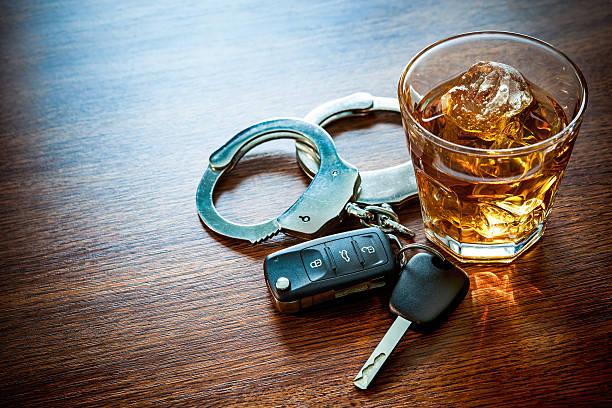
Charged With DWI in San Antonio? What Happens in the First 15 Days.
Most people arrested for DWI in San Antonio focus entirely on the criminal charge. What they do not realize until it is too late is that a DWI arrest in Texas triggers two completely separate legal proceedings simultaneously — and the deadline for one of them expires 15 days after the arrest, regardless of anything else happening in the case.
Understanding both proceedings, what your attorney must do in each one, and what the realistic consequences of a DWI conviction look like in Bexar County is the most useful thing you can do in the hours after an arrest. This post covers all of it.
The Two Cases That Begin the Moment You Are Arrested
When a Bexar County officer arrests you for DWI, two legal processes start at the same moment.
- The first is the criminal case — the State of Texas versus you — which will be heard in one of the county courts at law or criminal district courts in San Antonio depending on whether the charge is a misdemeanor or a felony. This is the proceeding most people think of when they think about a DWI charge. It determines whether you are convicted, what your sentence is, and whether a conviction goes on your permanent record.
- The second is the Administrative License Revocation proceeding — the Texas Department of Public Safety versus your driver’s license. This is a civil proceeding that runs parallel to the criminal case, is governed by Texas Transportation Code Chapter 724, and has its own timeline, its own hearing process, and its own outcome. Most importantly, it has its own deadline that has nothing to do with the criminal court schedule.
The 15-Day Deadline — and Why It Is the First Call You Make
Under Texas Transportation Code Section 724.032, the arresting officer is required to take your driver’s license at the time of a DWI arrest and provide you with a notice of suspension. That notice serves as a temporary driving permit for 40 days. But it also starts a 15-calendar-day clock.
If you or your attorney request an ALR hearing within 15 days of the arrest, the suspension is stayed pending the outcome of that hearing — meaning your license remains valid while the hearing is scheduled and conducted. If no hearing is requested within 15 days, your license is automatically suspended on day 40, with no further opportunity to contest the suspension before it takes effect.
This is why the first call after a DWI arrest needs to be to an attorney, not after you have had time to think about it. Fifteen days moves quickly, and an attorney who is retained on day 14 has significantly less ability to protect your license than one retained within the first 48 hours.
At Barton & Associates, we request ALR hearings for every DWI client at no additional charge, and we do it immediately upon being retained.
Why the ALR Hearing Matters Beyond Your License
The ALR hearing has a secondary value that most people do not know about. It is one of the earliest opportunities in the entire DWI case to cross-examine the arresting officer under oath — before the criminal case is fully developed, before the officer has refined their testimony, and before the prosecutor has had the opportunity to prepare the witness.
The transcript of that cross-examination becomes part of your criminal defense record. Inconsistencies between what the officer says at the ALR hearing and what their written report says — or what they later say at trial — are powerful impeachment material. An attorney who conducts a thorough ALR cross-examination is building the criminal defense at the same time they are fighting the license suspension.
What a DWI Defense Attorney Examines in Your Case
Every DWI case in Bexar County presents specific factual questions that a competent defense attorney investigates before any plea discussions begin.
- The traffic stop. Under the Fourth Amendment, a law enforcement officer must have reasonable suspicion of a traffic violation or criminal activity to initiate a stop. If the stop was not legally justified, a motion to suppress can exclude all evidence gathered after the stop — including the field sobriety tests, the breath or blood test result, and the officer’s observations. Without that evidence, the state typically cannot proceed.
- The field sobriety tests. The National Highway Traffic Safety Administration has established standardized procedures for the Horizontal Gaze Nystagmus test, the Walk and Turn test, and the One Leg Stand test. Officers must administer these tests according to NHTSA standards for the results to be reliable. Deviations from the standardized protocol — an uneven surface, inadequate lighting, failure to properly demonstrate the test — can render the results inadmissible or significantly undermine their weight.
- The breath test. The Intoxilyzer 9000 is the breath testing device currently used in Texas. Its accuracy depends on regular calibration and maintenance by certified personnel. Our attorneys subpoena the maintenance logs, calibration records, and operator certification documents for every breath test result in our DWI cases. Gaps in maintenance records or operator certification failures can challenge the reliability of the result.
- The blood draw. If a blood draw was conducted — whether by consent or by warrant — the chain of custody from the draw through laboratory analysis must be documented and verifiable. Laboratory procedures, analyst certification, and sample storage conditions are all subject to challenge if the documentation is incomplete or the procedures were not followed correctly.
The Consequences of a DWI Conviction in Texas
A first-offense DWI in Texas is a Class B misdemeanor, carrying a fine of up to $2,000, up to 180 days in county jail with a minimum of 72 hours, and a driver’s license suspension of 90 days to one year. If your blood alcohol concentration was 0.15 or higher, the charge is elevated to a Class A misdemeanor with a fine up to $4,000 and up to one year in county jail.
Beyond the direct penalties, a DWI conviction results in an annual surcharge to maintain your driver’s license under the Texas Driver Responsibility Program’s successor provisions, a mandatory ignition interlock device if your BAC was 0.15 or higher, and a permanent criminal record that appears on every background check for employment, housing, and professional licensing.
There is no deferred adjudication available for DWI in Texas. Under Texas Code of Criminal Procedure Article 42A.102, a defendant cannot receive deferred adjudication community supervision for a DWI charge. This means a plea of guilty or no contest to a DWI charge results in a conviction — not a deferral — that becomes a permanent part of your record. The decision about whether to accept a plea or go to trial is one of the most consequential legal decisions you will make.
If you were arrested for DWI in San Antonio or anywhere in Bexar County, call Barton & Associates at 210-500-0000 immediately. The 15-day ALR deadline does not wait, and neither should you. Consultations are free, confidential, and available 24 hours a day.