Railroad (FELA) & Crossing Accidents in Corpus Christi: Protecting Workers and Families After Train Tragedies
Corpus Christi is a city defined by its railroads. From the tracks that run through the industrial corridor along the Inner Harbor to the crossings that intersect South Padre Island Drive and countless local roads, trains are a constant presence in our community. For the men and women who work on the railroads—the engineers, conductors, track workers, and maintenance crews—the job comes with serious risks. For families who live near railroad crossings, the danger of a collision is always present. When railroad accidents occur, the consequences are often catastrophic. In Corpus Christi and throughout the Coastal Belt, railroad accidents require attorneys who understand the unique federal laws that govern these cases and the strategies for holding railroad companies accountable.
At Barton & Associates, Attorneys at Law, we represent railroad workers and families throughout Corpus Christi and the Coastal Belt who have been injured or lost loved ones in railroad accidents. Whether you are a railroad worker injured on the job or a motorist or pedestrian injured at a railroad crossing, we provide the knowledgeable, aggressive representation you need to seek justice and recover the compensation you deserve. With extensive experience in FELA claims and railroad crossing litigation, we guide our clients through every stage of the complex claims process.
Understanding Railroad Accidents
Railroad accidents can take many forms, but they all share one thing in common: the potential for catastrophic injury. Trains weigh thousands of tons and cannot stop quickly. When a train collides with a person, vehicle, or structure, the results are devastating.
Types of Railroad Accidents
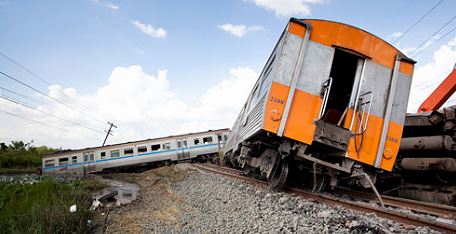
Train Derailments
Derailments can occur for many reasons:
-
Defective tracks
-
Speeding
-
Improper maintenance
-
Mechanical failure
-
Obstructions on tracks
Railroad Crossing Collisions
Collisions at railroad crossings occur when a train strikes a vehicle, pedestrian, or cyclist at a crossing. These accidents often result in catastrophic injuries or death.
Worker Injuries
Railroad workers face unique hazards:
-
Being struck by trains or rail cars
-
Falls from locomotives or rail cars
-
Crush injuries from coupling cars
-
Exposure to hazardous materials
-
Repetitive stress injuries
Hazardous Materials Incidents
Trains carrying hazardous materials can cause chemical spills, fires, and explosions that endanger workers and nearby communities.
Federal Employer Liability Act (FELA)
Railroad workers are not covered by state workers’ compensation laws. Instead, they are protected by the Federal Employers Liability Act (FELA), a federal law that allows railroad workers to sue their employers for on-the-job injuries.
What Is FELA?
FELA is a federal law enacted in 1908 to protect railroad workers. Unlike workers’ compensation, which is a no-fault system, FELA requires the worker to prove that the railroad’s negligence caused the injury.
Key Differences Between FELA and Workers’ Compensation
| FELA | Workers’ Compensation |
|---|---|
| Fault-based | No-fault |
| Requires proof of negligence | No proof required |
| Full damages (including pain and suffering) | Limited benefits |
| Jury trial available | No jury trial |
| Higher potential recovery | Statutory benefits |
What Must Be Proved in a FELA Case?
To succeed in a FELA claim, you must prove:
-
The railroad was negligent
-
The railroad’s negligence caused your injury
-
You suffered damages
The burden of proof is lower than in a typical negligence case. You only need to show that the railroad’s negligence played some part—even a small part—in causing your injury.
Common FELA Claims
Defective Equipment
Railroads must provide safe equipment. Defective locomotives, rail cars, tracks, or tools can lead to FELA claims.
Unsafe Working Conditions
Railroads must provide a safe workplace. This includes:
-
Adequate lighting
-
Safe walking surfaces
-
Proper training
-
Adequate staffing
Failure to Provide Safe Tools
Railroads must provide safe tools and equipment. Failure to do so can be grounds for a FELA claim.
Failure to Enforce Safety Rules
Railroads must enforce safety rules and protect workers from unsafe practices.
Assault by Coworkers
Railroads can be liable for assaults by coworkers if they knew or should have known of the risk.
Repetitive Stress Injuries
Repetitive stress injuries, such as carpal tunnel syndrome, back injuries, and hearing loss, are common among railroad workers.
Damages Under FELA
FELA allows for full compensation, including:
-
Medical expenses (past and future)
-
Lost wages and earning capacity
-
Pain and suffering
-
Emotional distress
-
Loss of enjoyment of life
-
In cases of death, wrongful death damages
Railroad Crossing Accidents
Railroad crossing accidents occur when a train collides with a vehicle, pedestrian, or cyclist at a crossing. These accidents are often catastrophic.
Common Causes of Crossing Accidents
Inadequate Warning Devices
Crossings should have proper warning devices:
-
Lights and gates
-
Warning signs
-
Bells and whistles
Obstructed Views
Vegetation, buildings, or other obstructions can block a driver’s view of approaching trains.
Defective Equipment
Malfunctioning gates, lights, or warning signals can lead to accidents.
Failure to Sound Warning
Trains are required to sound their horn when approaching crossings. Failure to do so can be negligence.
Poor Crossing Design
Poorly designed crossings, such as steep approaches or inadequate sight lines, can contribute to accidents.
Who Is Liable?
Multiple parties may be liable in a crossing accident:
-
The railroad company
-
The train crew
-
The crossing owner (often the railroad or local government)
-
The municipality responsible for road design
-
The vehicle driver (if negligent)
Proving Liability in Crossing Accidents
To prove liability, you must show:
-
The crossing was dangerous
-
The railroad or other party knew or should have known of the danger
-
They failed to take reasonable steps to correct it
-
Their negligence caused the accident
The Railroad Accident Case Process
These cases require specialized expertise:
Step 1: Preservation of Evidence
-
Preserve the crossing or accident scene
-
Obtain crossing inspection records
-
Preserve train event recorders (black boxes)
-
Obtain train crew records
-
Preserve maintenance records
Step 2: Investigation
Your attorney conducts a thorough investigation, including:
-
Crossing inspection history
-
Train speed and braking data
-
Train crew qualifications
-
Sight line analysis
-
Accident reconstruction
Step 3: Expert Witnesses
These cases require expert testimony from:
-
Railroad safety experts
-
Accident reconstructionists
-
Medical experts
-
Economists
-
Human factors experts
Step 4: Identify Responsible Parties
Your attorney identifies all parties who may be liable, including:
-
The railroad company
-
The crossing owner
-
Government entities
-
Vehicle drivers
Step 5: FELA Claim Requirements
For FELA claims, you must:
-
Report the injury to your employer promptly
-
Preserve evidence of the hazardous condition
-
Seek medical attention
-
Consult with an experienced FELA attorney
Step 6: Government Claims
Claims against government entities have shorter deadlines and special notice requirements.
Step 7: Demand and Negotiation
Your attorney sends a demand letter and negotiates with the railroad or its insurer.
Step 8: Litigation
If a fair settlement cannot be reached, your attorney files a lawsuit and pursues your claim in court.
Frequently Asked Questions About Railroad Accidents
What is FELA?
FELA is the Federal Employers Liability Act, a federal law that allows railroad workers to sue their employers for on-the-job injuries.
How is FELA different from workers’ compensation?
FELA requires proof of negligence but allows full damages, including pain and suffering. Workers’ compensation is no-fault but provides limited benefits.
What is the statute of limitations for FELA claims?
FELA claims must be filed within three years of the date of injury.
What is the statute of limitations for crossing accidents?
Crossing accidents generally have a two-year statute of limitations. Claims against government entities have shorter deadlines.
What damages can I recover?
You may recover medical expenses, lost wages, pain and suffering, and in cases of death, wrongful death damages.
What if I was partially at fault?
Under FELA, your recovery is reduced by your percentage of fault, but you can still recover as long as the railroad was partially at fault.
What should I do if I’m injured on the railroad?
Report the injury to your supervisor immediately. Seek medical attention. Do not give a recorded statement. Contact a FELA attorney.
What should I do if I’m in a crossing accident?
Report the accident to law enforcement. Seek medical attention. Preserve evidence, including photographs of the crossing. Contact an attorney.
Do I need an attorney for a railroad accident case?
Yes. Railroad accident cases are governed by federal law and involve complex issues of negligence, causation, and damages. An experienced railroad accident attorney can help you navigate the process and maximize your recovery.
How much does it cost to hire a railroad accident attorney?
Most railroad accident attorneys work on a contingency fee basis—you pay nothing upfront, and the attorney is paid a percentage of any recovery.
Why Barton & Associates Is the Right Choice for Your Railroad Accident Case
Railroad accident cases require attorneys who understand the unique federal laws that govern these claims, including FELA and the regulations that apply to railroad crossings. At Barton & Associates, Attorneys at Law, we have extensive experience representing railroad workers and families in Corpus Christi and throughout the Coastal Belt.
Our attorneys understand the complex regulations that govern railroads, the importance of preserving evidence like event recorders, and the strategies for proving negligence. We work closely with our clients to investigate the facts, gather evidence, and build a compelling case for full compensation.
We also understand that railroad accident cases require swift action. Evidence can be lost, and statutes of limitations are strict. Our attorneys act quickly to protect your rights and preserve your claims.
Seek Justice for Railroad Accidents Today
If you or a loved one has been injured in a railroad accident in Corpus Christi, you have the right to seek justice. Do not wait. Evidence can be lost, and statutes of limitations are strict.
Contact the experienced railroad accident attorneys at Barton & Associates today. Call us directly at 361-800-6780 to speak with a member of our team. You may also complete the Free Consultation form on our website, and we will reach out to you promptly. Please note that all on-site consultations at our Corpus Christi office are by appointment only, ensuring that we can give your case the focused attention it requires.
Reach out today—let us help you hold the railroads accountable and recover the compensation you deserve.
Main Category: Personal Injury Corpus Christi
Practice Area Category: Transportation & Mass Torts
Barton & Associates, Attorneys at Law
5110 Wilkinson Dr Suite 210, Corpus Christi, TX 78415
Office: 361-800-6780