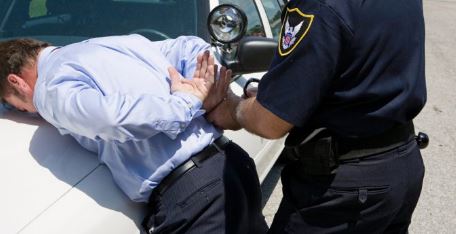
When Those Who Swore to Protect Violate Your Rights: Civil Rights & Police Misconduct in Austin, Texas
They take an oath to protect and serve. They wear a badge that represents authority, trust, and the law. But when police officers exceed their authority—when they use excessive force, make unlawful arrests, or violate constitutional rights—the consequences can be devastating. A wrongful shooting. A brutal beating. An unlawful search. A false arrest. When those sworn to protect become the source of harm, you have the right to hold them accountable.
At Barton & Associates, Attorneys at Law, we represent individuals and families across Central Texas whose constitutional rights have been violated by law enforcement. From the streets of Austin to the highways of Williamson County, from the neighborhoods of East Austin to the communities of the Hill Country, we understand the profound impact of police misconduct. Our attorneys have spent decades fighting for civil rights, holding law enforcement accountable when they cross the line.
We know that civil rights cases are among the most challenging in the law. They require navigating complex federal law, qualified immunity, and the deep resources of government entities. We know how to investigate police misconduct, identify the responsible officers, and build a case that seeks justice for those whose rights have been violated.
If your rights have been violated by law enforcement, you are not alone. Let us help you seek justice.
Understanding Civil Rights Violations
Civil rights are the fundamental freedoms guaranteed by the Constitution and federal law. When government actors—including police officers—violate these rights, they can be held liable.
What Are Civil Rights?
-
The right to be free from unreasonable searches and seizures (Fourth Amendment)
-
The right to be free from excessive force (Fourth Amendment)
-
The right to due process of law (Fourteenth Amendment)
-
The right to equal protection under the law (Fourteenth Amendment)
-
The right to free speech and assembly (First Amendment)
-
The right to be free from cruel and unusual punishment (Eighth Amendment)
Who Can Be Liable:
-
Individual officers
-
Police departments
-
Municipalities (cities, counties)
-
Supervisors who failed to train or discipline officers
For residents across Central Texas, civil rights violations can occur during traffic stops, arrests, searches, and encounters with law enforcement.
What Is Police Misconduct?
Police misconduct is any action by law enforcement that violates a person’s constitutional rights. It can take many forms.
Common Types of Police Misconduct:
-
Excessive Force: Using more force than reasonably necessary under the circumstances
-
Wrongful Shooting: Using deadly force when not justified
-
False Arrest: Arresting a person without probable cause
-
Unlawful Search and Seizure: Searching a person or property without a warrant or probable cause
-
Malicious Prosecution: Filing charges without probable cause
-
False Imprisonment: Holding a person without legal authority
-
Brady Violations: Withholding exculpatory evidence from a criminal defendant
-
First Amendment Violations: Arresting or retaliating against protesters, journalists, or critics
-
Jail Conditions: Failure to provide adequate medical care, use of excessive force against inmates
For those in the Austin area, police misconduct can happen in an instant—but its effects can last a lifetime.
How to Prove Police Misconduct
Proving police misconduct requires evidence that the officer’s actions violated your constitutional rights and that the violation caused you harm.
Step 1: Document the Incident
-
Photographs of your injuries
-
Names and badge numbers of officers involved
-
Witness information
-
Location and time
-
Any video footage (cell phone, surveillance, body camera)
Step 2: Obtain Official Records
-
Police reports
-
Body camera footage
-
Dash camera footage
-
911 call recordings
-
Medical records
-
Criminal case records (if charges were filed)
Step 3: Identify the Violation
Your attorney will analyze the facts to determine which constitutional rights were violated. Common claims include:
-
Excessive force (Fourth Amendment)
-
False arrest (Fourth Amendment)
-
Unlawful search (Fourth Amendment)
-
Due process violations (Fourteenth Amendment)
Step 4: Prove the Violation
You must prove that the officer’s actions were objectively unreasonable under the circumstances. This often requires expert testimony from use-of-force experts, police practices experts, and medical professionals.
Step 5: Overcome Qualified Immunity
Qualified immunity is a legal doctrine that protects government officials from liability unless they violated “clearly established” law. Your attorney must show that the officer’s conduct violated a right that was clearly established at the time.
For residents across Central Texas, proving police misconduct requires a thorough investigation and an attorney who knows how to overcome qualified immunity.
Excessive Force
Excessive force is one of the most common forms of police misconduct. Officers may use force when making arrests, during traffic stops, or in encounters with citizens. When that force is excessive, it violates the Fourth Amendment.
What Is Excessive Force?
-
Force that is objectively unreasonable under the circumstances
-
Force that is greater than necessary to achieve a legitimate law enforcement objective
Factors Courts Consider:
-
The severity of the crime
-
Whether the suspect posed an immediate threat
-
Whether the suspect was actively resisting arrest
-
Whether the suspect was armed
-
Whether the suspect was a danger to others
Examples of Excessive Force:
-
Beating a suspect who is already subdued
-
Using a Taser on a non-threatening individual
-
Shooting an unarmed person
-
Using a chokehold when not justified
Damages:
-
Medical expenses
-
Pain and suffering
-
Emotional distress
-
Lost income
-
Punitive damages (in cases of malice)
For families in the Austin area, excessive force cases require expert testimony on police practices and use-of-force standards.
Wrongful Death by Police
When police use deadly force that is not justified, the family of the deceased may have a claim for wrongful death.
When Deadly Force Is Justified:
-
To protect the officer or others from imminent threat of death or serious bodily injury
-
To prevent escape of a fleeing felon who poses a threat
When Deadly Force Is NOT Justified:
-
Shooting a fleeing suspect who poses no threat
-
Shooting an unarmed person
-
Shooting a person who is not an immediate threat
-
Using deadly force when lesser force would suffice
Who Can File:
-
The surviving spouse
-
The surviving children
-
The surviving parents (if no spouse or children)
For families across Central Texas, a wrongful death by police claim seeks justice for a life taken without justification.
False Arrest and Malicious Prosecution
When you are arrested without probable cause, or when charges are filed without evidence, you may have a claim for false arrest or malicious prosecution.
False Arrest:
-
Arrest without probable cause
-
Detention without legal authority
Malicious Prosecution:
-
Criminal charges filed without probable cause
-
The proceedings terminated in your favor (dismissal, acquittal)
-
Malice on the part of the prosecutor or officers
-
Damages
What You Must Prove:
-
The officer lacked probable cause to arrest you
-
The arrest was intentional (not accidental)
-
You suffered damages (lost time, emotional distress, legal fees)
For those in the Austin area, false arrest and malicious prosecution claims require proving that the officer acted without probable cause.
Unlawful Search and Seizure
The Fourth Amendment protects against unreasonable searches and seizures. When police search your home, vehicle, or person without a warrant or probable cause, you may have a claim.
What Is Unlawful:
-
Searching a home without a warrant
-
Searching a vehicle without probable cause
-
Searching a person without reasonable suspicion
-
Seizing property without legal authority
Exceptions:
-
Consent
-
Plain view
-
Exigent circumstances
-
Search incident to arrest
What You Can Recover:
-
Damages for the invasion of privacy
-
Emotional distress
-
Return of seized property
For residents across Central Texas, unlawful search claims often arise from traffic stops, home entries, and warrantless searches.
Qualified Immunity: The Biggest Hurdle
Qualified immunity is a legal doctrine that protects government officials—including police officers—from liability unless they violated “clearly established” law. It is one of the biggest hurdles in civil rights cases.
What Qualified Immunity Means:
-
Even if your rights were violated, you cannot recover unless the right was “clearly established”
-
“Clearly established” means that a reasonable officer would have known their conduct was illegal
-
There must be prior case law with nearly identical facts
Why It Matters:
-
Qualified immunity makes civil rights cases more difficult
-
Many cases are dismissed on qualified immunity grounds
-
Your attorney must be prepared to argue why the right was clearly established
How to Overcome Qualified Immunity:
-
Cite prior cases with similar facts
-
Argue that the conduct was so obviously illegal that no reasonable officer would have engaged in it
-
Present expert testimony on police practices
For those in the Austin area, overcoming qualified immunity is often the most challenging part of a civil rights case.
Municipal Liability
In addition to suing individual officers, you may be able to sue the city or county for policies or practices that led to the violation.
When a Municipality Can Be Liable:
-
The municipality had a policy or custom that caused the violation
-
The municipality failed to train officers adequately
-
The municipality failed to supervise or discipline officers
-
A final policymaker (chief, mayor, city council) made a decision that led to the violation
What You Must Prove:
-
A pattern of similar violations
-
Deliberate indifference to constitutional rights
-
The policy or custom caused your injury
For residents across Central Texas, municipal liability claims require proving that the problem was not just one officer, but the system itself.
Frequently Asked Questions About Civil Rights & Police Misconduct in Austin, Texas
When clients come to our office—whether from Austin’s neighborhoods, the suburbs to the north and south, or the Hill Country communities—they often have questions about civil rights claims. Here are the answers to the most common inquiries we receive.
What is qualified immunity?
Qualified immunity is a legal doctrine that protects government officials from liability unless they violated “clearly established” law. It is a major hurdle in civil rights cases.
What is excessive force?
Excessive force is force that is objectively unreasonable under the circumstances. Whether force is excessive depends on the severity of the crime, whether the suspect posed a threat, and whether the suspect was resisting.
What is the statute of limitations for civil rights claims?
In Texas, you generally have two years from the date of the violation to file a civil rights claim under Section 1983.
Can I sue a police department?
You can sue the municipality (city or county) if the violation resulted from a policy, custom, or failure to train. You can also sue individual officers.
What damages can I recover?
You can recover medical expenses, lost income, pain and suffering, emotional distress, and, in cases of malice, punitive damages.
Do I need an attorney for a police misconduct case?
Yes. Civil rights cases are complex, and qualified immunity makes them even more challenging. You need an attorney with experience in Section 1983 litigation.
What should I do if my rights are violated?
-
Do not resist, even if you believe the officer is wrong
-
Document everything (photographs, witnesses, badge numbers)
-
Seek medical attention
-
Contact an attorney immediately
Why Barton & Associates for Civil Rights & Police Misconduct in Austin
Civil rights cases require attorneys who are not afraid to take on law enforcement. Our attorneys have spent decades fighting for the rights of individuals across Central Texas, holding police officers and municipalities accountable when they violate constitutional rights.
We know the local police departments. We know the federal courts. We know the experts who can prove excessive force. And we know how to overcome qualified immunity.
Take the First Step Toward Justice
If your rights have been violated by law enforcement, do not wait. The two-year statute of limitations is strict. Evidence disappears. The sooner you have an experienced attorney on your side, the sooner you can begin the process of seeking justice.
Call our Austin office today at 512-THE-FIRM (843-3476) to speak with an experienced civil rights attorney about your case. You can also complete the online Free Consultation form on our website to schedule a confidential meeting. Please note, on-site consultations are by appointment only. We look forward to helping you seek the justice you deserve.
Main Category: Personal Injury Austin
Practice Area Category: Intentional & Complex Torts
Barton & Associates, Attorneys at Law
316 W 12th St Suite 400, Austin, TX 78701
Office: 512-THE-FIRM (843-3476)