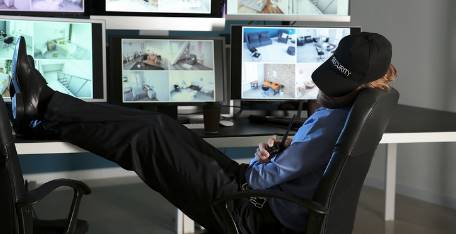
When Crime Is Predictable: Inadequate Security Claims in Austin, Texas
A dark parking lot at an apartment complex. A broken gate at a gated community. A hotel room with a faulty lock. A bar where fights are common but security is absent. Every day, property owners make choices about security—whether to install lighting, whether to repair broken gates, whether to hire security guards. When those choices are driven by profit rather than safety, the consequences can be devastating. Assaults, robberies, sexual assaults, and even murders occur because property owners failed to take reasonable steps to protect the people on their property.
At Barton & Associates, Attorneys at Law, we represent victims of violent crime across Central Texas who were injured because property owners failed to provide adequate security. From the apartment complexes of Austin to the hotels of the Hill Country, from the parking garages downtown to the bars on Sixth Street, we understand that crime is not always random—it is often predictable. And when a crime is predictable, the property owner can be held accountable.
We know that inadequate security cases are among the most challenging in personal injury law. They require proving that the property owner knew or should have known of the risk of criminal activity. They require evidence of prior crimes, expert testimony on security standards, and a deep understanding of premises liability law. We know how to investigate these cases, identify the responsible parties, and build a case that holds property owners accountable.
If you or a loved one has been the victim of a violent crime on someone else’s property, you are not alone. Let us help you seek justice.
Understanding Inadequate Security Claims
Inadequate security claims are a type of premises liability claim. They arise when a property owner fails to provide reasonable security measures, and that failure results in injury from criminal activity.
The Legal Duty:
Property owners have a duty to protect invitees (customers, tenants, guests) from foreseeable criminal activity. This duty includes:
- Providing adequate lighting
- Maintaining locks and gates
- Hiring security guards when appropriate
- Monitoring surveillance cameras
- Responding to known security issues
When Is Crime “Foreseeable”?
Crime is foreseeable when:
- Prior similar crimes have occurred on or near the property
- The property is located in a high-crime area
- The property owner has received complaints about security
- The property has known security issues (broken locks, dark areas)
What You Must Prove:
- The property owner owed you a duty of care
- The property owner failed to provide adequate security
- The failure caused your injury (the crime would not have occurred with adequate security)
- You suffered damages
For residents across Central Texas, inadequate security claims hold property owners accountable when they fail to protect those who lawfully use their property.
What Is an Inadequate Security Claim?
An inadequate security claim is a legal action against a property owner for injuries caused by criminal activity that could have been prevented with reasonable security measures.
Common Locations for Inadequate Security Claims:
- Apartment Complexes: Assaults, robberies, sexual assaults in parking lots, hallways, or apartments
- Hotels and Motels: Assaults in parking lots, hallways, or guest rooms
- Parking Garages: Assaults, robberies in poorly lit, unmonitored garages
- Bars and Nightclubs: Assaults, shootings due to overcrowding, lack of security
- Retail Stores: Robberies, assaults in parking lots
- Universities and Schools: Assaults on campus
- Gated Communities: Crimes that could have been prevented with working gates
Common Security Failures:
- Inadequate lighting
- Broken locks or gates
- No security cameras
- No security guards
- Failure to monitor known troublemakers
- Failure to respond to prior complaints
For those in the Austin area, inadequate security claims arise when property owners prioritize profit over safety.
How to Prove an Inadequate Security Claim
Proving an inadequate security claim requires showing that the property owner knew or should have known of the risk of criminal activity and failed to take reasonable steps to prevent it.
Step 1: Document the Crime
- Police report
- Witness statements
- Photographs of the scene
- Medical records documenting your injuries
Step 2: Establish Foreseeability
You must prove that the crime was foreseeable. Evidence of foreseeability includes:
- Prior similar crimes on the property
- Prior similar crimes in the area
- Complaints from tenants or guests about security
- Known security issues (broken locks, dark areas)
Step 3: Identify Security Failures
What should the property owner have done?
- Installed lighting
- Repaired broken locks or gates
- Hired security guards
- Installed surveillance cameras
- Responded to prior complaints
Step 4: Prove Causation
You must prove that the security failure caused your injury. If the crime would have occurred even with adequate security, you cannot recover.
Step 5: Work with a Security Expert
Inadequate security cases often require expert testimony from a security professional. The expert can testify about:
- The standard of care for similar properties
- The security measures that should have been in place
- How those measures would have prevented the crime
Step 6: Document Your Damages
- Medical expenses
- Lost income
- Pain and suffering
- Emotional distress
- Psychological counseling
For residents across Central Texas, proving an inadequate security claim requires thorough investigation and often expert testimony.
Apartment Complex Security
Apartment complexes are the most common location for inadequate security claims. Tenants and their guests have a right to feel safe in their homes.
Common Security Failures in Apartments:
- Broken gates at gated communities
- Inadequate lighting in parking lots, hallways, and stairwells
- Broken locks on exterior doors
- No security cameras
- No security guards in high-crime areas
- Failure to screen tenants with criminal histories
Foreseeability in Apartments:
- Prior crimes at the complex
- Prior complaints from tenants
- Location in a high-crime area
- Known issues with criminal activity
Landlord Liability:
Landlords have a duty to maintain common areas and to take reasonable steps to protect tenants from foreseeable criminal activity.
For those in the Austin area, apartment complex security cases require evidence of prior crimes and complaints.
Hotel and Motel Security
Hotels and motels owe a duty of care to their guests. When they fail to provide adequate security, guests can be injured by criminal activity.
Common Security Failures in Hotels:
- Broken locks on guest room doors
- Inadequate lighting in parking lots and hallways
- No security cameras
- No security guards
- Failure to monitor access to the property
- Failure to respond to prior complaints
Foreseeability in Hotels:
- Prior crimes at the hotel
- Location in a high-crime area
- Known issues with transient guests
- Complaints from guests
Special Considerations:
Hotels often have a heightened duty because guests are away from home and may be unfamiliar with the area. They rely on the hotel to keep them safe.
For residents across Central Texas, hotel security cases require investigation of prior incidents and security protocols.
Parking Garage Security
Parking garages—especially those attached to hotels, apartments, and commercial buildings—are common sites for robberies and assaults.
Common Security Failures in Parking Garages:
- Inadequate lighting
- No security cameras
- No security guards
- Broken gates or access controls
- Poor visibility
- Lack of emergency phones
Foreseeability in Parking Garages:
- Prior crimes in the garage
- Location in a high-crime area
- Known issues with security
Who Is Liable:
- The property owner
- The parking garage operator
- The building management company
For those in the Austin area, parking garage security cases require evidence of prior crimes and inadequate security measures.
Bar and Nightclub Security
Bars and nightclubs have a duty to protect patrons from foreseeable violence. Overcrowding, overserving alcohol, and inadequate security can lead to fights, shootings, and other violence.
Common Security Failures in Bars:
- Overcrowding
- Inadequate number of security guards
- Failure to check IDs
- Overserving alcohol
- Failure to remove troublemakers
- Lack of surveillance cameras
Dram Shop Liability:
Bars can also be liable under dram shop laws for serving alcohol to obviously intoxicated patrons who later cause injury.
Foreseeability in Bars:
- Prior fights or violence at the bar
- Location in a high-crime area
- Reputation for violence
- History of overserving
For residents across Central Texas, bar security cases require evidence of prior incidents and security failures.
Retail Store Security
Retail stores have a duty to protect customers from foreseeable criminal activity. Robberies, assaults, and carjackings in parking lots are common.
Common Security Failures in Retail Stores:
- Inadequate lighting in parking lots
- No security cameras
- No security guards
- Failure to monitor known troublemakers
- Inadequate training for employees
Foreseeability in Retail Stores:
- Prior crimes at the store or in the area
- Known issues with criminal activity
- Complaints from customers
Who Is Liable:
- The store owner
- The shopping center owner
- The property management company
For those in the Austin area, retail store security cases require evidence of prior crimes and inadequate security.
The Role of Prior Crimes
Prior similar crimes are the most important evidence in an inadequate security case. If the property owner knew—or should have known—that criminal activity was likely, they had a duty to take preventive measures.
What Qualifies as a Prior Similar Crime:
- Crimes of the same type (assaults, robberies, sexual assaults)
- Crimes that occurred on or near the property
- Crimes that should have put the property owner on notice
How to Prove Prior Crimes:
- Police reports
- Crime statistics
- Testimony from tenants or guests
- Complaints to management
The “Totality of the Circumstances”:
Courts consider the “totality of the circumstances”—not just prior crimes, but also the location, the nature of the property, and any known security issues.
For residents across Central Texas, prior crimes are the cornerstone of an inadequate security claim.
The Role of Security Experts
Inadequate security cases often require expert testimony from a security professional. The expert can testify about the standard of care for similar properties and the security measures that should have been in place.
What a Security Expert Can Do:
- Evaluate the property’s security measures
- Identify security failures
- Testify about the standard of care
- Explain how adequate security would have prevented the crime
Qualifications of a Security Expert:
- Experience in security management
- Knowledge of industry standards
- Familiarity with similar properties
For those in the Austin area, security experts are essential to proving an inadequate security claim.
Frequently Asked Questions About Inadequate Security in Austin, Texas
When clients come to our office—whether from Austin’s neighborhoods, the suburbs to the north and south, or the Hill Country communities—they often have questions about inadequate security claims. Here are the answers to the most common inquiries we receive.
What is an inadequate security claim?
An inadequate security claim is a legal action against a property owner for injuries caused by criminal activity that could have been prevented with reasonable security measures.
Who can be held liable for inadequate security?
Apartment complex owners, hotels, bars, retail stores, parking garage operators, and any property owner who fails to provide reasonable security can be held liable.
What is “foreseeability”?
Foreseeability means the property owner knew or should have known that criminal activity was likely. Prior similar crimes are the most common way to prove foreseeability.
What are common security failures?
Common failures include inadequate lighting, broken locks, no security cameras, no security guards, and failure to respond to prior complaints.
What damages can I recover?
You can recover medical expenses, lost income, pain and suffering, emotional distress, and, in cases of wrongful death, funeral expenses and loss of companionship.
What is the statute of limitations for inadequate security claims?
In Texas, you generally have two years from the date of injury to file a premises liability claim.
Do I need an attorney for an inadequate security claim?
Yes. Inadequate security cases are complex and require evidence of prior crimes, security expert testimony, and a deep understanding of premises liability law. An experienced attorney can help you navigate the process and hold the property owner accountable.
Why Barton & Associates for Inadequate Security in Austin
Inadequate security cases require attorneys who understand premises liability law, the importance of prior crime evidence, and the strategies for proving foreseeability. Our attorneys have spent decades representing victims of violent crime across Central Texas who were injured because property owners failed to keep them safe.
We know the local properties—the apartment complexes, hotels, bars, and parking garages. We know how to investigate prior crimes, work with security experts, and build a case that holds property owners accountable.
Take the First Step Toward Justice
If you or a loved one has been the victim of a violent crime on someone else’s property, do not wait. Evidence disappears. Witnesses forget. The two-year statute of limitations is strict. The sooner you have an experienced attorney on your side, the sooner you can begin the process of seeking the justice you deserve.
Contact our Austin office today at 512-THE-FIRM (843-3476) to speak with an experienced inadequate security attorney about your case. You can also complete the online Free Consultation form on our website to schedule a confidential meeting. Please note, on-site consultations are by appointment only. We look forward to helping you seek the justice you deserve.
Main Category: Personal Injury Austin
Practice Area Category: Workplace & On-Site Injuries
Barton & Associates, Attorneys at Law
316 W 12th St Suite 400, Austin, TX 78701
Office: 512-THE-FIRM (843-3476)