


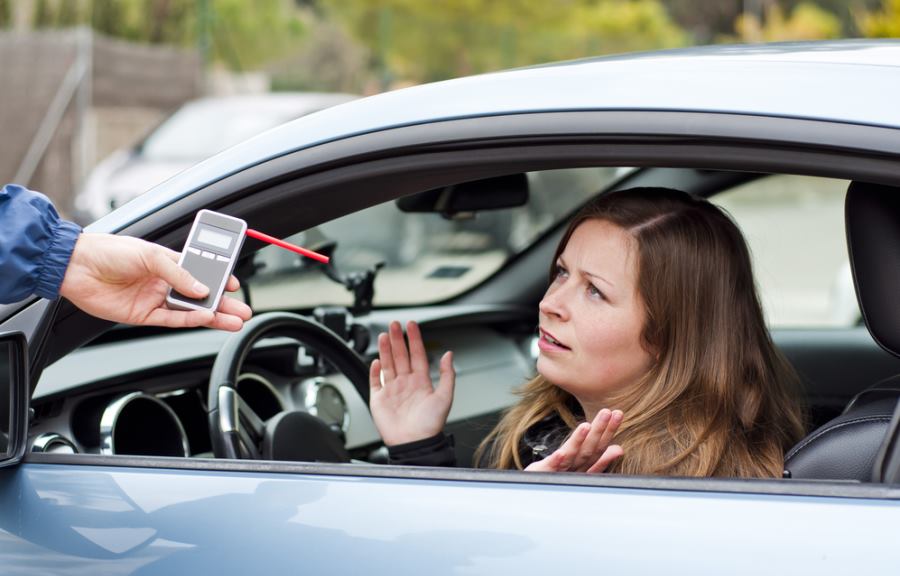
Challenging the DWI Stop and Field Sobriety Tests in Texas
Facing a DWI charge in Texas can feel like an overwhelming and frightening experience. The moments following a traffic stop—being asked to step out of your car, perform tasks on the side of the road, and submit to a breath test—often feel like an inevitable path to conviction. However, what many drivers don’t realize is that the legal process begins long before you set foot in a courtroom. It starts the moment a police officer decides to pull you over.
At Barton & Associates, Attorneys at Law, with offices in San Antonio, Austin, and Corpus Christi, we believe that knowledge is your first line of defense. Our experienced criminal defense team, led by Gary J. Barton, knows that the initial traffic stop and the administration of field sobriety tests (FSTs) are often the weakest links in the prosecution’s case. These are not infallible scientific instruments; they are human-led procedures, rife with potential for error, subjectivity, and constitutional violation.
This guide will walk you through the specific ways a skilled San Antonio DWI lawyer can challenge the legality of your stop and the validity of your field sobriety tests, potentially leading to dismissed charges or reduced penalties. Do not leave your freedom to chance.
The Foundation of Your Defense: The Initial Traffic Stop
Before any test is administered, the officer must have a valid reason to stop your vehicle. This is not a mere formality; it is a constitutional requirement rooted in the Fourth Amendment, which protects against unreasonable searches and seizures. If the initial stop was illegal, any evidence gathered after it—including field sobriety tests, breathalyzer results, and even observations of your behavior—can potentially be suppressed. This is often called the “fruit of the poisonous tree” doctrine.
An officer can legally initiate a traffic stop under two primary circumstances:
- Observing a Specific Traffic Violation: This is the most common justification. It could be anything from speeding, failing to signal a lane change, or having a broken taillight, to weaving within a lane or crossing a lane line.
- Reasonable Suspicion of Criminal Activity: This is a lower standard than “probable cause” but requires more than a mere hunch. The officer must be able to point to specific, articulable facts that would lead a reasonable person to suspect criminal activity is afoot. For example, an officer might claim reasonable suspicion based on a report of an erratic driver matching your vehicle’s description.
How Your Attorney Can Challenge the Stop
A meticulous defense attorney will scrutinize every detail of the stop. Here are common avenues for challenge:
- Lack of Reasonable Suspicion: Was the “weaving” truly unsafe or simply a driver adjusting to road conditions? Did the officer have a clear view to justify the stop? Your attorney can obtain the dashcam footage and the officer’s report to see if the stated reason holds up under scrutiny.
- Pretextual Stops: This occurs when an officer uses a minor, technical violation (like a license plate light being out) as a pretext to stop you and investigate a hunch about DWI. While pretextual stops are generally legal, your attorney can argue that the officer’s actions exceeded the scope of the original reason for the stop.
- Violation of Rights at a DWI Checkpoint: In the limited areas where checkpoints are used, they must follow strict guidelines regarding neutral site selection and operation. If those procedures are not perfectly followed, the stop may be invalid.
The Trouble with Standardized Field Sobriety Tests (SFSTs)
Once you are stopped, if the officer suspects impairment, they will likely ask you to step out of the vehicle to perform Standardized Field Sobriety Tests. These are a battery of three tests developed by the National Highway Traffic Safety Administration (NHTSA): the Horizontal Gaze Nystagmus (HGN) test, the Walk-and-Turn, and the One-Leg Stand.
It is crucial to understand that these tests are voluntary under Texas law. You have the right to politely decline to perform them. However, if you did perform them, the results are far from conclusive proof of intoxication. In fact, they are highly subjective and prone to error, providing a strong foundation for your defense.
1. The Horizontal Gaze Nystagmus (HGN) Test
This test involves the officer moving a stimulus (like a pen or finger) horizontally in front of your eyes, checking for three clues in each eye: lack of smooth pursuit, distinct nystagmus at maximum deviation, and onset of nystagmus prior to 45 degrees.
How to Challenge It:
- Medical Conditions: Many people have a natural, involuntary jerking of the eye (nystagmus) unrelated to alcohol. Conditions like epilepsy, certain medications, or even extreme fatigue can cause the same clues the officer is looking for.
- Improper Administration: The officer must hold the stimulus at the correct distance (12-15 inches) and move it at the proper speed. Any deviation invalidates the test.
- Environmental Factors: Passing traffic, sirens, or flashing lights can affect your ability to track the stimulus.
- Scientific Reliability: While the HGN test is admissible in Texas courts, its scientific validity is a complex topic. A skilled attorney can bring in an expert witness to challenge the officer’s interpretation of your eye movements.
2. The Walk-and-Turn Test
This is a “divided attention” test. You are instructed to take nine heel-to-toe steps along a straight line, turn in a specific manner, and take nine steps back, while counting your steps aloud.
How to Challenge It:
- Physical Limitations: Age, injury, back problems, inner ear disorders, or even being overweight can make it difficult to perform this test. The instructions even state it should not be administered to individuals over 65 or with certain physical ailments.
- Poor Instructions: The officer must give clear, standardized instructions. If they fail to demonstrate the test or give confusing directions, the results are unreliable.
- Environmental Conditions: Was the road shoulder sloped, uneven, or covered in gravel? Was it raining or windy? Any of these factors can cause stumbling that has nothing to do with alcohol.
- Nerves: Being stopped by a police officer is a high-stress situation. Anxiety can easily cause someone to lose their balance or miscount their steps.
3. The One-Leg Stand Test
This test requires you to stand with one foot approximately six inches off the ground and count out loud for 30 seconds.
How to Challenge It:
- Physical Limitations: The same physical limitations for the Walk-and-Turn apply here. Inner ear infections, leg injuries, and even being 30 pounds overweight can make this test impossible to perform perfectly.
- Improper Timing: Officers are supposed to time the 30 seconds accurately. Many do not, and what feels like 30 seconds of balancing can be much longer.
- Surface Issues: Like the walk-and-turn, the stability of the surface is critical.
Beyond the SFSTs: Other Evidence to Challenge
Your defense doesn’t stop with the field tests. An experienced attorney will also scrutinize:
- The Officer’s Observations: Claims of “bloodshot eyes,” “slurred speech,” or “odor of alcohol” are subjective. Allergies, lack of sleep, or even working in a bar can provide alternative explanations.
- Dashcam and Bodycam Footage: This is often the most powerful piece of evidence for the defense. The video rarely matches the officer’s dramatic written report. Your attorney will review it to see if you truly appeared impaired or if the tests were administered correctly.
- The Arrest Decision: An arrest requires “probable cause”—a reasonable belief, based on facts, that you are intoxicated. If the SFSTs were invalid and other observations are weak, your attorney can argue the officer lacked probable cause.
The Texas Implied Consent Law and Refusal
You may have heard of Texas’s “implied consent” law. This means that by driving on Texas roads, you have implicitly agreed to submit to a breath or blood test if lawfully arrested for DWI. However, this law does not force you to take a roadside portable breath test (PBT) or SFSTs. The consequences for refusing a breath or blood test after a lawful arrest are an automatic driver’s license suspension through the Administrative License Revocation (ALR) program.
This is a complex area. While a refusal can lead to an administrative suspension, it also means the state has no chemical test result to use against you in your criminal trial. Your attorney can help you weigh this critical decision and can fight the ALR suspension in a separate hearing, which is crucial for protecting your driving privileges.
Why You Need an Experienced San Antonio DWI Defense Lawyer
Navigating the complex interplay between the traffic stop, field sobriety tests, the arrest, and the separate ALR hearing is not something to face alone. An attorney from Barton & Associates brings a critical advantage: experience. We know what proper procedure looks like, and we know how to identify when an officer has cut corners or made a mistake.
We will:
- Conduct a Thorough Investigation: We will obtain and meticulously review all police reports, dashcam footage, and 911 calls.
- File Motions to Suppress: If the stop was illegal or the tests were improperly administered, we will file motions asking the court to exclude that damaging evidence. If the evidence of the stop and tests is suppressed, the prosecution often has no case left.
- Challenge the Science: We can consult with experts in forensic science to challenge the reliability of the breathalyzer machine or the officer’s administration of the SFSTs.
- Protect Your License: We will represent you in the ALR hearing to fight the suspension of your driver’s license, giving you the best chance to keep your ability to drive while your case is pending.
Don’t Let a DWI Define Your Future
A DWI charge in Bexar County or anywhere in Texas does not have to mean a conviction. The process is complex, but it is designed with protections for the accused—protections that you can only leverage with a skilled legal advocate.
At Barton & Associates, Attorneys at Law, we understand the high stakes. Your freedom, your reputation, and your livelihood are on the line. From our offices in San Antonio, Austin, and Corpus Christi, we fight tirelessly for clients across Texas, applying the same meticulous approach Gary J. Barton has used for years to defend the accused. We take nothing for granted, investigating every possible angle to build a powerful defense strategy.
You are not alone in this fight. Contact us today for a free, confidential consultation. Let us review the details of your stop and your tests, and let us start building your defense. Call us at 210-500-0000 or fill out our online form to schedule your appointment.





