San Antonio Railroad (FELA) & Crossing Accident Attorneys: Your Track to Justice
When the Power of the Railroads Meets Human Harm, You Need an Equal Force for Advocacy
The steady rumble of trains is a constant soundtrack to life in San Antonio and across Texas. As a vital artery of commerce and transportation, our extensive rail network is operated by some of the largest and most powerful corporations in the world. For the dedicated railroad workers who keep this system moving and for the motorists and pedestrians who cross its paths daily, this industrial power carries inherent and often underestimated risks. Injuries occurring in this realm—whether to a conductor on the job, an engineer in the cab, or a family at a rural crossing—are governed by a unique and complex body of law. Standard personal injury or workers’ compensation rules do not apply. Navigating a claim requires specific knowledge of federal statutes, railroad industry practices, and the aggressive defense tactics employed by rail companies.
At Barton & Associates, Attorneys at Law, our Railroad (FELA) & Crossing Accident practice is dedicated exclusively to representing those harmed by the railroad industry. We understand that these cases are battles of attrition against corporations with vast legal resources whose primary strategy is often delay and denial. For an injured railroad worker, your employer is not offering standard Texas workers’ comp; instead, your right to recover falls under the Federal Employers’ Liability Act (FELA), a century-old federal law that provides a path to greater compensation but demands skilled navigation. For individuals and families devastated by a crossing collision, you may be facing off against both a multinational railroad and local government entities, each pointing fingers at the other.
Our mission is to cut through this complexity and provide unwavering, expert advocacy. We combine a deep understanding of FELA’s nuances, railroad operating rules, and the engineering principles of crossing design with the relentless, client-focused litigation for which Barton & Associates is known. We investigate with the precision of industry insiders, consulting with railroad safety experts, signal engineers, and locomotive event recorder specialists to build an undeniable case. Whether you are a Union Pacific or BNSF worker suffering from a traumatic injury or repetitive trauma, or a family seeking answers after a catastrophic collision at a poorly maintained crossing, we are committed to holding the powerful accountable and securing the full measure of justice you deserve.
Why Railroad Injury Law Is a Specialized Field
Railroad injury claims exist in a legal and procedural world of their own, distinct from standard workplace or car accident cases. Success requires an attorney who doesn’t just practice personal injury law but who understands the culture, rules, and laws of the rail industry.
- Federal Law Prevails: The rights of injured railroad workers are almost exclusively defined by the Federal Employers’ Liability Act (FELA), a federal statute enacted in 1908. Your case will be filed in state or federal court under FELA rules, not state workers’ compensation law.
- The “Slight Negligence” Standard: Unlike Texas workers’ comp, FELA is not a no-fault system. An injured worker must prove the railroad’s negligence played some part, however small, in causing the injury. This lower burden of proof is a powerful tool but requires evidence and legal strategy tailored to FELA precedent.
- The Railroad’s Playbook: Railroads employ sophisticated legal teams well-versed in tactics to undermine claims. They may immediately attempt to secure a recorded statement, allege “contributory negligence” by the employee, or argue the injury is pre-existing. An attorney unfamiliar with these maneuvers can be at a severe disadvantage from the start.
- Complex Causation in Crossing Accidents: Determining liability for a grade crossing collision involves investigating the railroad’s maintenance of the right-of-way (e.g., overgrown vegetation blocking views), the adequacy of warning devices, train speed, crew conduct, and often the role of local government in road design and signage. This multi-party liability demands a systematic investigation.
At Barton & Associates, we are not intimidated by the railroad’s playbook; we are prepared for it. We advise clients from the moment of injury, protecting them from common pitfalls. We conduct immediate, independent investigations to secure event recorder data, crew statements, and maintenance records before evidence can be altered or lost. Our approach is proactive, strategic, and built on a foundation of specialized knowledge.
A Closer Look at Our Railroad Injury Practice Areas
FELA Claims for Injured Railroad Workers
If you are a railroad employee injured on the job, you are covered by FELA. This law applies to a wide range of employees, including engineers, conductors, brakemen, switchmen, and yard crew. Injuries can result from a single traumatic event or develop over time due to repetitive trauma.
Common Injury Scenarios We Handle:
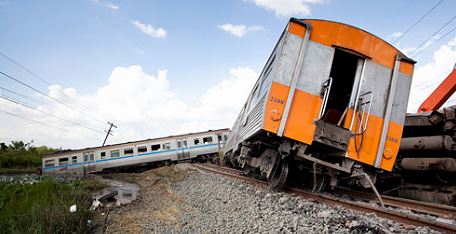
- Traumatic Injuries: Derailments, falls from equipment, injuries during coupling/uncoupling, slip and falls on ballast or diesel fuel, and being struck by equipment.
- Repetitive Stress & Cumulative Trauma Disorders: Chronic back, knee, shoulder, and hand injuries caused by years of vibration, awkward postures, and heavy lifting. This includes degenerative disc disease and osteoarthritis.
- Occupational Illnesses: Hearing loss from consistent exposure to locomotive noise, respiratory issues from diesel exhaust or chemical exposure, and illnesses related to asbestos in older equipment.
- Psychological Injury: Severe post-traumatic stress following a critical incident, such as a derailment or a crossing accident where the crew was involved.
Our FELA Legal Approach: We begin by thoroughly documenting the specific unsafe conditions or negligent acts that led to your injury—whether it was a defective piece of equipment, inadequate training, insufficient manpower, or a violation of the railroad’s own safety rules. We work with vocational rehabilitation experts and life care planners to project your future medical needs and lost earning capacity. Under FELA, you are entitled to recover damages for past and future medical expenses, lost wages, pain and suffering, and mental anguish. We fight to ensure the settlement or verdict reflects the true, lifelong impact of a railroad career cut short by injury.
Railroad Crossing Accidents & Injuries
Grade crossing collisions are some of the most violent and deadly accidents on our roadways. They often occur due to a dangerous combination of factors: a driver’s error and a crossing that is inherently unsafe due to poor design or maintenance.
Common Causes We Investigate:
- Inadequate Warning Devices: Malfunctioning or missing lights, gates, or bells at crossings designated for such protection.
- Obstructed Sightlines: Overgrown trees, shrubs, or illegally parked equipment on the railroad’s right-of-way that prevent a driver from seeing an approaching train.
- Excessive Train Speed: Trains operating at high speeds through crossings in populated areas, especially where sightlines are limited.
- Poor Crossing Surface & Design: Uneven pavement, deep ruts, or a steep approach angle that can cause a vehicle to stall or become stuck on the tracks.
- Negligent Crew Conduct: Failure to sound the horn or bell appropriately as required by law and railroad rules.
Our Crossing Accident Legal Approach: Our investigation is twofold. First, we examine the actions of the train crew and the mechanical condition of the train through event recorder data (the locomotive’s “black box”) and signal system logs. Second, we conduct a thorough engineering analysis of the crossing itself, often working with crossing design experts and civil engineers to demonstrate how its condition violated safety standards. We regularly pursue claims against both the railroad company (for negligence in operation and right-of-way maintenance) and governmental entities (like TxDOT or a county, for dangerous road design or failing to upgrade crossings). We understand the strict notice requirements for suing government bodies in Texas and act swiftly to preserve all claims.
Wrongful Death from Railroad Incidents
The loss of a loved one in a railroad workplace accident or crossing collision is a devastating blow. Families are left not only with profound grief but also with the sudden loss of financial support and guidance.
Our Wrongful Death Legal Approach: We handle these sensitive cases with compassion and resolve. Under FELA, certain surviving family members of a deceased railroad worker can bring a claim for damages, including loss of financial support, loss of services, loss of companionship, and funeral expenses. In crossing collision wrongful death cases, we pursue all available damages under Texas law. We work to give the family a full understanding of what happened, holding all responsible parties accountable to provide a measure of closure and financial security for the future.
The Investigative Edge: How We Build Your Case
Our strength lies in our ability to deconstruct the railroad’s defense with facts. Our investigation process is meticulous:
- Preserve Critical Evidence: We immediately seek to secure the Locomotive Event Recorder (LER) data, which records speed, horn application, brake pressure, and throttle position. We also seek all relevant dispatch tapes, crew statements, and track inspection records.
- Document the Scene: For crossing accidents, we conduct scene surveys, measure sight distances, photograph conditions, and obtain maintenance records for signals and the crossing surface.
- Consult Specialized Experts: Our network includes former railroad operating officers, signal and train control engineers, biomechanical experts, and vocational analysts who can testify to industry standards and the cause of your injuries.
- Analyze Rules & Regulations: We comb through the railroad’s own operating rules, the Federal Railroad Administration (FRA) regulations, and the Manual on Uniform Traffic Control Devices (MUTCD) to identify specific violations that establish negligence.
The Barton & Associates Difference in Railroad Litigation
Choosing our firm means aligning with advocates who speak the language of the railroad and fight with the heart of your community.
- Proactive Client Guidance: We counsel our clients from day one on how to handle railroad claims investigators, what not to sign, and how to protect their health and their claim.
- Trial-Tested Resolve: We prepare every case as if it will go to trial. Railroads settle cases based on their assessment of your attorney’s willingness and ability to win in court. Our proven trial record gives us decisive leverage in negotiations.
- Comprehensive Damage Recovery: We account for the full impact of the injury, including future medical care, the need for vocational retraining, and the intangible loss of quality of life and ability to enjoy family activities.
If You’ve Been Derailed by a Railroad Injury, Let Us Help You Recover
A railroad injury can stop your life in its tracks, leaving you in pain, facing financial strain, and uncertain of your future. You do not have to fight the railroad alone. The experienced San Antonio Railroad Injury Attorneys at Barton & Associates are here to stand with you, providing the specialized knowledge, resources, and aggressive advocacy needed to win.
Take the First Step Toward Justice and Financial Security
Contact us today for a free, confidential and thorough case evaluation. We will listen to your story, explain your rights under FELA or personal injury law and outline the powerful representation we can provide. Call us 24/7 at 210-500-0000 or complete our online Free Consultation form. Let us help you get your life back on track.
Main Category: Personal Injury
Practice Area Category: Transportation & Mass Torts
Barton & Associates, Attorneys at Law
115 Camaron St, San Antonio, TX 78205
Office: 210-500-0000